dsh-search-boost
Run the following command in DeepSeek Harness:
dsh plugin install Mr-remon219/dsh-search-boost
Paste the following prompt into your AI chat to install this plugin:
Please install the dsh-search-boost plugin in DeepSeek Harness from https://github.com/Mr-remon219/dsh-search-boost as a bundle plugin, then configure it for your profile and restart the session.
About this plugin
In DeepSeek Harness, built-in web_search and web_fetch often provide a fairly fixed path: sources can be limited, deep research requires repeated manual prompting, and long pages can carry noisy content that weakens reasoning. dsh-search-boost is designed as a bundle plugin to address that gap. It upgrades the built-in search and fetch seams while registering a family of research-oriented tools, letting agents fuse multiple engine results, filter credible sources, preserve native citation behavior, and turn web pages into cleaner, reasoning-ready content.
Its core value is layered fused retrieval plus an injected proactive-search policy. The free layer runs Bing, DuckDuckGo, Yahoo, and Exa free sources in parallel without API keys, which is useful for zero-cost and privacy-conscious workflows. The API layer keeps those keyless legs and can also bring in Tavily, Brave, Exa, and an optional Antigravity CLI when available, improving recall and cross-engine corroboration. fused_search handles complexity routing, query preprocessing, domain filters, cross-engine scoring, and caching; fetch_page uses a Jina-first reading path with local HTML fallback and focused topic extraction; x_search covers real-time X posts, users, and threads through both official and credential-free paths; deep_research and research_parallel split investigations into rounds or parallel subqueries so the main agent can find gaps and merge sources.
This plugin is a good fit for people who use DeepSeek Harness for serious information gathering: writing technical reports, tracking open-source changes, comparing products, reviewing community discussions, or building agents that should actively verify facts. Start with the free layer when cost and configuration matter most, then enable the API layer when you need broader recall, stronger freshness, and more robust source corroboration, while still falling back gracefully when keys are absent.
Use Cases
- Verify open-source project updates quickly
- Compare technical approaches or product information
- Track community discussions and breaking topics
Best For
- DSH users who need stronger web search
- Developers building verification-oriented agents
- Users who want low-cost deep research
Related Plugins
A unified suite combining hot runtime injection, task-aware thinking-mode routing, and a graded session protocol with red-team gates to sustain model diligence across long-horizon inference.
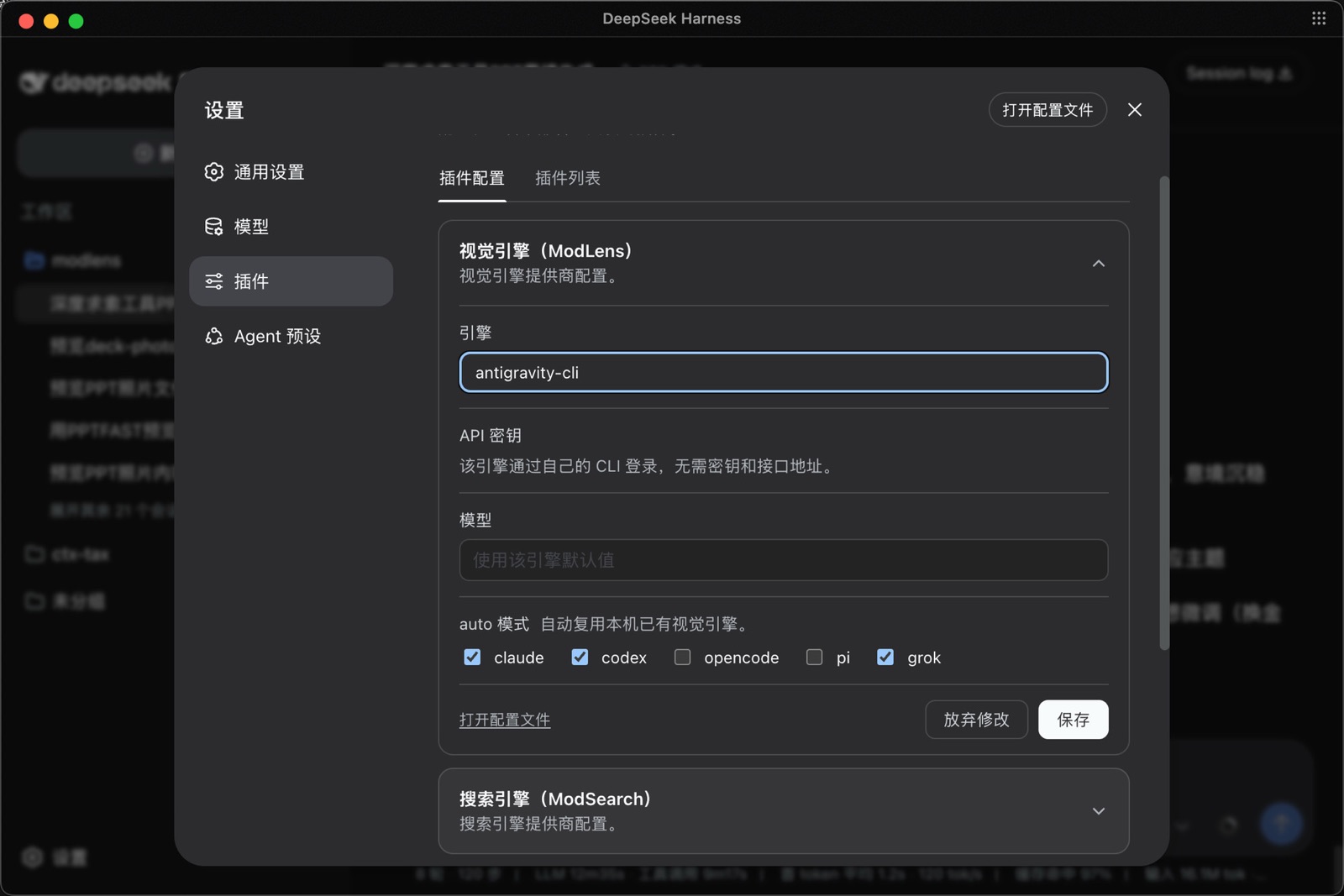
ModLens is a vision plugin for DeepSeek Harness that gives text-only models sight by reading images pasted directly into chat, with zero-config setup and multiple vision engines.
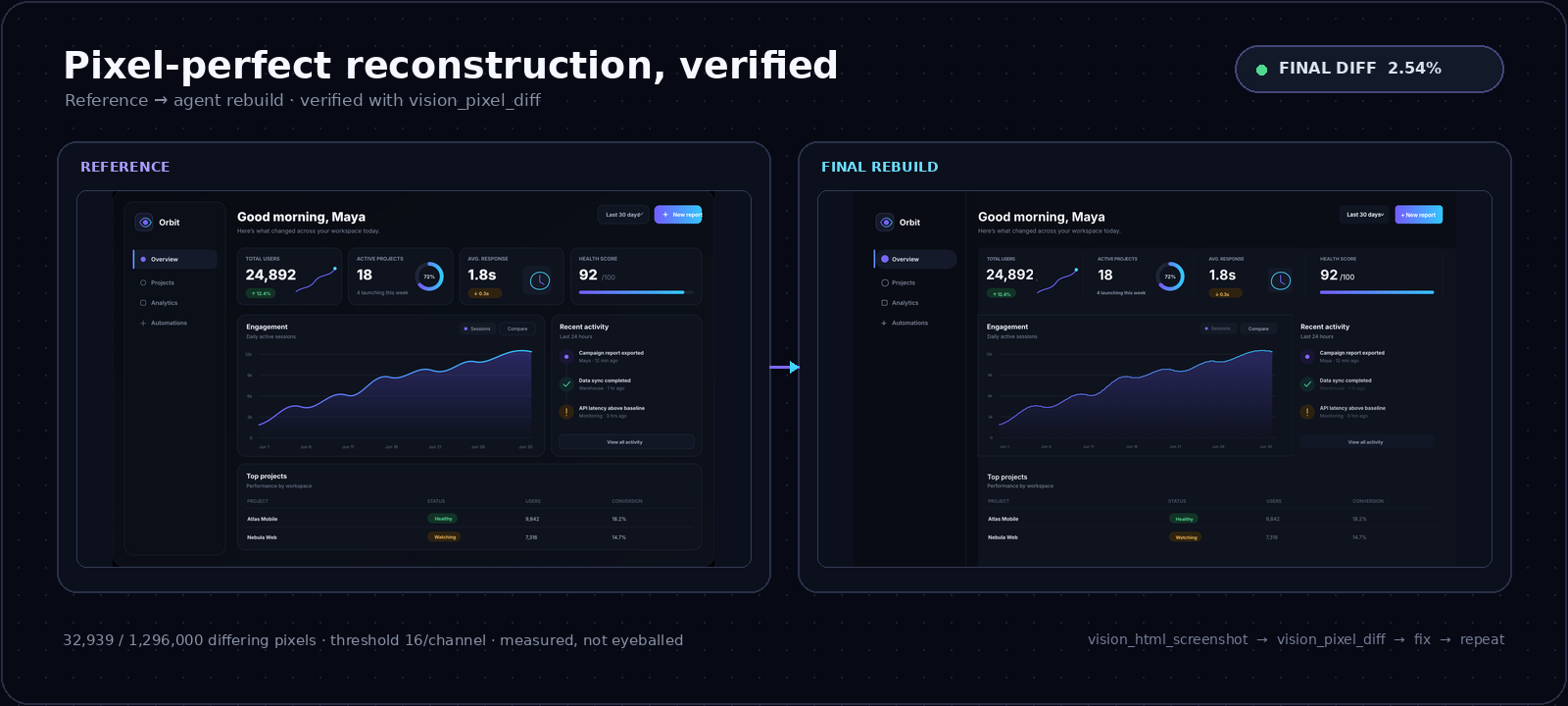
On-demand vision for text-only DeepSeek Harness agents: built-in free keyless vision chain and 14 vision tools, routing image turns as tool calls to vision models with pixel fidelity, no Python needed, one-command install.

Give text-only models in DeepSeek Harness eyes, enabling image Q&A, long-screenshot OCR, UI restoration, and GUI visual tasks.