dsh-receipts
Run the following command in DeepSeek Harness:
dsh plugin install 988hj7tczd-oss/dsh-receipts
Paste the following prompt into your AI chat to install this plugin:
Run dsh plugin install 988hj7tczd-oss/dsh-receipts in your DeepSeek Harness terminal to install; source code is available at https://github.com/988hj7tczd-oss/dsh-receipts .
About this plugin
You have been using an AI coding assistant for months, yet you cannot clearly say what you actually built, how much it cost, or what it delivered. dsh-receipts turns the session logs sitting on your local machine into a structured usage-and-impact report. It reads DeepSeek Harness transcripts in pure local mode (Zstd-compressed logs supported), cross-references git history across your repositories, and produces Markdown daily / weekly / monthly reports plus a self-contained single-file HTML receipt that opens offline and can be shared with a manager or teammate without any setup on their end. The entire mining pipeline is zero-network, zero-config, and zero-model-call by design; the only optional LLM pass is a single under-20-KB polishing step, keeping cost negligible.
Reports can be sliced by period (7 to 365 days), filtered by repository substring, and optionally redacted to mask absolute paths. The plugin enforces strict privacy boundaries: it reads only your dshHome directory, writes only to your output folder, and ships with network-whitelist test assertions so that no data ever leaves the machine.
It is a natural fit for solo developers who need to justify AI tooling spend to stakeholders, engineering leads who want periodic retrospectives on how much real work the assistant actually unblocked, and any engineer who wants a reproducible, auditable paper trail of AI-assisted development. Topic classification is deterministic keyword clustering rather than semantic analysis, so results are stable, explainable, and easy to extend. The project is MIT-licensed, fully self-implemented, and ships with comprehensive test coverage including multi-frame Zstd regression tests and offline HTML self-containment verification.
Use Cases
- Report real AI-assisted output and time investment to managers or clients
- Generate weekly or monthly retrospectives on which repos and tasks were touched
- Cross-validate session activity against git commits for an auditable local evidence trail
Best For
- Solo developers who must justify AI tooling ROI to stakeholders
- Engineering leads who want periodic quantification of AI-assisted output
- Privacy-sensitive engineers who insist on fully offline, local-only workflows
Related Plugins
Traceable, searchable cross-session memory for AI agents that turns conversation knowledge into a typed knowledge graph and recalls relevant subgraphs instead of replaying full history, natively integrated with DeepSeek Harness.
Gives DSH AI cross-session long-term memory, to-do and skill management, plus multi-session orchestration, external AI delegation, and an infinite canvas that grows with you.
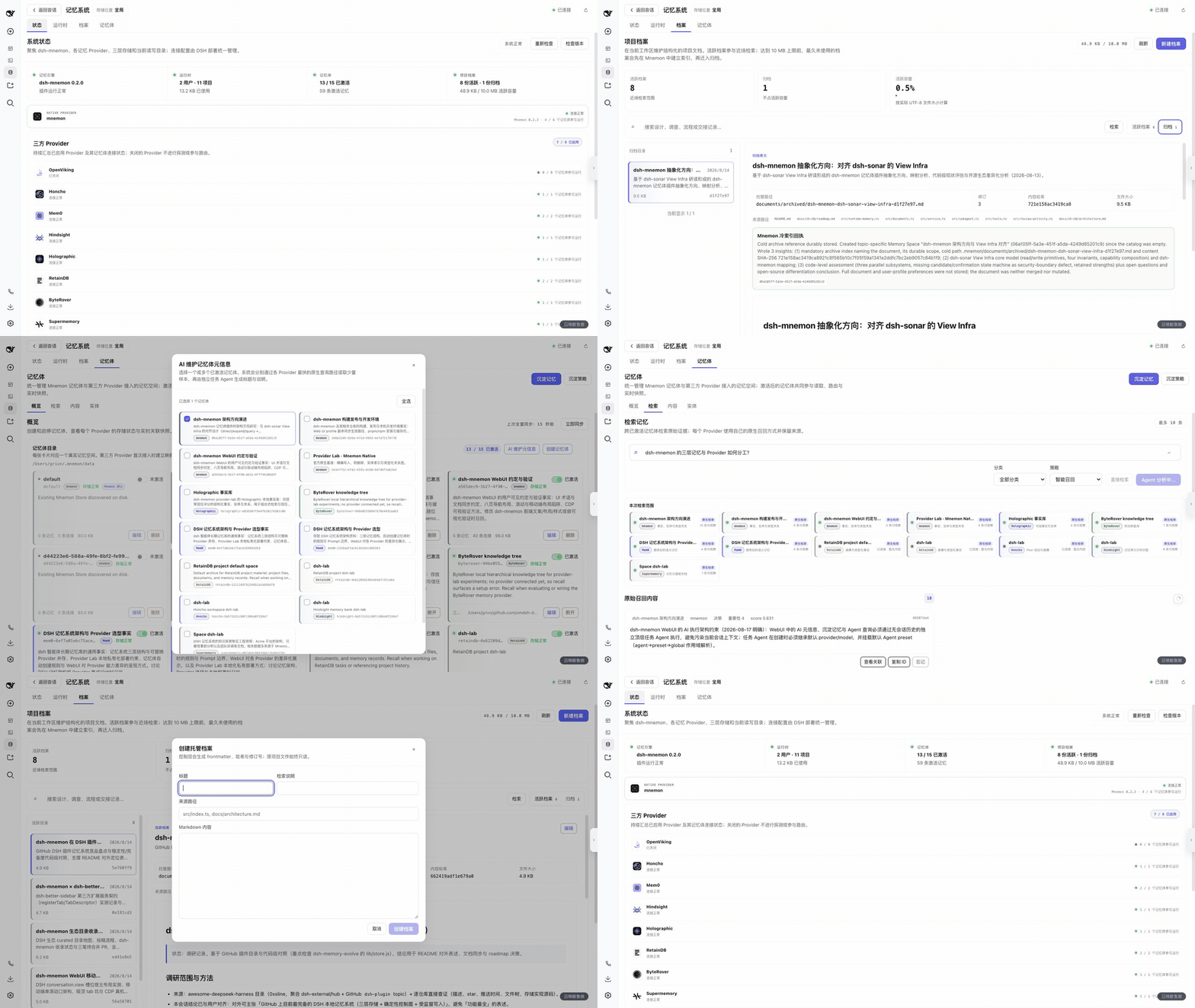
dsh-mnemon is a three-tier, pluggable, Agent-driven memory system for DeepSeek Harness, combining Runtime memory, Project Documents, and replaceable Memory Spaces with nine long-term providers.
An opinionated, zero-infrastructure file-based memory protocol: human-readable markdown files plus a bounded always-loaded index, curation discipline, and no database or embeddings.