dsh-image-reader
Run the following command in DeepSeek Harness:
dsh plugin install zcXie777/dsh-image-reader
Paste the following prompt into your AI chat to install this plugin:
Run dsh plugin install zcXie777/dsh-image-reader in your terminal, then restart the running Web profile to activate the plugin (source repo: https://github.com/zcXie777/dsh-image-reader).
About this plugin
DeepSeek Harness follows the "everything is a plugin" philosophy, but its default agent is text-only—it can reason over prose yet has no way to actually "see" a screenshot, a flow diagram, or a product photo. dsh-image-reader fills exactly that gap: it gives a text-only agent a pair of eyes.
The plugin injects a single model-facing tool, read_image. When the agent passes a workspace image path, the plugin forwards the request to any OpenAI-compatible chat/completions vision endpoint and returns the model's answer (in Chinese or English, per your configuration). It is vendor-agnostic: you supply the base URL and model name in your profile, and the API key is always read from an environment variable—never persisted to disk. On the security side, every path is resolved via realpath to block symlink escapes, with size caps and an extension whitelist enforced before upload.
This plugin is for developers who already run a DeepSeek Harness text-only profile and occasionally need the model to glance at an image—analyzing a UI screenshot, interpreting an architecture diagram, or reading text out of a photo. As long as you have an OpenAI-compatible multimodal endpoint and the matching API key, a few minutes of configuration is all it takes, with no need to switch agent frameworks.
Use Cases
- Ask the agent to diagnose layout issues in a UI screenshot
- Interpret module dependencies in an architecture diagram
- Extract text from a photograph or scanned document
Best For
- Developers running a text-only DeepSeek Harness profile
- Teams that need vision support without switching agent frameworks
- Users with an OpenAI-compatible vision endpoint and API key
Related Plugins
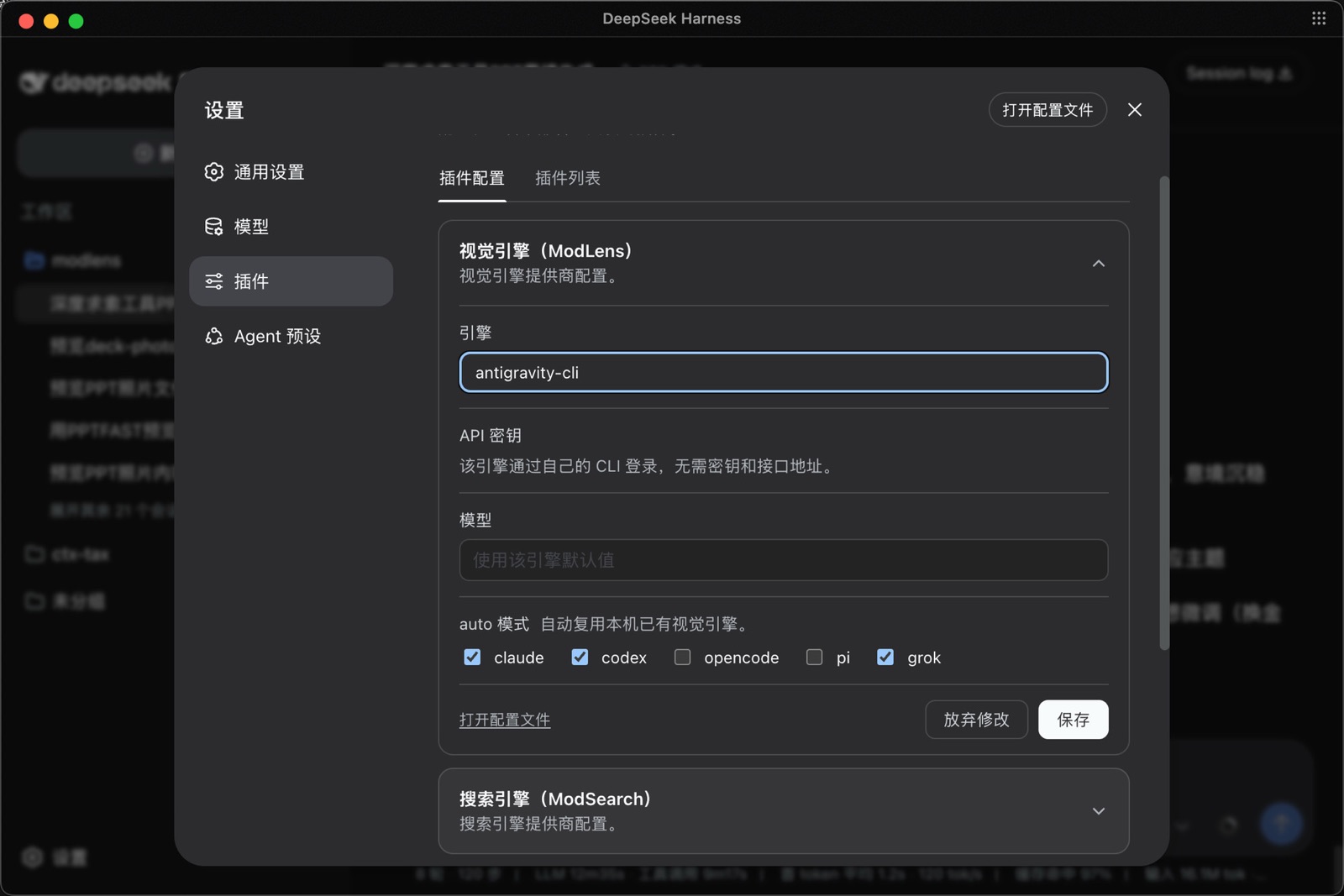
ModLens is a vision plugin for DeepSeek Harness that gives text-only models sight by reading images pasted directly into chat, with zero-config setup and multiple vision engines.
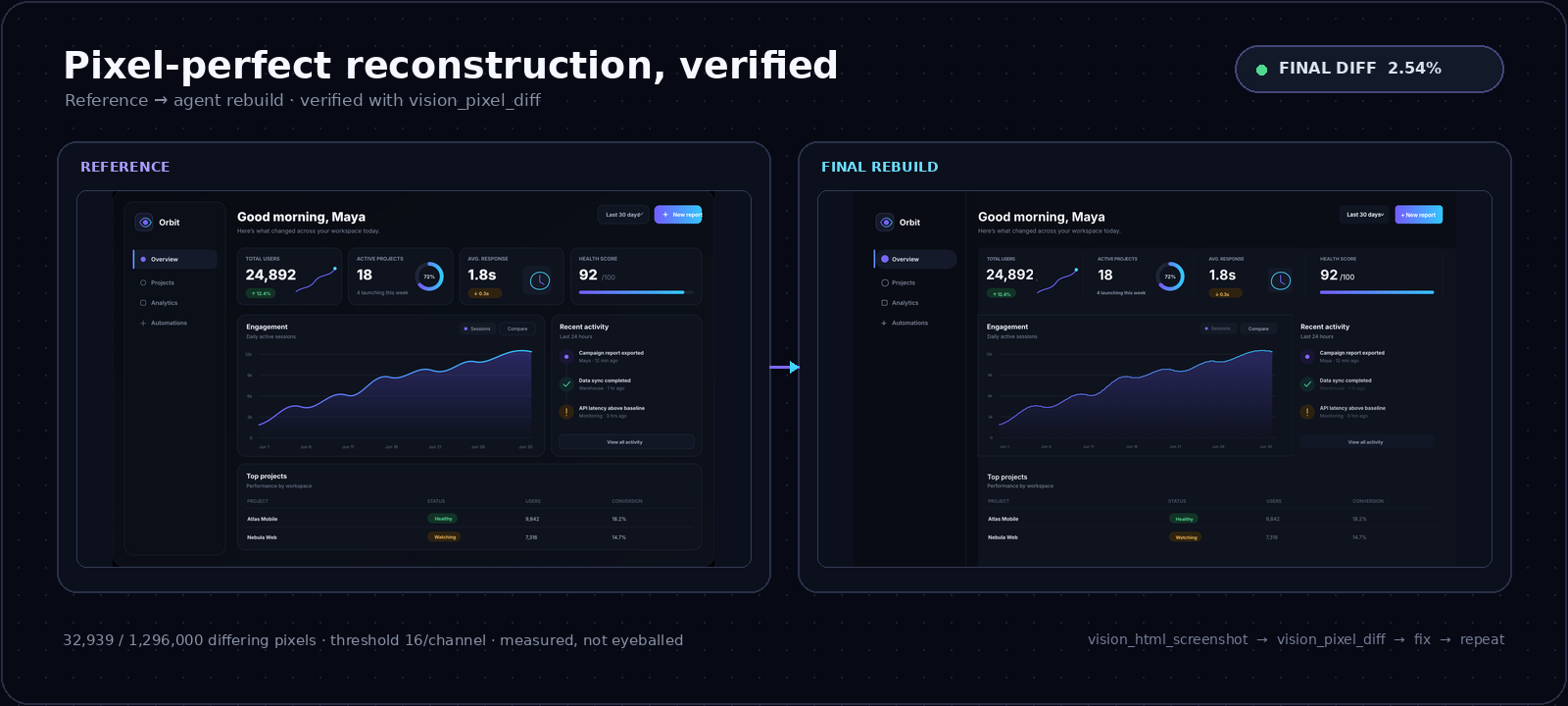
On-demand vision for text-only DeepSeek Harness agents: built-in free keyless vision chain and 14 vision tools, routing image turns as tool calls to vision models with pixel fidelity, no Python needed, one-command install.
Give text-only models in DeepSeek Harness eyes, enabling image Q&A, long-screenshot OCR, UI restoration, and GUI visual tasks.
An armor-breaking plugin for DeepSeek: rewrites instruction priority, expands refusal-blocked phrases, persists across sessions, and shows a green active indicator.