dsh-llm-deepseek-vision
Run the following command in DeepSeek Harness:
dsh plugin install NagasakiSoyo-ui/dsh-llm-deepseek-vision
Paste the following prompt into your AI chat to install this plugin:
Run dsh plugin install NagasakiSoyo-ui/dsh-llm-deepseek-vision in your terminal to install the vision plugin; the full source is available at https://github.com/NagasakiSoyo-ui/dsh-llm-deepseek-vision
About this plugin
DeepSeek v4-flash and v4-pro are powerful pure-text reasoning models, but they simply cannot process images. The dsh-llm-deepseek-vision plugin gives them a pair of eyes, enabling image understanding without touching the text reasoning core.
The mechanism is straightforward: the plugin registers a DeepSeek (Vision) provider route inside Harness. When a request carries no images, traffic passes through to the default text-inference route (opencode-go) with zero overhead. When images are attached, a dedicated vision model (mimo-v2.5 by default) first converts each image into a textual description, and the text model then reasons over those descriptions. The text inference engine never touches raw image bytes, keeping responsibilities clean and decoupled.
Ideal for developers working in the DeepSeek Harness environment who run pure-text models but need multimodal conversation support. The plugin exposes configuration for the vision provider, vision model, description prompt, per-call output token cap, and the delegate inference route, so you can swap in a cheaper or more nuanced vision model to match your cost and accuracy requirements.
Use Cases
- Attaching images to DeepSeek text-model conversations for Q&A
- Understanding user-uploaded screenshots, charts, or photos in context
- Extending a text-only inference stack with image input without modifying the core
Best For
- Developers deploying DeepSeek text-model services via Harness
- Product teams needing image-text mixed chat on top of text-only models
- Engineers who want to swap vision models flexibly to optimize inference cost
Related Plugins
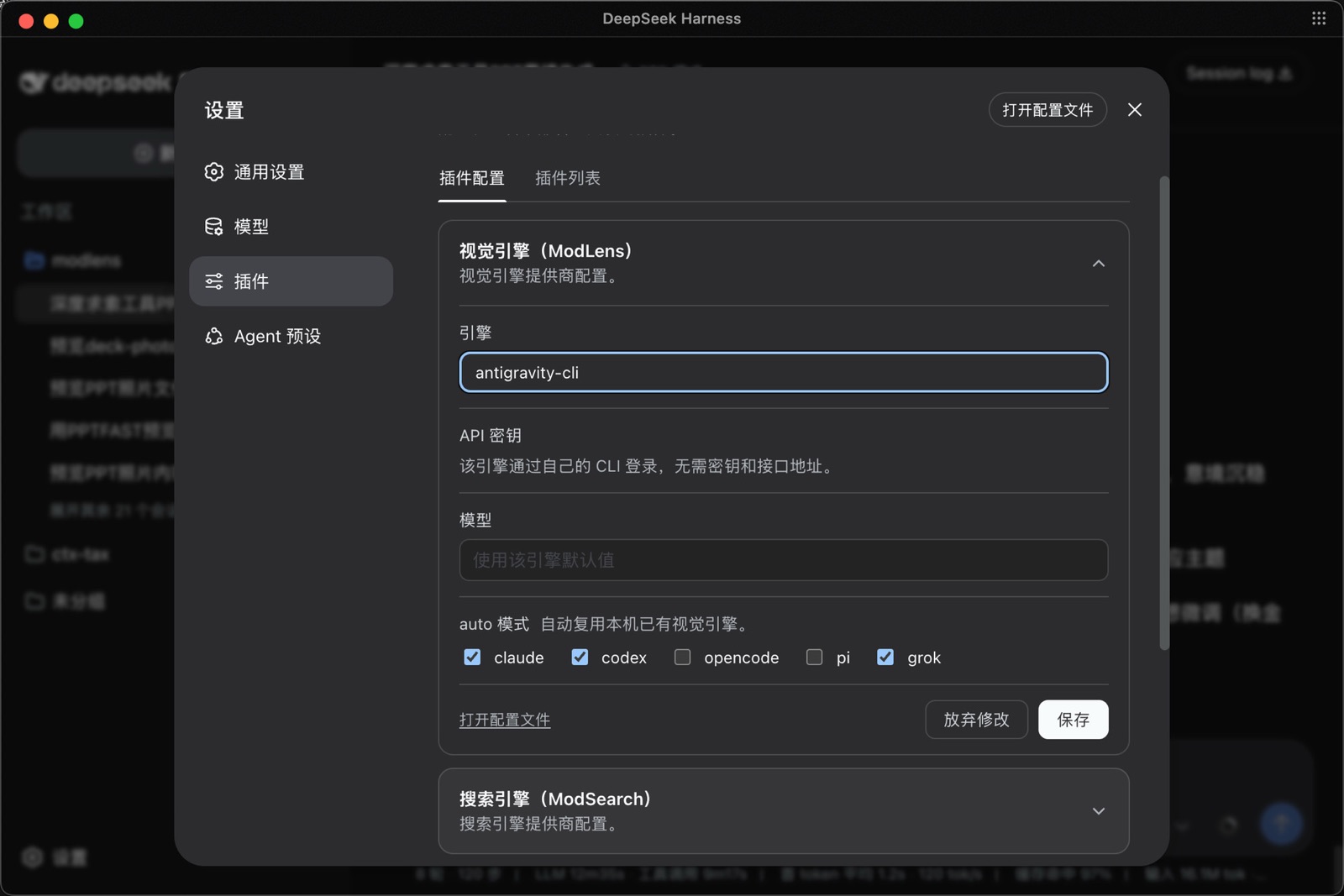
ModLens is a vision plugin for DeepSeek Harness that gives text-only models sight by reading images pasted directly into chat, with zero-config setup and multiple vision engines.
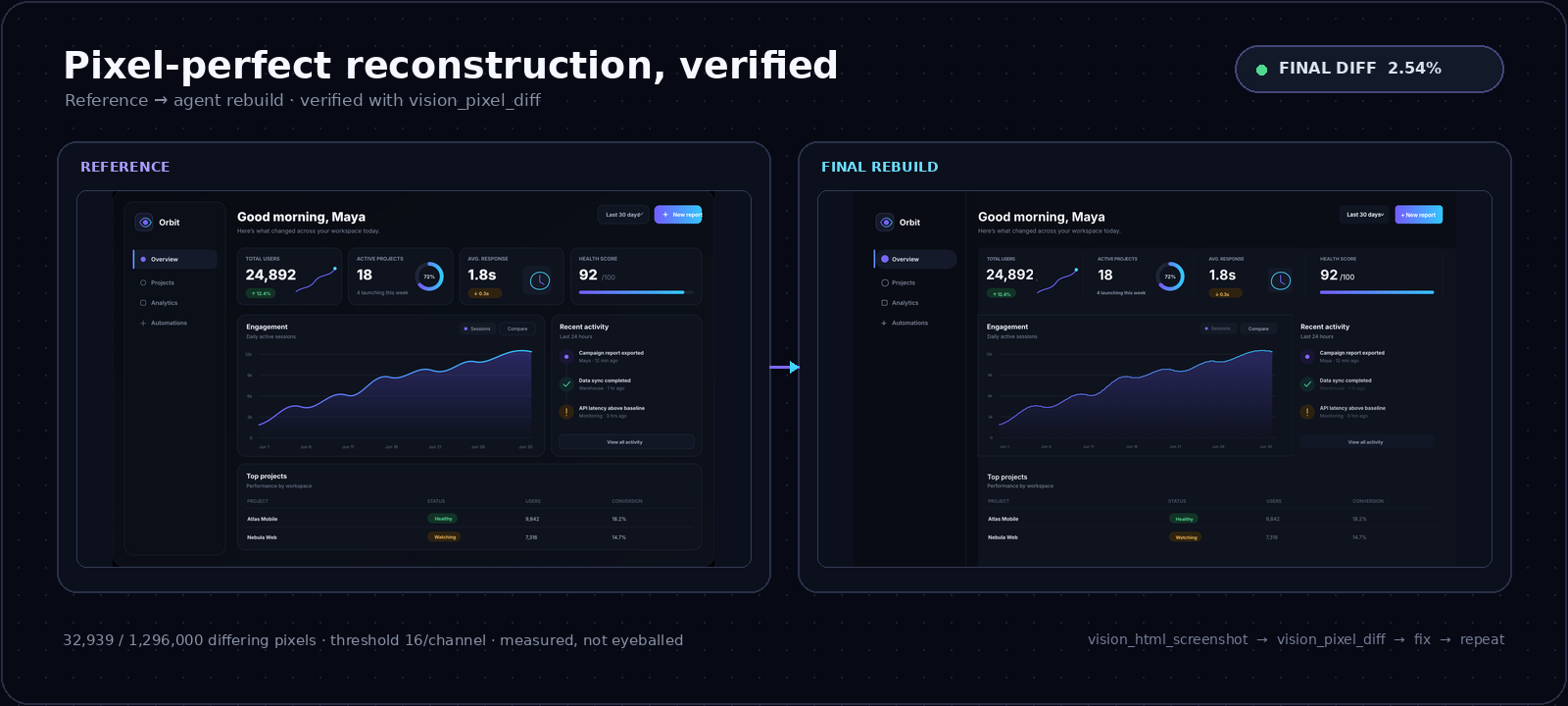
On-demand vision for text-only DeepSeek Harness agents: built-in free keyless vision chain and 14 vision tools, routing image turns as tool calls to vision models with pixel fidelity, no Python needed, one-command install.
Give text-only models in DeepSeek Harness eyes, enabling image Q&A, long-screenshot OCR, UI restoration, and GUI visual tasks.
An armor-breaking plugin for DeepSeek: rewrites instruction priority, expands refusal-blocked phrases, persists across sessions, and shows a green active indicator.