dsh-obsidian-export
Run the following command in DeepSeek Harness:
dsh plugin install xiaomiba0904/dsh-obsidian-export
Paste the following prompt into your AI chat to install this plugin:
Install it in DeepSeek Harness by running dsh plugin install xiaomiba0904/dsh-obsidian-export; source code is available at https://github.com/xiaomiba0904/dsh-obsidian-export . Restart the profile after installation to activate the tools.
About this plugin
DSH conversations normally stay in persistence files, hard to search or link into an existing note base. dsh-obsidian-export turns them into Markdown notes inside an Obsidian vault with no Obsidian client required. Export uses a content-hash manifest for deduplication and supports auto, overwrite, skip, and dry-run modes for safe, idempotent re-exports. The vault side exposes six model-facing tools: note reading with frontmatter and wikilink parsing, full-text or filename search with tag filters, recursive directory listing, aggregated tag counts, and backlink lookup for graph traversal. Built for developers who rely on DSH for daily work and maintain a second brain in Obsidian.
Use Cases
- Export DSH conversations into Obsidian vault notes
- Full-text search and browse vault notes within a conversation
- Traverse knowledge graph relationships via backlinks
Best For
- Developers who manage personal notes with Obsidian
- Users who rely on DSH for daily coding or research
- Practitioners who want AI conversations integrated into their knowledge base
Related Plugins

Traceable, searchable cross-session memory for AI agents that turns conversation knowledge into a typed knowledge graph and recalls relevant subgraphs instead of replaying full history, natively integrated with DeepSeek Harness.
Gives DSH AI cross-session long-term memory, to-do and skill management, plus multi-session orchestration, external AI delegation, and an infinite canvas that grows with you.
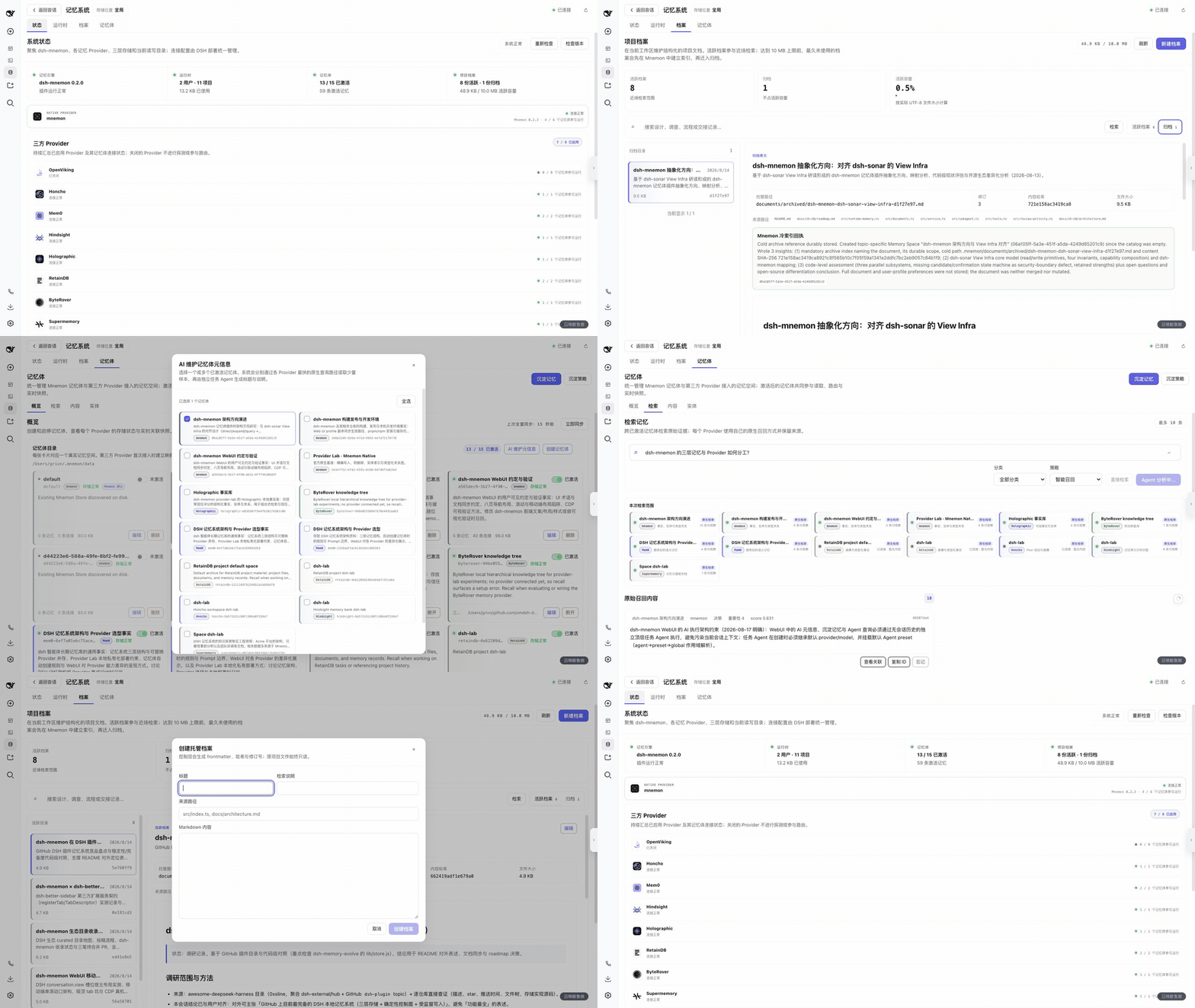
dsh-mnemon is a three-tier, pluggable, Agent-driven memory system for DeepSeek Harness, combining Runtime memory, Project Documents, and replaceable Memory Spaces with nine long-term providers.
An opinionated, zero-infrastructure file-based memory protocol: human-readable markdown files plus a bounded always-loaded index, curation discipline, and no database or embeddings.