dsh-opencode-go-provider
Run the following command in DeepSeek Harness:
dsh plugin install edynasty/dsh-opencode-go-provider
Paste the following prompt into your AI chat to install this plugin:
Install from https://github.com/edynasty/dsh-opencode-go-provider as a commit-pinned Git dependency into the DeepSeek Harness web profile by running dsh plugin install edynasty/dsh-opencode-go-provider to mount the opencode-go model route.
About this plugin
The DeepSeek Harness web profile already ships a basic opencode-go provider entry, but it offers only a minimal catalog and a thin forward. If you need to call OpenAI, Anthropic, and other protocol models through the OpenCode Go gateway without losing your model list every time the network hiccups, dsh-opencode-go-provider was built for exactly that. It adopts the existing route with its own adapter, dispatching per model to openai-responses, openai-completions, or anthropic-messages based on real models.dev metadata- no name-prefix guessing, no fragile heuristics.
The standout capability is the stale-while-revalidate model catalog. An embedded catalog is available at boot with zero network and zero credentials. Within a five-minute freshness window reads never touch the network; a sixty-minute background refresh revalidates with a ten-second timeout and atomic cache writes. When the network is down or the cache file is corrupt, the system falls back gracefully to the embedded catalog, and the corrupt file is never deleted. Models known to models.dev but temporarily absent from the live endpoint stay selectable under a fourteen-day deprecation grace window before eviction. The entire lifecycle keeps the catalog available, consistent, and safe under offline, degraded-network, and upstream-flakiness conditions.
On the security front, the API key lives exclusively in the DSH credentials service and is never echoed, rendered, or written to settings, logs, or the package. Test connection issues exactly one authenticated GET and never calls generation endpoints. The Web Connect settings card lets non-command-line users connect, run diagnostics, and disconnect with a few clicks. If you previously hand-configured llm-pi-ai.providers.opencode-go, the built-in migration-dry-run and migration-apply tools migrate the block safely while preserving comments, quoting, key order, and every other provider entry.
Built for DeepSeek Harness rc.6 users who want a single OpenCode Go route covering multiple protocols, an always-available offline catalog, and airtight credential separation.
Use Cases
- Call OpenAI, Anthropic, and other protocol models through a single OpenCode Go route without per-vendor setup
- Access the model catalog offline or over a flaky network via the embedded catalog and stale-while-revalidate cache
- Migrate a hand-written llm-pi-ai.providers.opencode-go block to the bundle route safely
Best For
- Developers running DeepSeek Harness rc.6 with the web profile
- Teams that need multi-protocol model routing with strict credential isolation and safe diagnostics
- Users who prefer a Web settings card for LLM connection management over pure CLI
Related Plugins
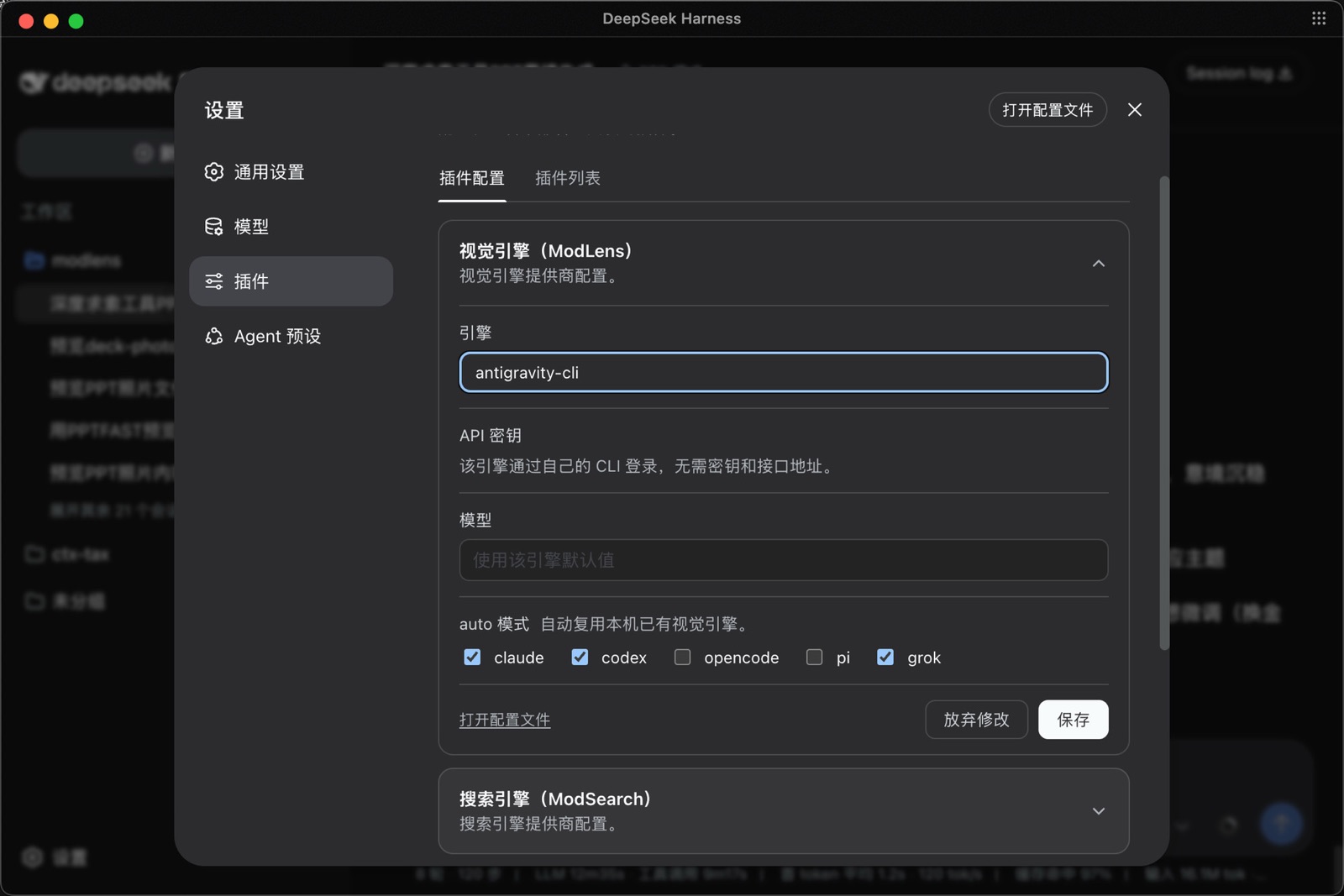
ModLens is a vision plugin for DeepSeek Harness that gives text-only models sight by reading images pasted directly into chat, with zero-config setup and multiple vision engines.
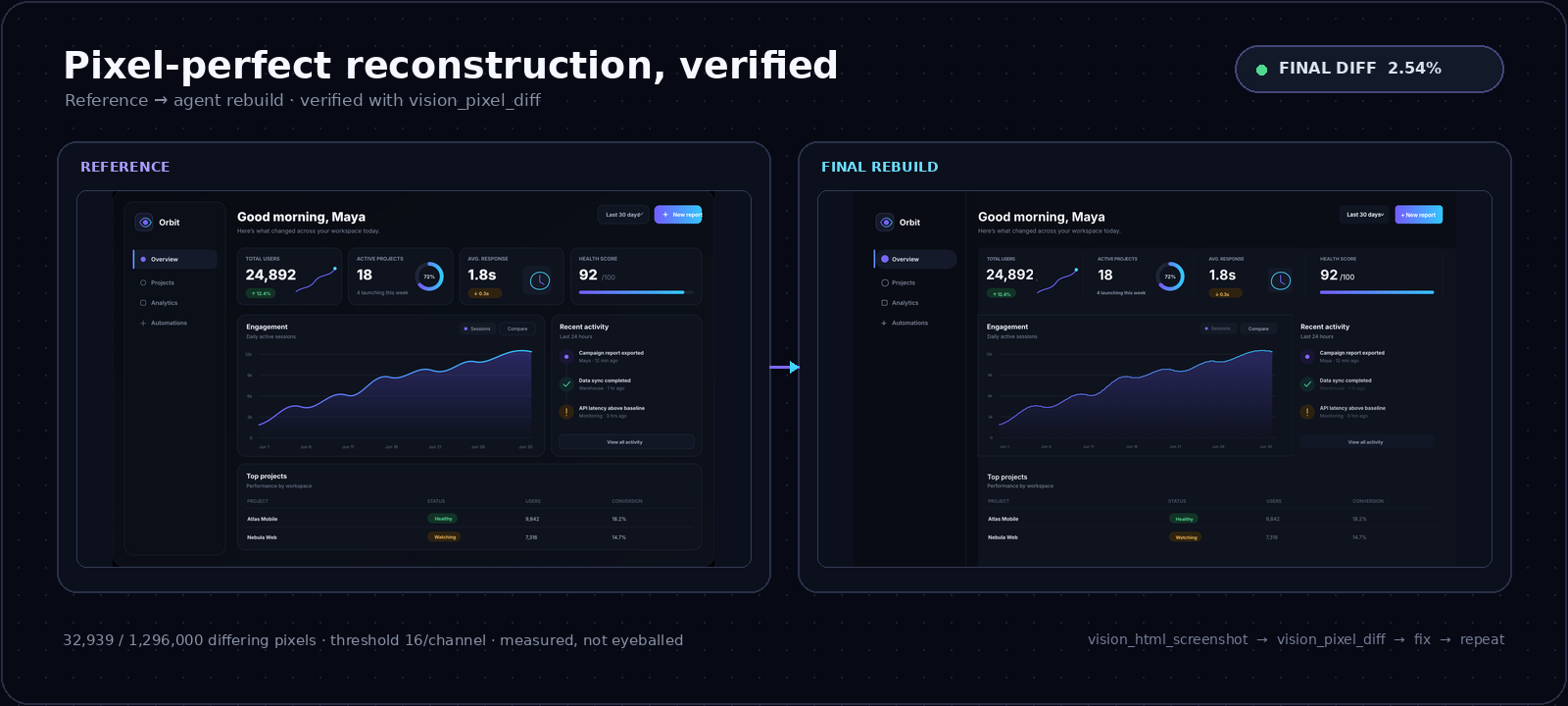
On-demand vision for text-only DeepSeek Harness agents: built-in free keyless vision chain and 14 vision tools, routing image turns as tool calls to vision models with pixel fidelity, no Python needed, one-command install.
Give text-only models in DeepSeek Harness eyes, enabling image Q&A, long-screenshot OCR, UI restoration, and GUI visual tasks.
An armor-breaking plugin for DeepSeek: rewrites instruction priority, expands refusal-blocked phrases, persists across sessions, and shows a green active indicator.