dsh-voice-mic
Run the following command in DeepSeek Harness:
dsh plugin install Zachary7456/dsh-voice-mic
Paste the following prompt into your AI chat to install this plugin:
Run dsh plugin install Zachary7456/dsh-voice-mic in your terminal to install; the source repository is at https://github.com/Zachary7456/dsh-voice-mic . After installation, restart dsh web to see the microphone button beside the input field.
About this plugin
Writing long prompts in the DeepSeek Harness Web GUI means typing every single character by hand. dsh-voice-mic removes that friction: tap the microphone button, speak, and watch recognition results stream into the input draft in real time. When you stop recording the text stays put with no auto-send, so you can review and edit before hitting enter.
Three transcription engines share one recording-and-display pipeline. The browser engine needs zero setup via Web Speech API. The local offline backend lets you deploy SenseVoice or Paraformer with a single click; audio never leaves your machine. The cloud engine speaks the OpenAI-compatible /v1/audio/transcriptions protocol, with presets for OpenAI, Groq, and SiliconFlow. Across all three, the tail-replacement strategy only updates the newest suffix so your manual edits are never overwritten, and errors trigger an automatic rollback.
Built for prompt engineers who type long instructions in a web UI, privacy-first users who want speech data to stay local, and teams that prefer a third-party ASR backend. Once installed and dsh web is restarted, a microphone icon appears beside the input field, invocable with Alt+V (rebindable in settings).
Use Cases
- Dictate long prompts in the web console instead of typing them out
- Run fully on-device transcription with SenseVoice or Paraformer for privacy
- Connect to Groq, SiliconFlow, or any OpenAI-compatible transcription API
Best For
- Prompt engineers who compose long instructions at high frequency
- Privacy-first users who want all audio to stay on their machine
- Developers standardizing on third-party ASR backends
Related Plugins
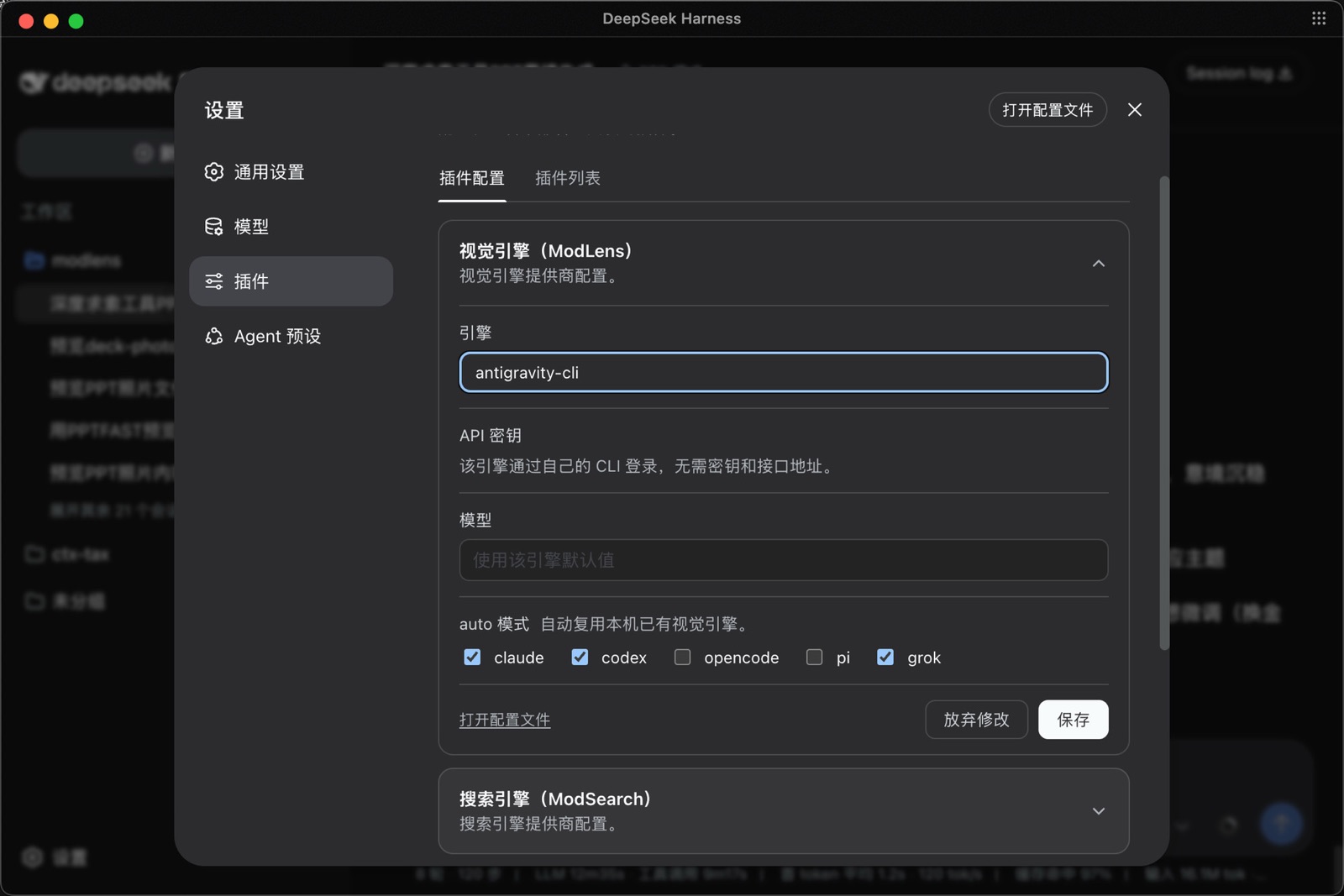
ModLens is a vision plugin for DeepSeek Harness that gives text-only models sight by reading images pasted directly into chat, with zero-config setup and multiple vision engines.
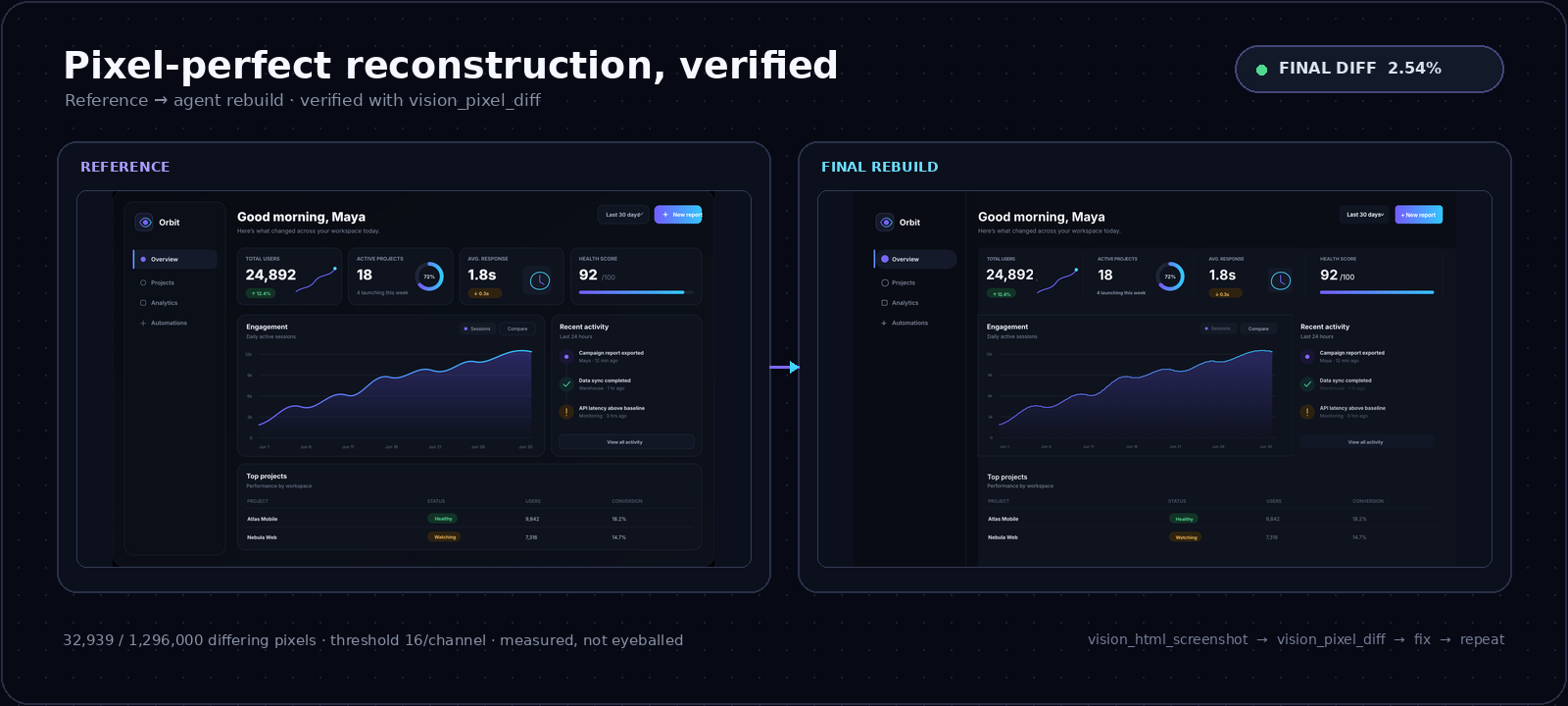
On-demand vision for text-only DeepSeek Harness agents: built-in free keyless vision chain and 14 vision tools, routing image turns as tool calls to vision models with pixel fidelity, no Python needed, one-command install.
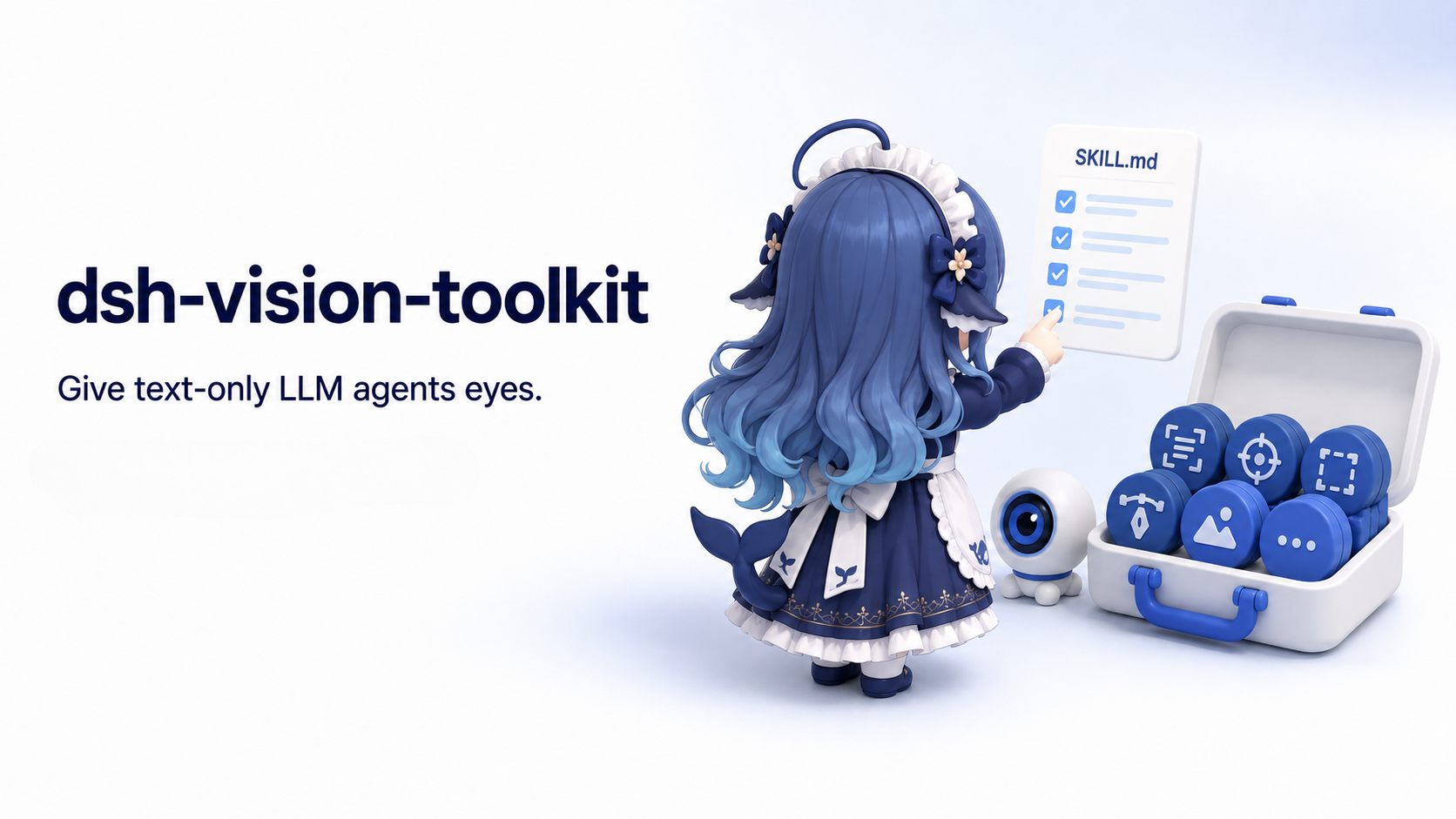
Give text-only models in DeepSeek Harness eyes, enabling image Q&A, long-screenshot OCR, UI restoration, and GUI visual tasks.
An armor-breaking plugin for DeepSeek: rewrites instruction priority, expands refusal-blocked phrases, persists across sessions, and shows a green active indicator.