dsh-vision-proxy
Run the following command in DeepSeek Harness:
dsh plugin install Flyvhidbwo/dsh-vision-proxy
Paste the following prompt into your AI chat to install this plugin:
To install this plugin in DeepSeek Harness, specify the full source repository https://github.com/Flyvhidbwo/dsh-vision-proxy.
About this plugin
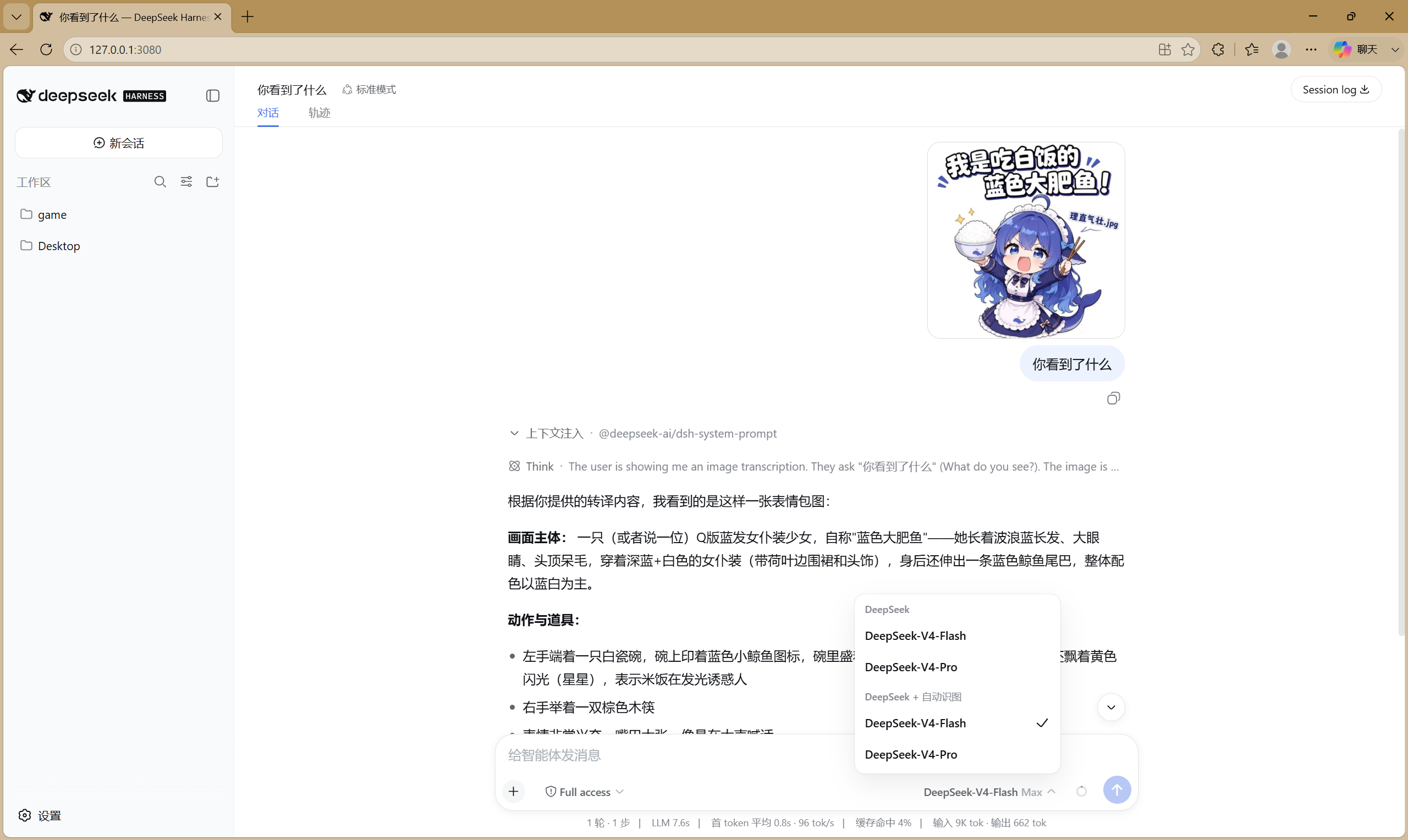
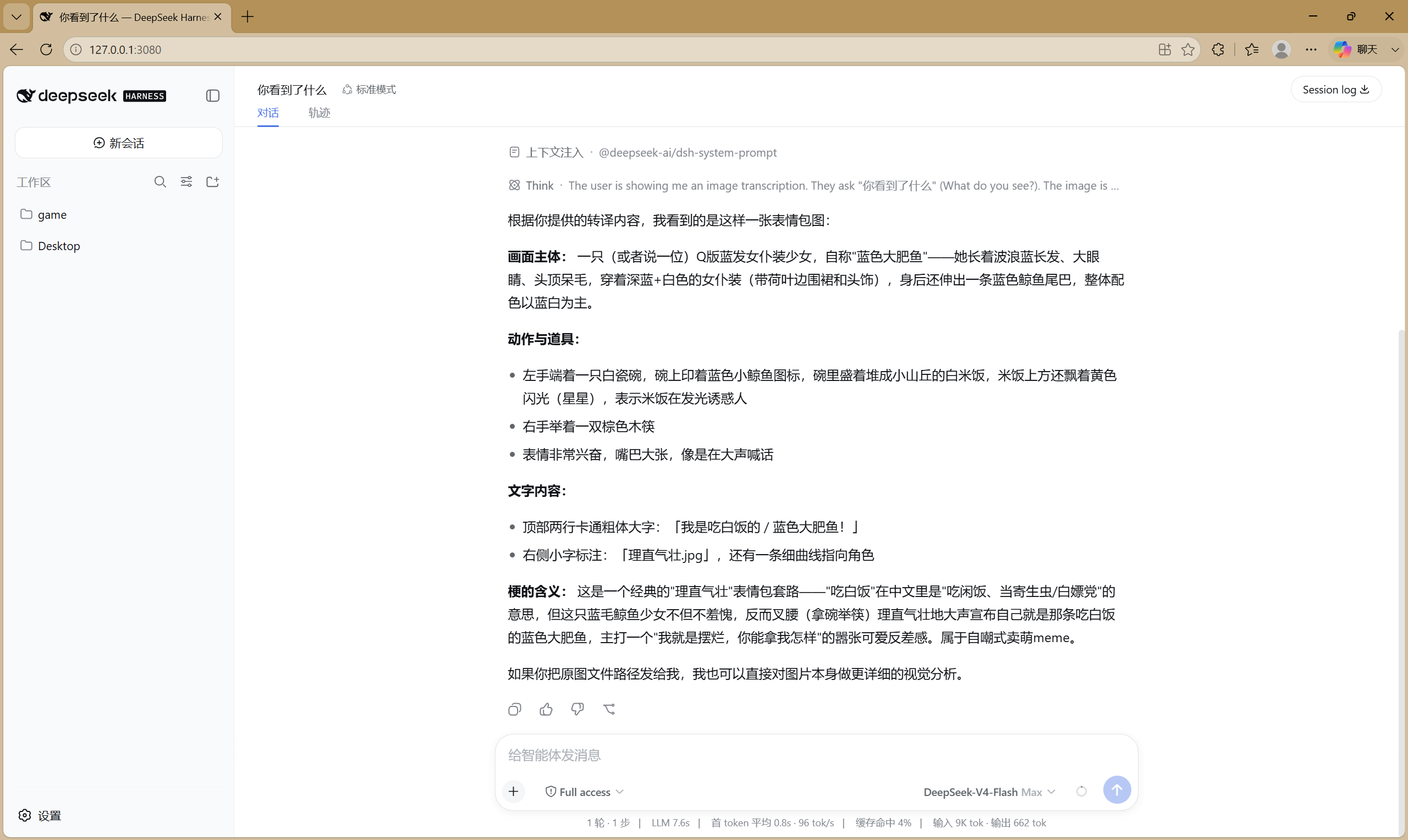
When a plain-text DeepSeek model is selected in DeepSeek Harness, image attachments from the GUI are usually rejected before the model ever sees them. dsh-vision-proxy fills this gap by registering a visual proxy route that accepts image input, converts each attached image into descriptive text, and then hands the conversation to DeepSeek. The chat model remains the main brain; vision is only an added bridge.
Its core strengths are reliability and flexibility. It can auto-detect a local Ollama service for a zero-config, privacy-friendly path where images never leave the machine. It also supports any OpenAI-compatible vision endpoint, allowing fallback chains across Bailian, Zhipu, OpenRouter, self-hosted gateways, and more. Anonymous endpoints are constrained by strict timeouts, fast failure on rate limits, and cooldown handling, while translation results are cached by image content to avoid repeated work.
This plugin is best for users who still want DeepSeek as their main text model but need image attachments to work in the web UI. It also fits users who prefer local VLMs for private screenshots or already operate custom OpenAI-compatible vision services. If you are using an official multimodal DeepSeek vision model directly, this translation bridge is not necessary.
Screenshots
Use Cases
- Paste images into a plain-text DeepSeek route and translate them automatically
- Use local Ollama for sensitive screenshots without sending images to remote APIs
- Build vision fallback chains across multiple OpenAI-compatible VLM providers
Best For
- Users who keep DeepSeek as the main chat model
- Users who need private local image understanding
- Users with existing OpenAI-compatible vision endpoints
Related Plugins
A unified suite combining hot runtime injection, task-aware thinking-mode routing, and a graded session protocol with red-team gates to sustain model diligence across long-horizon inference.
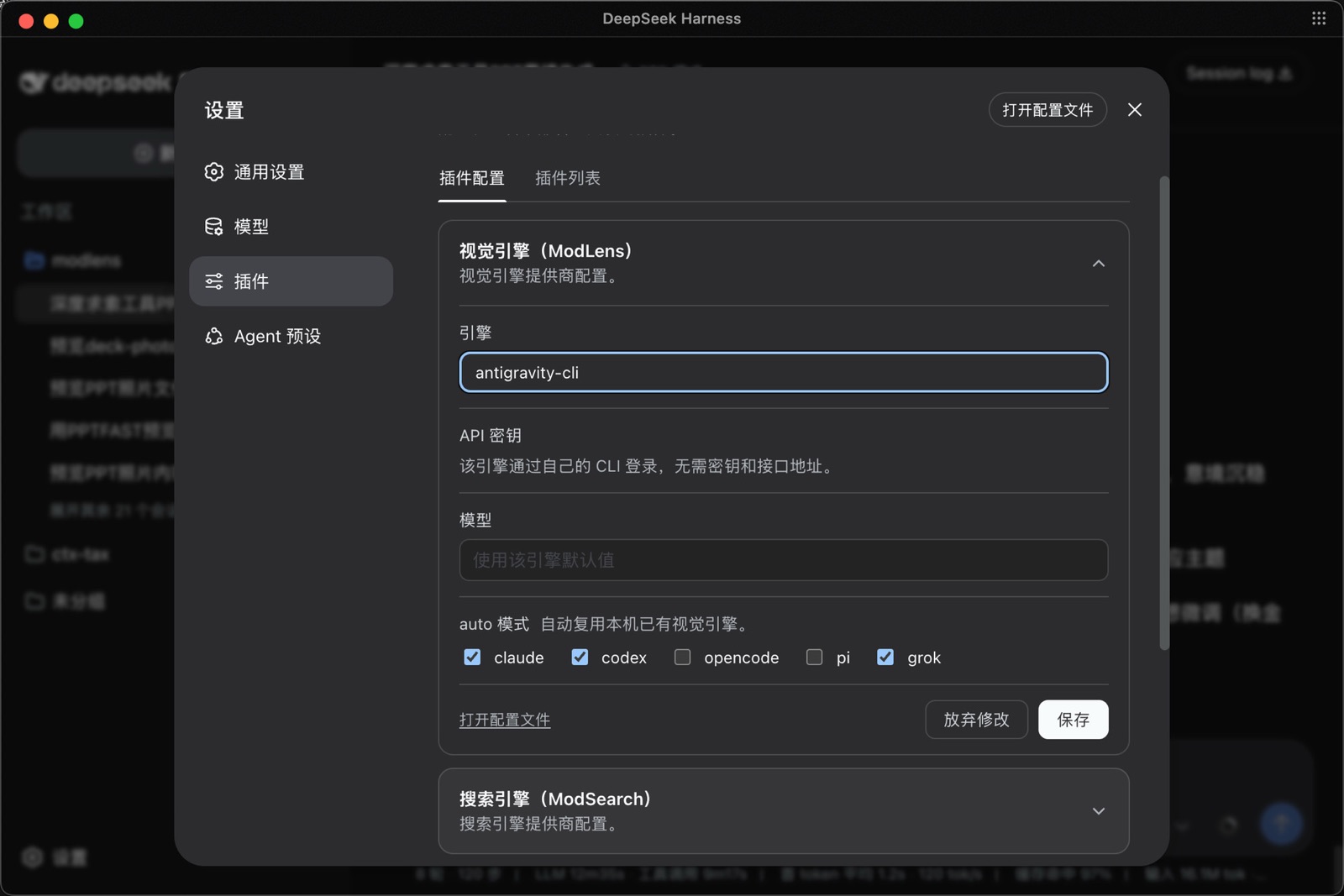
ModLens is a vision plugin for DeepSeek Harness that gives text-only models sight by reading images pasted directly into chat, with zero-config setup and multiple vision engines.
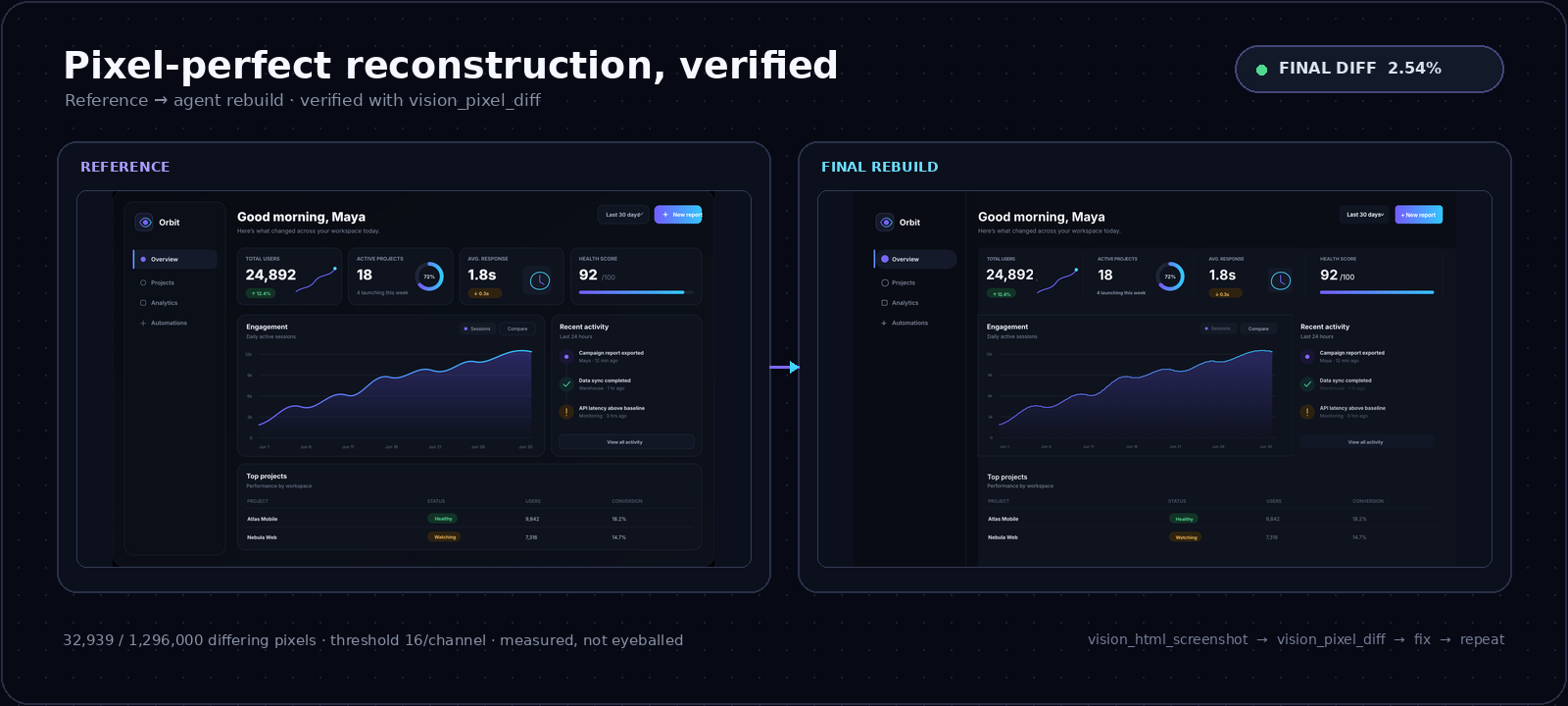
On-demand vision for text-only DeepSeek Harness agents: built-in free keyless vision chain and 14 vision tools, routing image turns as tool calls to vision models with pixel fidelity, no Python needed, one-command install.
Give text-only models in DeepSeek Harness eyes, enabling image Q&A, long-screenshot OCR, UI restoration, and GUI visual tasks.