dsh-chatgpt-codex
Run the following command in DeepSeek Harness:
dsh plugin install sudipnext/dsh-chatgpt-codex
Paste the following prompt into your AI chat to install this plugin:
Run dsh plugin install sudipnext/dsh-chatgpt-codex inside DeepSeek Harness to install the plugin; the source repository is hosted at https://github.com/sudipnext/dsh-chatgpt-codex .
About this plugin
DeepSeek Harness has no built-in ChatGPT OAuth on its main model route, so anyone who wants to call Codex-family models (GPT-5.6 Luna, Terra, Sol, and earlier) from DSH is currently limited to a one-shot subagent path or a separate OpenAI API key. dsh-chatgpt-codex closes that gap by wiring the ChatGPT credential flow and the Codex Responses streaming interface directly into the native DSH message-and-tool protocol with zero API keys and no pi-ai runtime dependency.
The plugin supports both browser PKCE callbacks and headless device-code login, handles automatic token refresh with cross-process rotation locks, and stores credentials atomically at 0600 under a dedicated DSH directory. On the response side it streams text, reasoning summaries, function calls, images, usage metrics, and finish reasons, while encrypted reasoning-item replay keeps multi-turn Codex sessions coherent. The bundled model catalog covers the current GPT-5.6 and GPT-5.5/5.4 families; actual availability depends on your ChatGPT subscription tier and workspace policy.
It is well suited for developers who want to use a ChatGPT subscription as their primary DSH model, particularly those working over SSH, inside Docker containers, or other headless setups where juggling extra API keys is unwanted friction.
Use Cases
- Use Codex-family models as the primary DSH model without an OpenAI API key
- Authenticate via device code in headless SSH or Docker environments
- Maintain multi-turn Codex session coherence through encrypted reasoning replay
Best For
- DSH users who prefer a ChatGPT subscription over an OpenAI API key
- Developers working in headless environments like SSH or Docker
- Teams integrating Codex models into their DSH workflow
Related Plugins
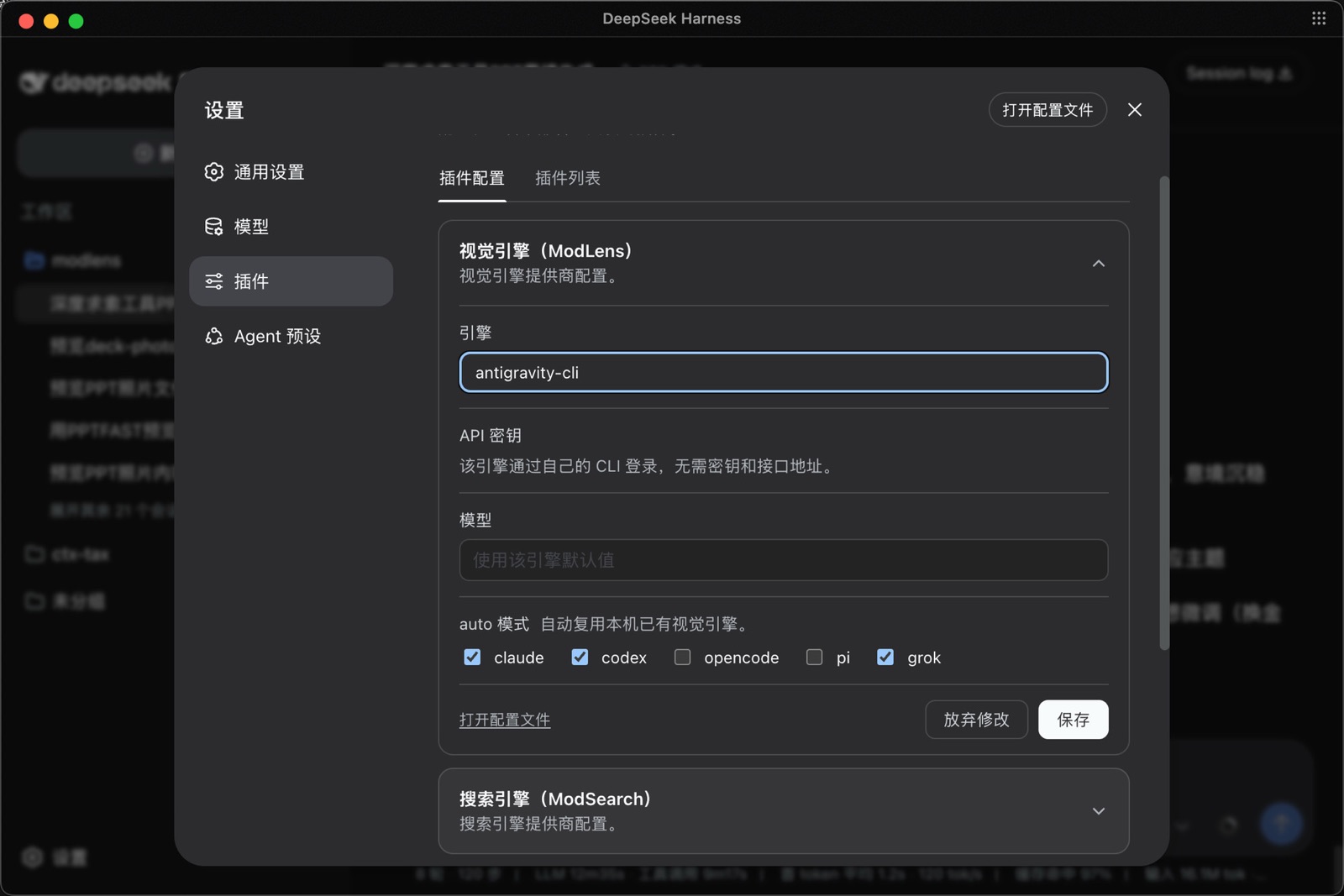
ModLens is a vision plugin for DeepSeek Harness that gives text-only models sight by reading images pasted directly into chat, with zero-config setup and multiple vision engines.
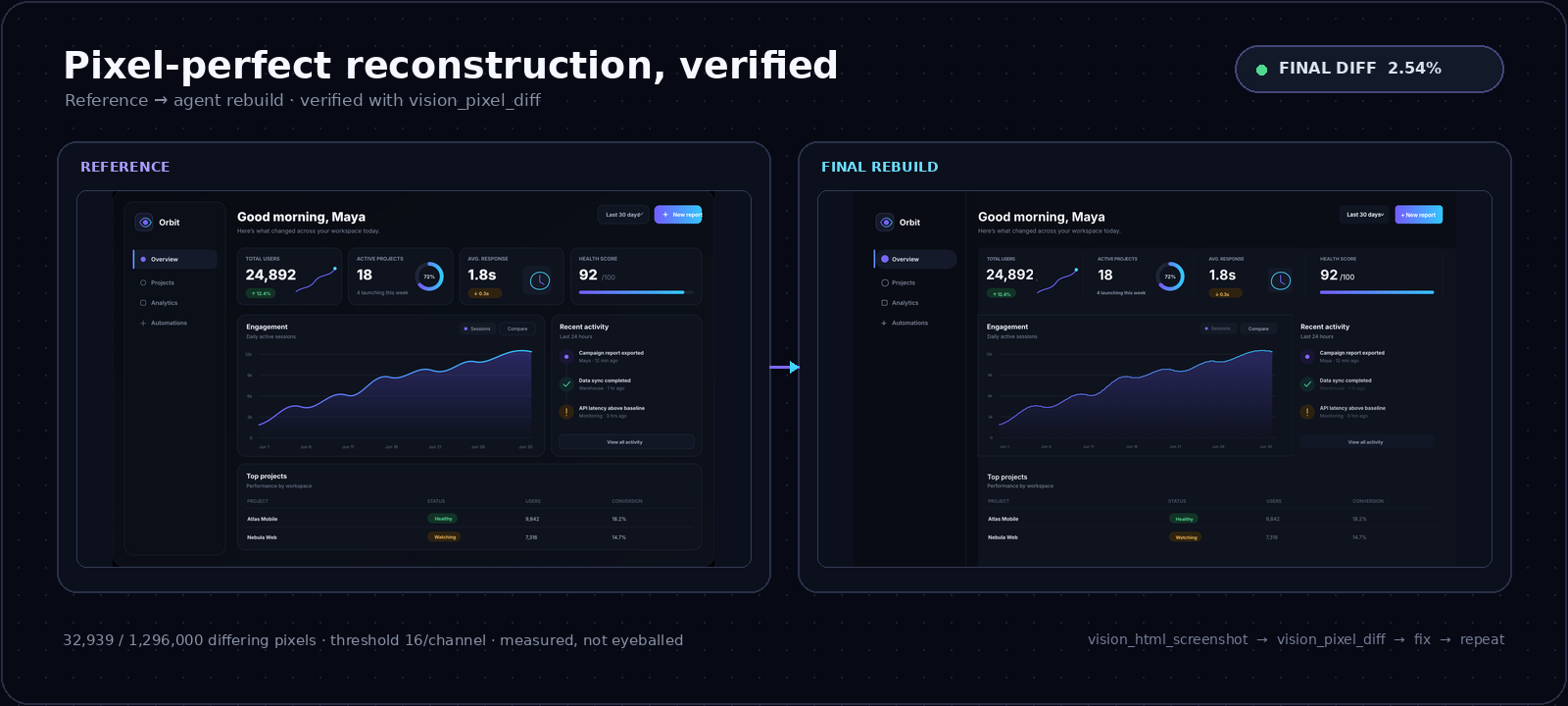
On-demand vision for text-only DeepSeek Harness agents: built-in free keyless vision chain and 14 vision tools, routing image turns as tool calls to vision models with pixel fidelity, no Python needed, one-command install.
Give text-only models in DeepSeek Harness eyes, enabling image Q&A, long-screenshot OCR, UI restoration, and GUI visual tasks.
An armor-breaking plugin for DeepSeek: rewrites instruction priority, expands refusal-blocked phrases, persists across sessions, and shows a green active indicator.