dsh-genie
Run the following command in DeepSeek Harness:
dsh plugin install swaylq/dsh-genie
Paste the following prompt into your AI chat to install this plugin:
Run the installation command in DeepSeek Harness to get this plugin, source code at https://github.com/swaylq/dsh-genie。
About this plugin
DeepSeek Harness's Cordis toolset allows agents to write plugins on the fly, but these dynamic packages vanish upon session restart. dsh-genie fills this missing half by compressing a standard development workflow into a single tool call, persisting agent-validated code from memory to disk. The plugin shines with its minimalist operation: no pnpm, no network, and no build authorization required. Every "wish" is simply a standard directory on the filesystem, containing a package. and cordis.patch.yml. Developers can read, edit, or even push these to a repository. By cleverly leveraging Node.js's module resolution, it symlinks generated code into Harness's configuration, ensuring it activates automatically on the next boot.
Use Cases
- Code written by the agent remains usable after a restart.
- Save plugin configurations defined by the AI to avoid re-development.
- Convert temporarily generated tools from the agent into permanent system components.
Best For
- DeepSeek Harness plugin developers
- Users needing to save AI-generated outputs
- Advanced users pursuing highly customized workflows
Related Plugins
Traceable, searchable cross-session memory for AI agents that turns conversation knowledge into a typed knowledge graph and recalls relevant subgraphs instead of replaying full history, natively integrated with DeepSeek Harness.
Gives DSH AI cross-session long-term memory, to-do and skill management, plus multi-session orchestration, external AI delegation, and an infinite canvas that grows with you.
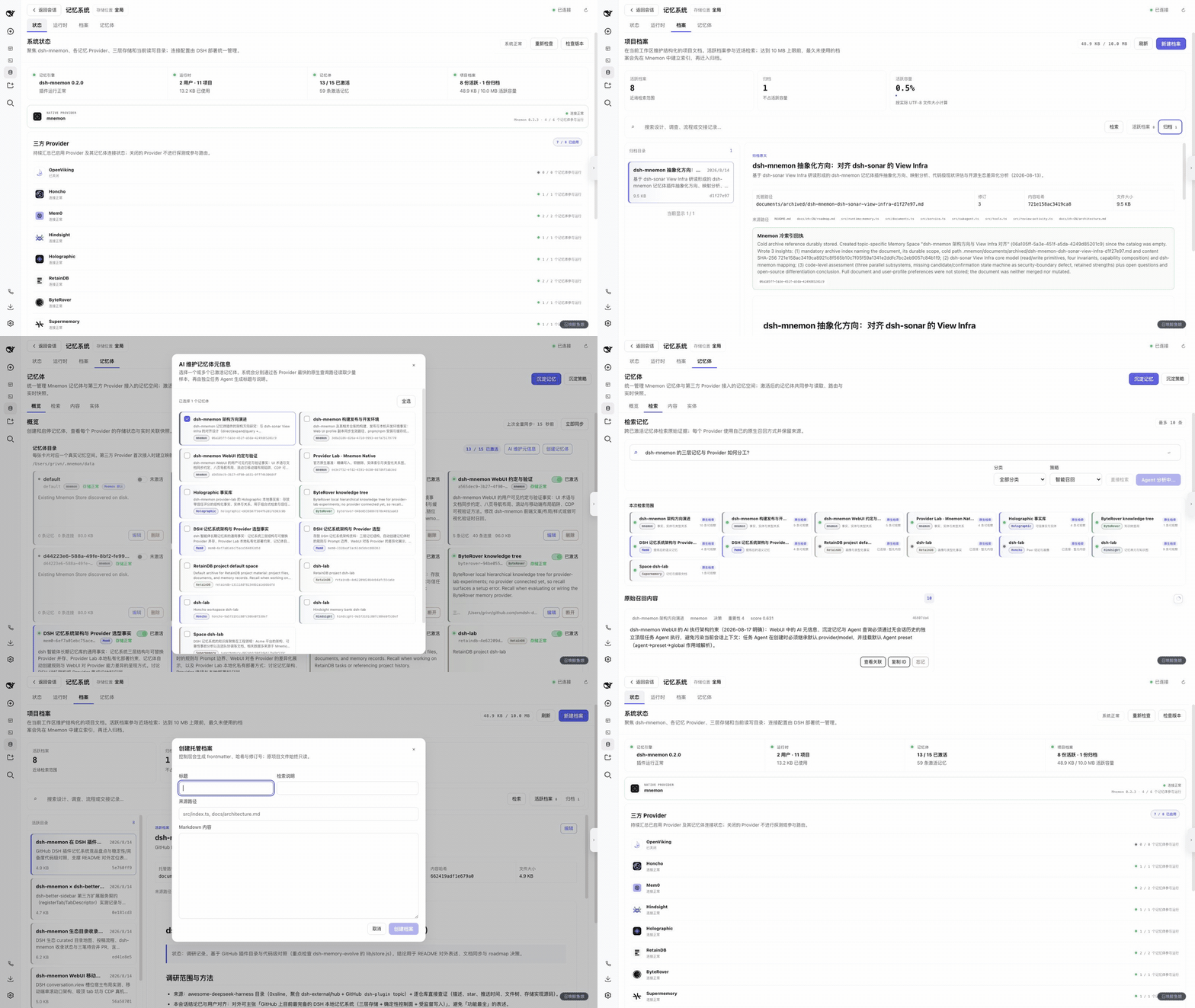
dsh-mnemon is a three-tier, pluggable, Agent-driven memory system for DeepSeek Harness, combining Runtime memory, Project Documents, and replaceable Memory Spaces with nine long-term providers.
An opinionated, zero-infrastructure file-based memory protocol: human-readable markdown files plus a bounded always-loaded index, curation discipline, and no database or embeddings.