
dsh-memflow
Run the following command in DeepSeek Harness:
dsh plugin install crwsr124/dsh-memflow
Paste the following prompt into your AI chat to install this plugin:
To install the dsh-memflow plugin in DeepSeek Harness, please visit its open source address https://github.com/crwsr124/dsh-memflow to proceed.
About this plugin
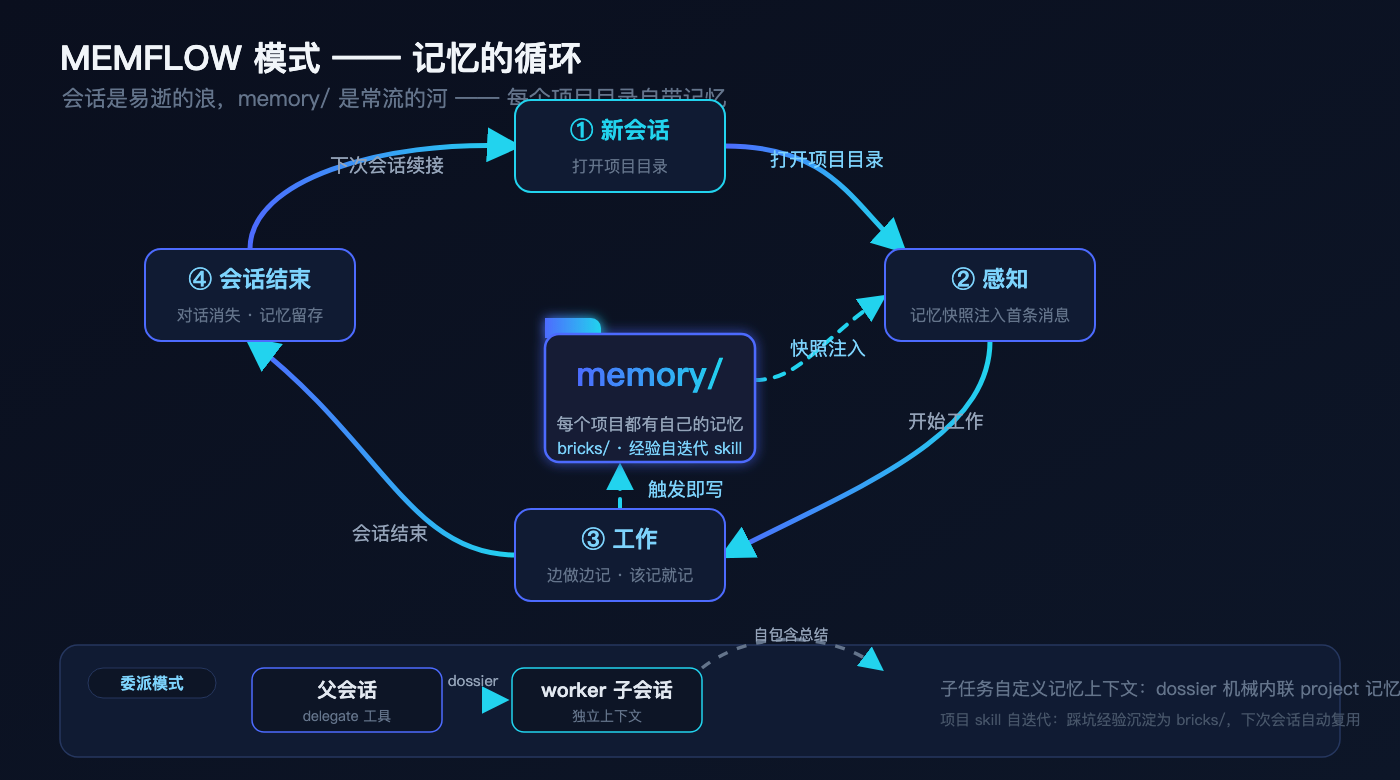
A common pain point in AI interaction is that session closure often means the permanent loss of critical state and decisions. This "ephemeral" nature can be frustrating for complex projects requiring long-term context and continuity. dsh-memflow aims to solve this by transforming DeepSeek Harness into an agent with persistent memory capabilities, ensuring project state exists beyond individual conversation sessions.
The core lies in its innovative distributed memory architecture. Each working directory owns its own memory/ folder, acting as an independent knowledge base for the project. When a session begins, it mechanically loads the current memory snapshot and updates in real-time throughout the process—capturing task completions, state changes, and key decisions without manual intervention. This "sense-first, record-as-you-go" workflow eliminates the need for manual saving, ensuring any new session can seamlessly restore previous work progress.
Whether managing multi-step development tasks or coordinating complex subtasks, MEMFLOW provides a "Hermes-like" memory capability for all workflows. Through its flexible protocol variables and delegation tools, it allows AI tools to seamlessly spawn sub-agents in the background while inheriting the project's full memory context. It is an essential tool for engineers and developers looking to upgrade their AI agents into efficient teams with long-term context and memory.
Screenshots
Use Cases
- Maintain project context across sessions
- Manage complex subtasks requiring memory
- Automatically record AI decisions and state changes
Best For
- Technical developers needing long-term context
- Engineers optimizing AI workflows and agent collaboration
- Teams managing complex multi-step tasks
Related Plugins
Traceable, searchable cross-session memory for AI agents that turns conversation knowledge into a typed knowledge graph and recalls relevant subgraphs instead of replaying full history, natively integrated with DeepSeek Harness.
Gives DSH AI cross-session long-term memory, to-do and skill management, plus multi-session orchestration, external AI delegation, and an infinite canvas that grows with you.
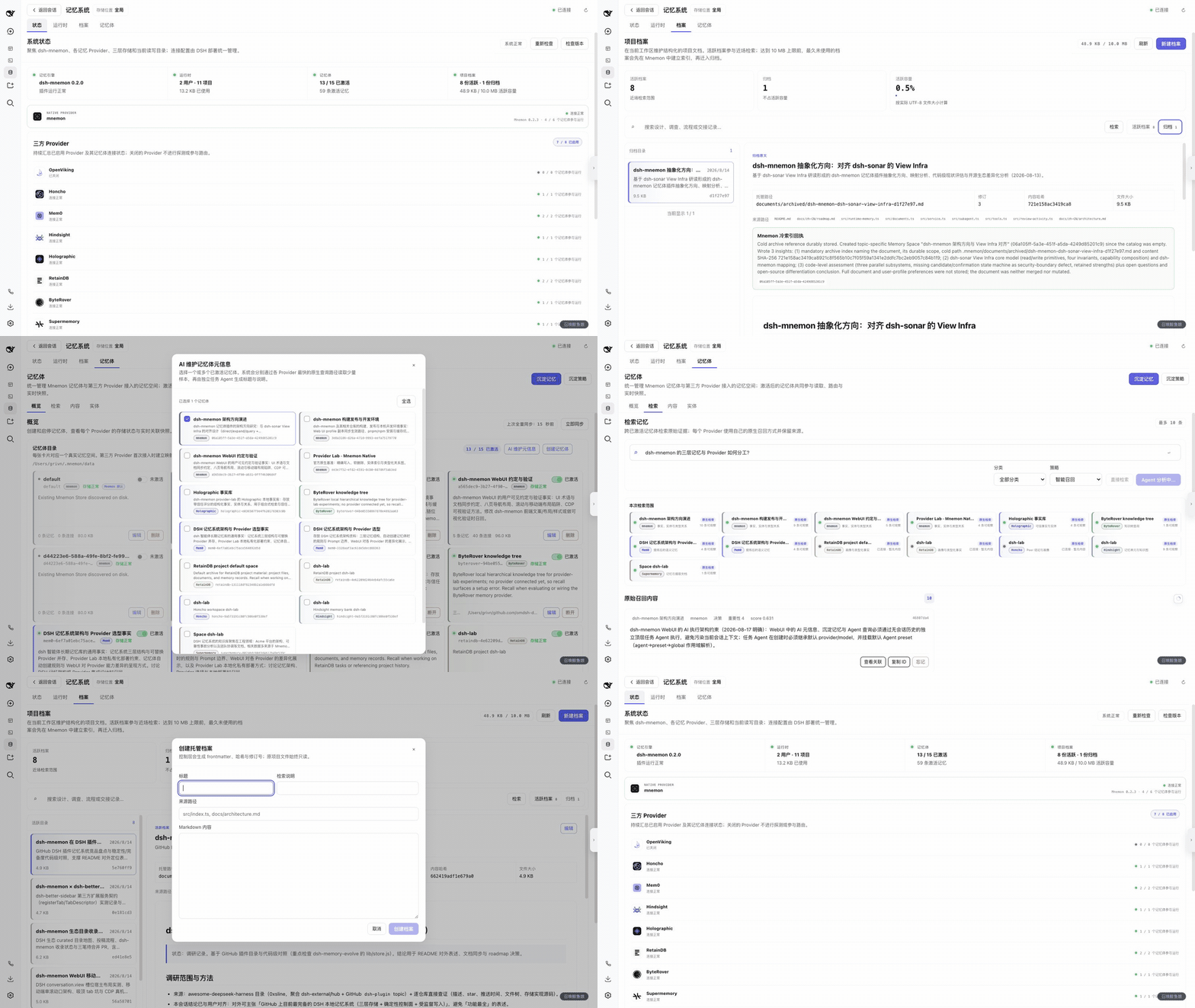
dsh-mnemon is a three-tier, pluggable, Agent-driven memory system for DeepSeek Harness, combining Runtime memory, Project Documents, and replaceable Memory Spaces with nine long-term providers.
An opinionated, zero-infrastructure file-based memory protocol: human-readable markdown files plus a bounded always-loaded index, curation discipline, and no database or embeddings.