dsh-ui-state
Run the following command in DeepSeek Harness:
dsh plugin install zink-ning-lkr/dsh-ui-state
Paste the following prompt into your AI chat to install this plugin:
To install this plugin in DeepSeek Harness, please run the command `dsh plugin install zink-ning-lkr/dsh-ui-state`, which will automatically restore sidebar, details panel, and conversation scroll positions. Source: https://github.com/zink-ning-lkr/dsh-ui-state
About this plugin
In DSH Web GUI, every restart resets your workflow: sidebars may collapse unexpectedly, detail panels vanish, and conversations scroll back to the top, disrupting your focus. The dsh-ui-state plugin acts as a smart persistence layer, capturing layout changes in real-time—such as sidebar toggles, width adjustments, and scroll positions—through event-driven mechanisms. Upon restart, it seamlessly restores your interface without manual intervention. Designed for users who rely on multi-panel workflows, this plugin eliminates the friction of losing your layout settings. It is perfect for anyone seeking a stable, continuous working environment where their interface preferences are preserved exactly as they left them.
Use Cases
- Restores sidebar collapse state after DSH restart.
- Restores conversation scroll position when switching views.
- Restores details panel open/close state automatically.
Best For
- Developers frequently using DSH Web GUI.
- Users requiring multi-panel parallel workflows.
- Users engaging in long multi-session conversations.
Related Plugins
Traceable, searchable cross-session memory for AI agents that turns conversation knowledge into a typed knowledge graph and recalls relevant subgraphs instead of replaying full history, natively integrated with DeepSeek Harness.
Gives DSH AI cross-session long-term memory, to-do and skill management, plus multi-session orchestration, external AI delegation, and an infinite canvas that grows with you.
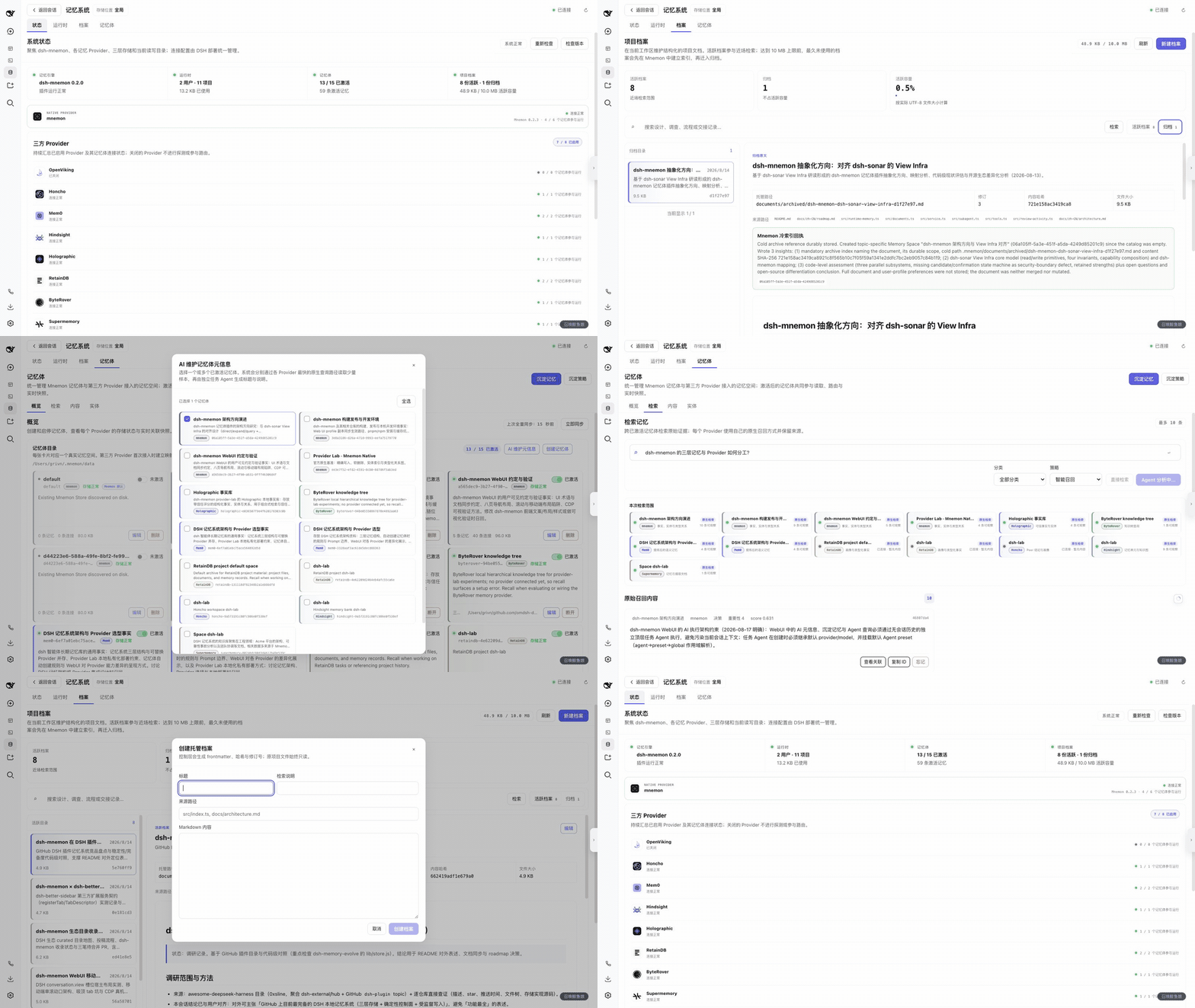
dsh-mnemon is a three-tier, pluggable, Agent-driven memory system for DeepSeek Harness, combining Runtime memory, Project Documents, and replaceable Memory Spaces with nine long-term providers.
An opinionated, zero-infrastructure file-based memory protocol: human-readable markdown files plus a bounded always-loaded index, curation discipline, and no database or embeddings.