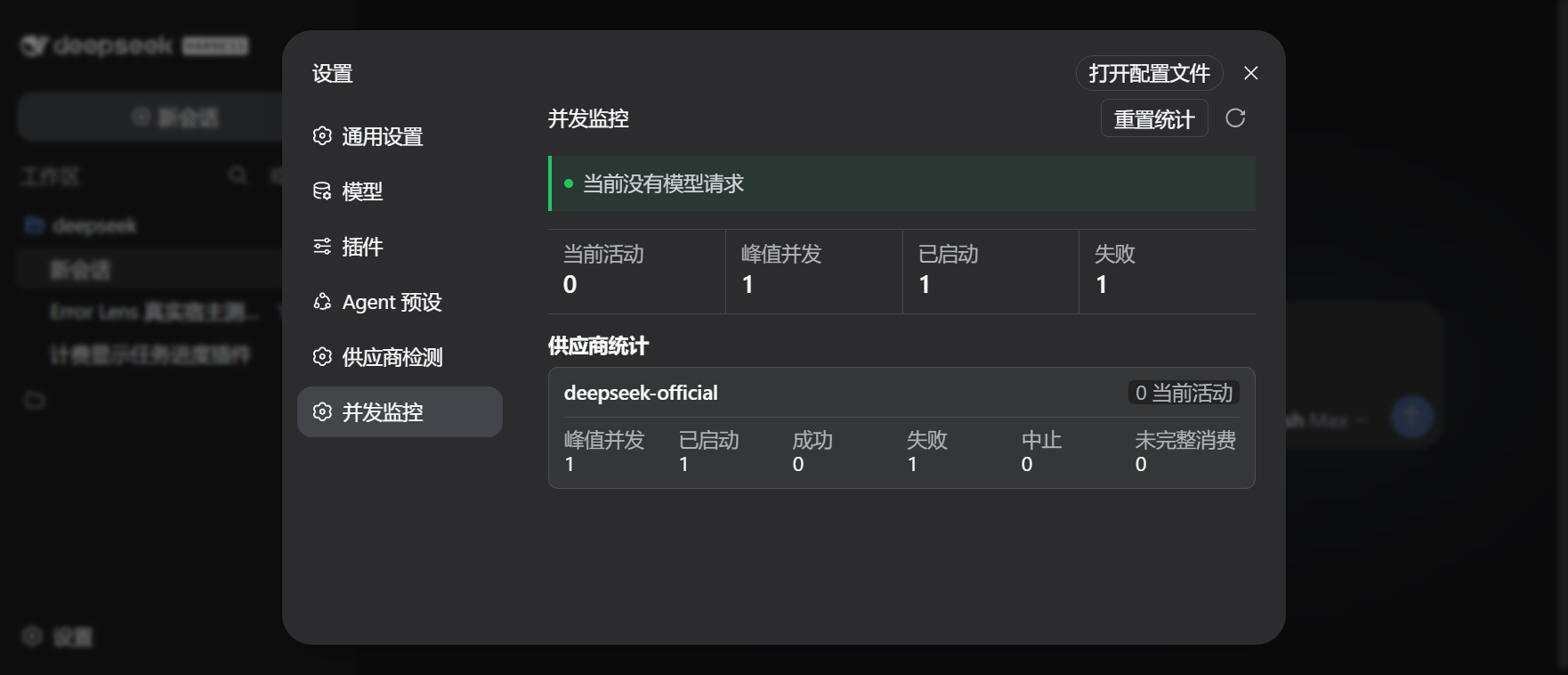
dsh-concurrency-meter
Run the following command in DeepSeek Harness:
dsh plugin install Wanbinyu/dsh-concurrency-meter
Paste the following prompt into your AI chat to install this plugin:
In DeepSeek Harness, you can install this plugin using the command dsh plugin install Wanbinyu/dsh-concurrency-meter, with the full source code available at https://github.com/Wanbinyu/dsh-concurrency-meter.
About this plugin
Real-time monitoring of request concurrency is crucial for optimizing performance and troubleshooting in model inference services, but intrusive tools may introduce additional risks. The dsh-concurrency-meter plugin provides a safe, read-only monitoring solution for DeepSeek Harness Web, seamlessly integrating into the call chain to track request states with minimal overhead.
The plugin's core capability lies in comprehensive and non-disruptive observation: it displays current active requests, peak concurrency, and supplier-specific statistics (such as success, failure, abort, etc.) in real time, while supporting configurable concurrency threshold alerts and statistics reset. Importantly, it does not intercept, queue, or modify any requests, ensuring the monitoring process remains entirely transparent.
Whether you are a developer debugging API call flows, an operations professional monitoring service health, or a researcher analyzing model load, dsh-concurrency-meter offers intuitive insights. It is particularly suitable for users who wish to safely monitor concurrency behavior in production environments without introducing any potential interference.
Screenshots
Use Cases
- Monitor model request concurrency status in real time
- Check peak concurrency when debugging performance bottlenecks
- Analyze request handling performance across different suppliers
Best For
- Developers debugging API call flows
- Operations professionals monitoring service health
- Researchers analyzing model load behavior
Related Plugins
A unified suite combining hot runtime injection, task-aware thinking-mode routing, and a graded session protocol with red-team gates to sustain model diligence across long-horizon inference.
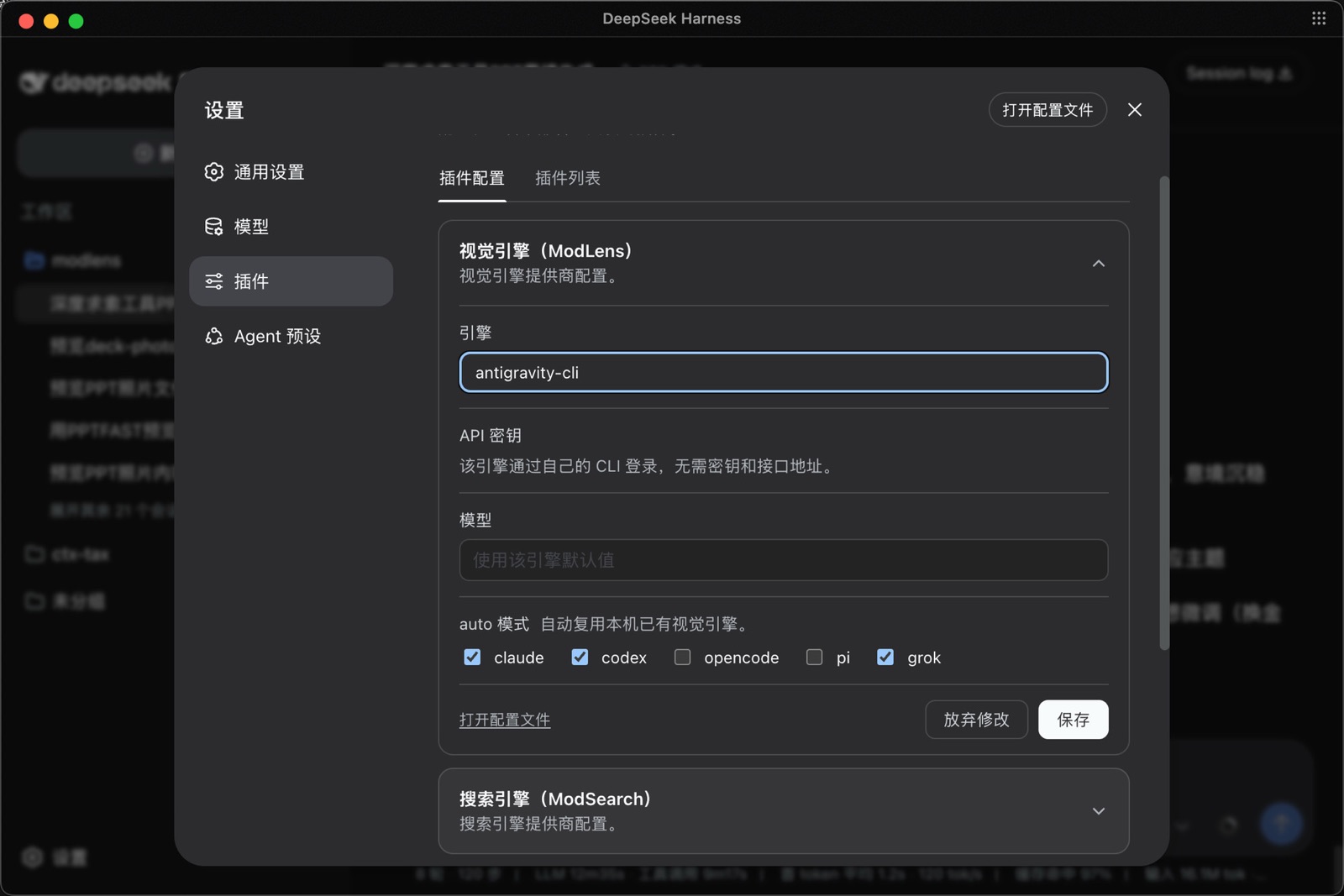
ModLens is a vision plugin for DeepSeek Harness that gives text-only models sight by reading images pasted directly into chat, with zero-config setup and multiple vision engines.
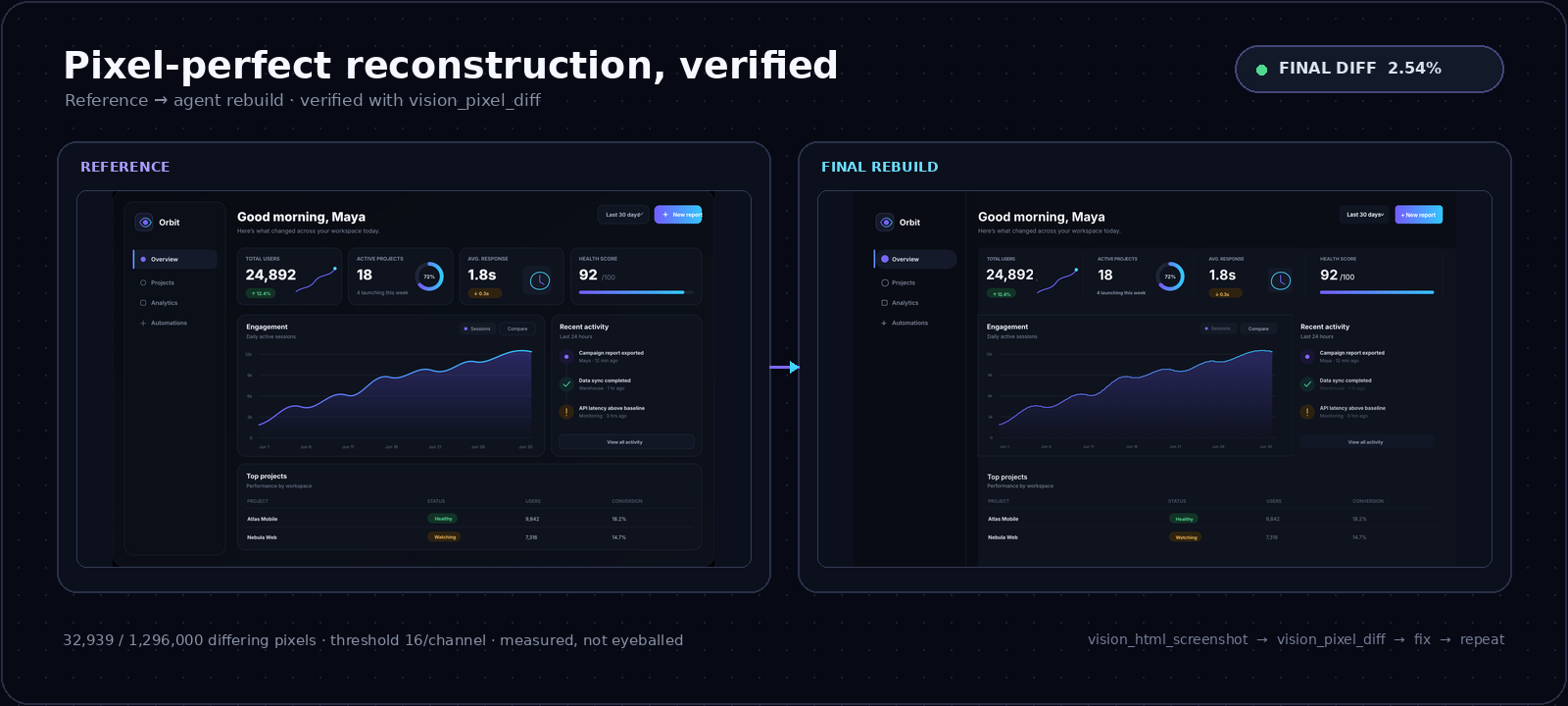
On-demand vision for text-only DeepSeek Harness agents: built-in free keyless vision chain and 14 vision tools, routing image turns as tool calls to vision models with pixel fidelity, no Python needed, one-command install.

Give text-only models in DeepSeek Harness eyes, enabling image Q&A, long-screenshot OCR, UI restoration, and GUI visual tasks.