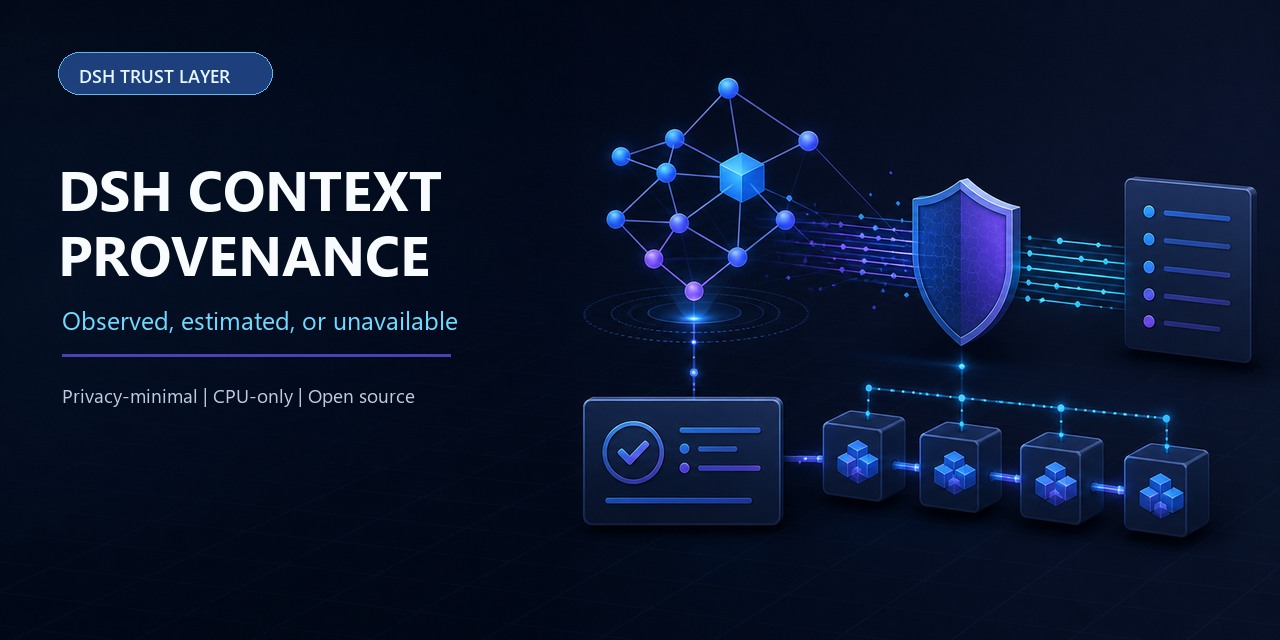
dsh-context-provenance
Run the following command in DeepSeek Harness:
dsh plugin install 030611/dsh-context-provenance
Paste the following prompt into your AI chat to install this plugin:
To install this plugin in DeepSeek Harness, run the command dsh plugin install 030611/dsh-context-provenance with the full source address at https://github.com/030611/dsh-context-provenance.
About this plugin
In AI Agent frameworks like DeepSeek Harness, auditing context provenance is essential for transparency, but traditional methods risk exposing sensitive data such as prompt texts or raw paths. The dsh-context-provenance plugin addresses this by leveraging public runtime interfaces to securely audit context. Its core capability involves comparing adjacent request evidence and labeling each field as Observed, Estimated, or Unavailable. Retaining only the most recent observations and exposing them via the existing Cordis inspect query, it ensures no request modification or sensitive data return. This makes it ideal for developers, administrators, and auditors seeking to debug context issues while upholding privacy, catering to a community focused on secure, ethical monitoring.
Screenshots
Use Cases
- Debugging Agent context behavior differences
- Conducting system security compliance audits
- Monitoring request evidence without exposing sensitive data
Best For
- AI framework developers
- System administrators
- Security auditors
Related Plugins

Memory layer for coding agents that indexes local session history and auto-recalls relevant context before edits, commands, and failures, with no manual search needed.
Traceable, searchable cross-session memory for AI agents that turns conversation knowledge into a typed knowledge graph and recalls relevant subgraphs instead of replaying full history, natively integrated with DeepSeek Harness.
Gives DSH AI cross-session long-term memory, to-do and skill management, plus multi-session orchestration, external AI delegation, and an infinite canvas that grows with you.
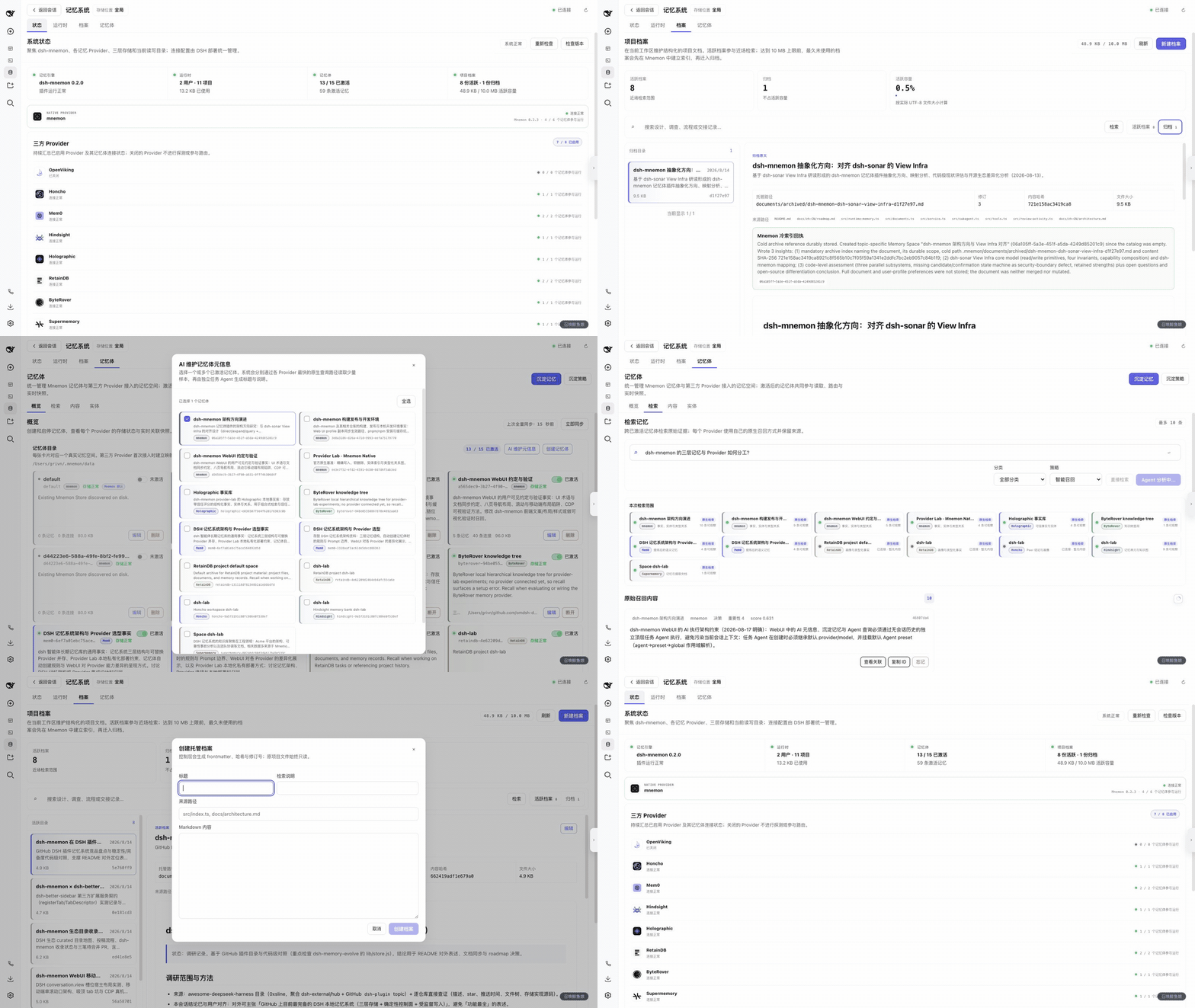
dsh-mnemon is a three-tier, pluggable, Agent-driven memory system for DeepSeek Harness, combining Runtime memory, Project Documents, and replaceable Memory Spaces with nine long-term providers.