
dsh-recall
Run the following command in DeepSeek Harness:
dsh plugin install Relistencode/dsh-recall
Paste the following prompt into your AI chat to install this plugin:
To install the dsh-recall plugin, run the command: dsh plugin install Relistencode/dsh-recall, or get the source directly from the GitHub repository at https://github.com/Relistencode/dsh-recall.
About this plugin
In extended conversations, users often need to revisit past discussions, especially after history has been compacted into summaries. The dsh-recall plugin builds a 'memory maze' for DeepSeek Harness agents, using a three-layer hybrid retrieval system (literal, fuzzy, semantic) to accurately recall any historical dialogue snippet—even if it has been compacted or forgotten. Its core capabilities include fully local and offline operation, progressive disclosure to save tokens, event aggregation to reduce fragmentation, and automatic compaction anchors for context continuity. It is ideal for heavy session users, writers and role-players tracking scattered settings, and code maintainers retracing decision backgrounds—ensuring that 'didn't we discuss this before?' never requires retelling.
Screenshots

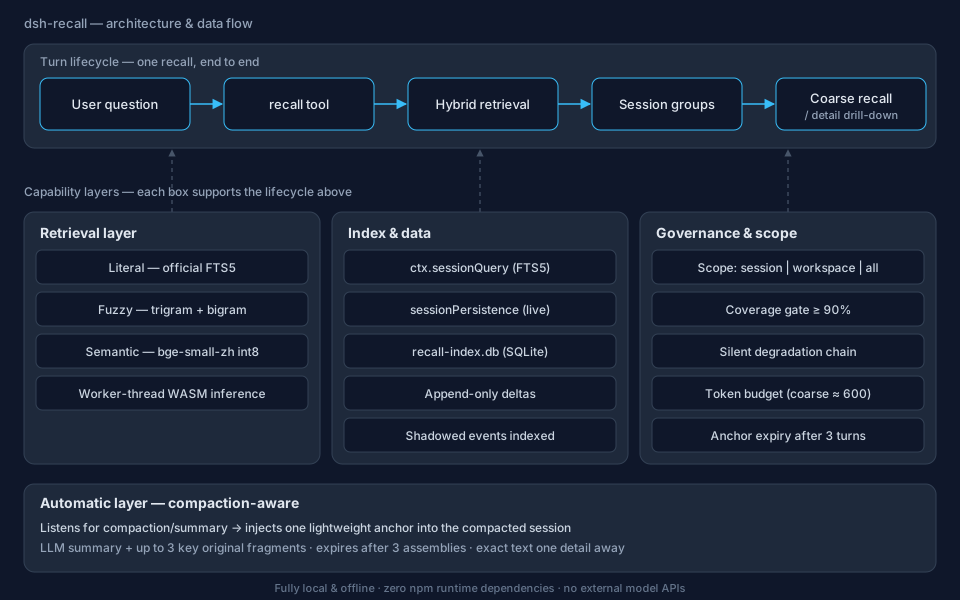
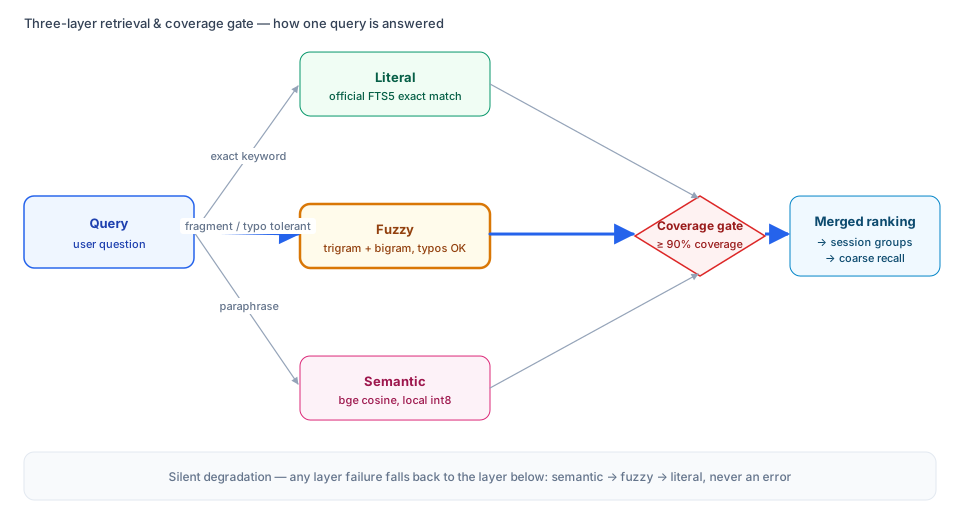
Use Cases
- Reviewing historical discussions in long conversations
- Restoring context after conversation compaction
- Tracking scattered settings in writing or role-playing
Best For
- Heavy users of long sessions
- Writers and role-playing enthusiasts
- Code and documentation maintainers
Related Plugins

Memory layer for coding agents that indexes local session history and auto-recalls relevant context before edits, commands, and failures, with no manual search needed.
Traceable, searchable cross-session memory for AI agents that turns conversation knowledge into a typed knowledge graph and recalls relevant subgraphs instead of replaying full history, natively integrated with DeepSeek Harness.
Gives DSH AI cross-session long-term memory, to-do and skill management, plus multi-session orchestration, external AI delegation, and an infinite canvas that grows with you.
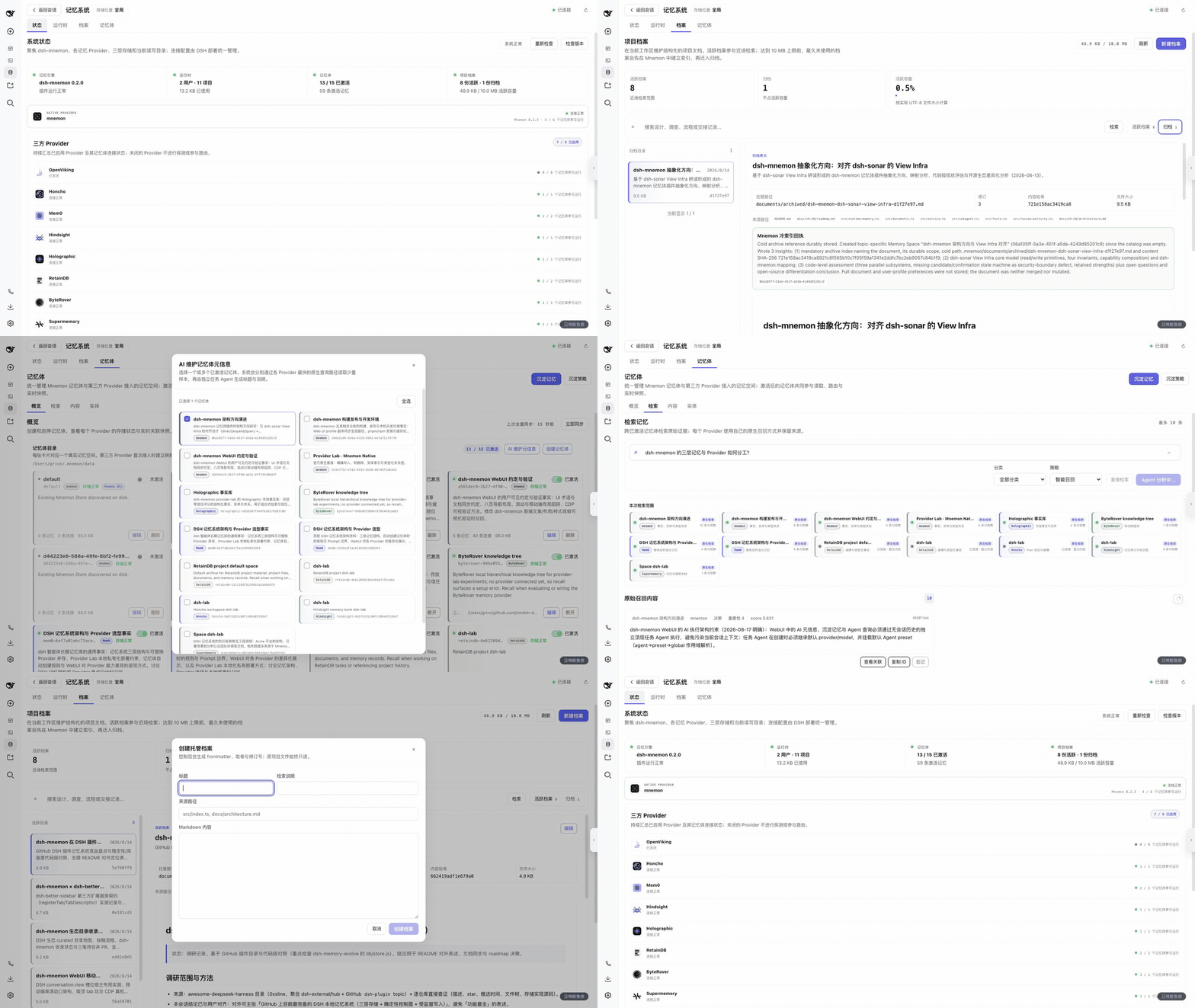
dsh-mnemon is a three-tier, pluggable, Agent-driven memory system for DeepSeek Harness, combining Runtime memory, Project Documents, and replaceable Memory Spaces with nine long-term providers.