lunheng-article-pipeline-dsh
Run the following command in DeepSeek Harness:
dsh plugin install zuoyunlai/lunheng-article-pipeline-dsh
Paste the following prompt into your AI chat to install this plugin:
To install the Lunheng Article Pipeline plugin in DeepSeek Harness, run the command 'dsh plugin install zuoyunlai/lunheng-article-pipeline-dsh'. The full source repository is available at https://github.com/zuoyunlai/lunheng-article-pipeline-dsh.
About this plugin
The process of creating deep articles or papers often presents challenges: how to ensure comprehensiveness, depth, and originality? Traditional single AI generation may lack multi-angle verification and systematic workflows. The Lunheng plugin addresses this by leveraging the DeepSeek Harness framework to break down article production into nine specialized role cards, forming a complete multi-agent pipeline from literature retrieval and data analysis to critical review.
Its core strength lies in structured collaboration: three retrieval agents (T1-T3) work in parallel to ensure broad information coverage; writing and analysis roles (T4-T6) process content deeply, with T6 as a critique partner specifically attacking arguments from opposing sides to enhance robustness; audit roles (T7, G0-G14) independently check quality, including Chinese AI trace detection; and final delivery is secured through a mechanical end-check (M-Gate) with evidence-based results. This design not only mimics real team collaboration but also ensures traceable verification at every step.
This plugin is ideal for users requiring high-quality deep content, such as academic researchers, professional authors, think tank analysts, or content strategists. Whether you are writing papers, reports, or long-form articles, it offers an automated pipeline from draft to final product, especially suitable for scenarios demanding rigor and innovation. With flexible model configuration—from zero-config single-model to multi-model tiering—users can balance cost and performance based on their needs, getting started easily.
Use Cases
- Writing academic papers and long-form articles
- Automated generation of in-depth research reports
- Systematic management of content creation workflows
Best For
- Academic researchers and scholars
- Professional content creators and editors
- Think tank analysts and strategists
Related Plugins
A unified suite combining hot runtime injection, task-aware thinking-mode routing, and a graded session protocol with red-team gates to sustain model diligence across long-horizon inference.
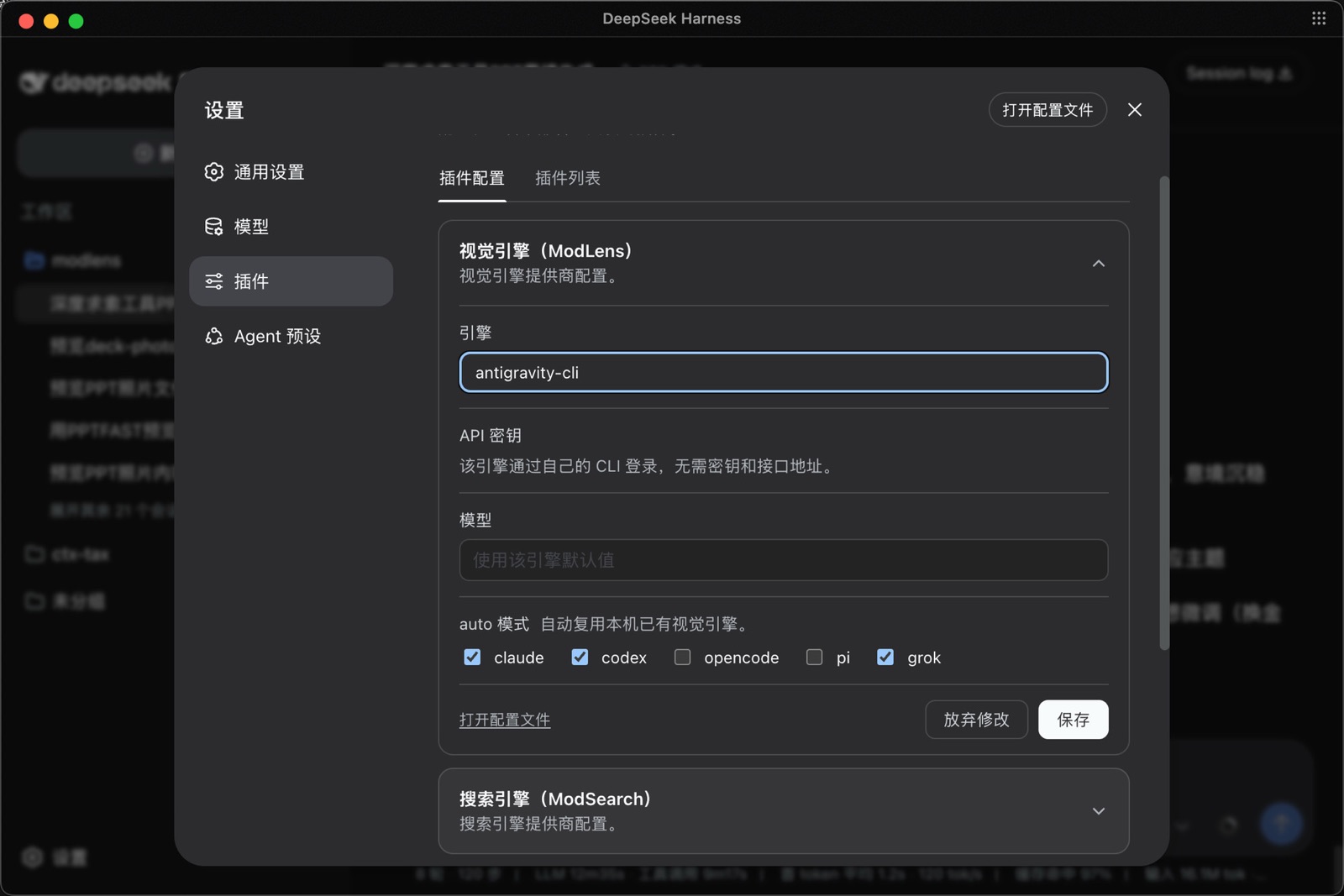
ModLens is a vision plugin for DeepSeek Harness that gives text-only models sight by reading images pasted directly into chat, with zero-config setup and multiple vision engines.
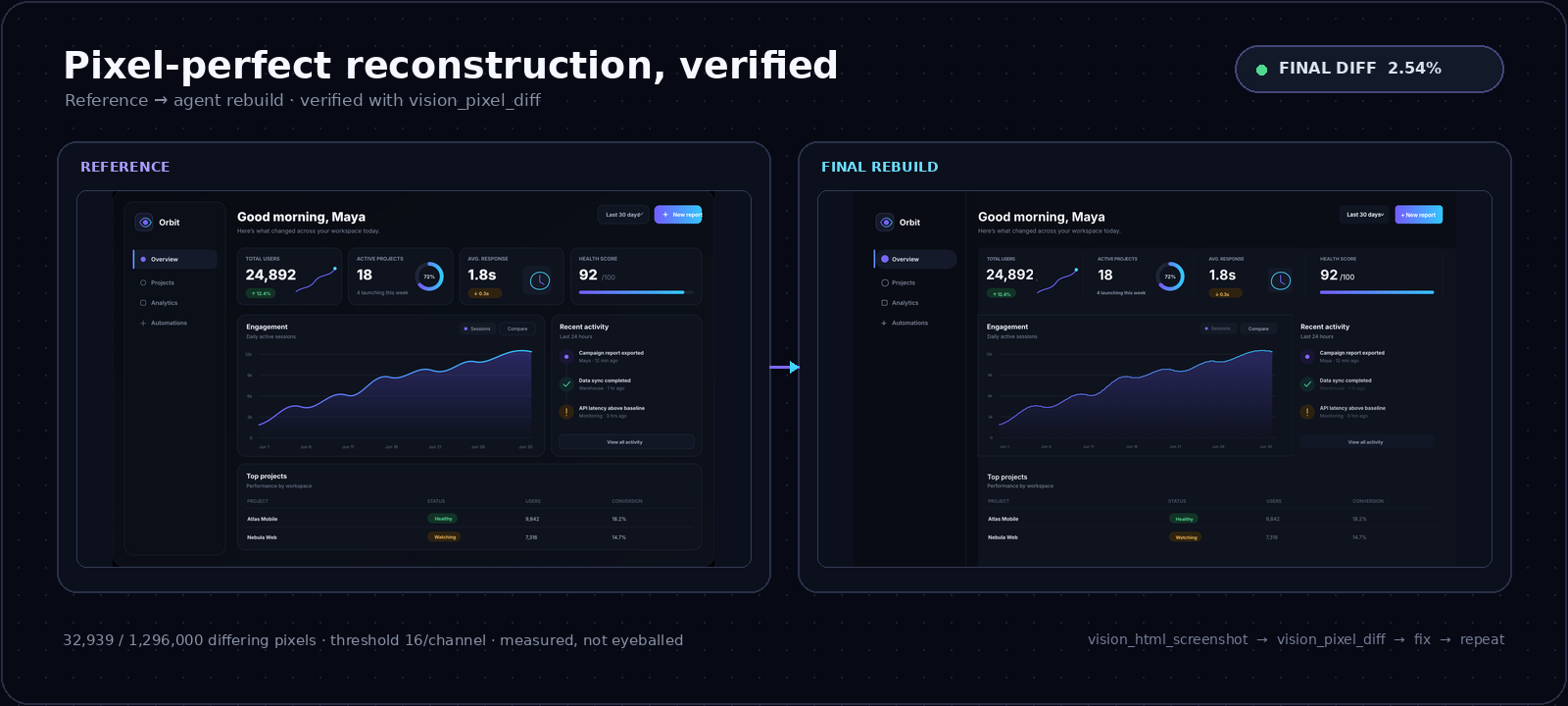
On-demand vision for text-only DeepSeek Harness agents: built-in free keyless vision chain and 14 vision tools, routing image turns as tool calls to vision models with pixel fidelity, no Python needed, one-command install.

Give text-only models in DeepSeek Harness eyes, enabling image Q&A, long-screenshot OCR, UI restoration, and GUI visual tasks.