
IFQ Design Delivery
Paste the following prompt into your AI chat to install this skill:
Please install @user_0b351294/ifq-design-skills by following https://skillhub.cn/install/skillhub.md.
About this skill
Problem
Visual delivery work often stalls not because the request is ambiguous, but because execution is fragmented: a landing page, app prototype, deck, infographic, or motion demo needs fact-checking, brand assets, a stable template, layout decisions, export planning, and verification. If a model starts from a blank HTML file, the result can be structurally loose, typography-unstable, generically branded, and hard to verify. When the request involves a product, company, release date, version, person, or spec, unverified claims can become embedded in the artifact. IFQ Design Skills targets this class of HTML-first visual delivery by turning the task into a routable, verifiable workflow.
How It Works
The skill uses a short root instruction layer to confirm that the request is a visual HTML deliverable, then routes through references/modes.md and assets/templates/INDEX.json instead of generating from scratch. The core path includes:
- Template-driven output: fork a listed template into the workspace, preserving structure and interaction affordances.
- Brand layer: inline
assets/ifq-brand/ifq-tokens.cssand weave in at least three IFQ ambient marks for consistent visual rhythm. - Facts before assumptions: verify product, company, technology, date, version, person, or specification claims against authoritative sources when available; otherwise ask for sources and mark the fact unresolved.
- Asset protocol: handle logos, product images, UI screenshots, color, and typography before layout or hero imagery decisions.
- Verification: preview with host browser or screenshot tools when available; click through at least one primary path, one tab or screen switch, and one detail action for app prototypes; check slide count, aspect ratio, and format for decks.
Boundaries
It is well suited to interactive prototypes, hi-fi mockups, clickable app flows, dashboards, landing pages, whitepapers, reports, infographics, slide decks, brand systems, and motion demos that also need MP4/GIF export planning. It is not intended for production frontend engineering, backend work, SEO-critical site implementation, CSS bug fixing inside an existing app, copy-only editing, or deliverables that must round-trip through Word, Google Docs, or locked corporate templates. The bundled workflow stays local-first, avoiding unrelated secrets, dynamic eval, child_process, runtime network calls, and hidden installs; optional export automation is expected to live in the full repository rather than the lightweight bundle.
Use Cases
- Receive an app prototype request, fork a listed template, and verify primary paths and screen switches.
- Build a launch landing page, inline IFQ tokens, and include at least three brand visual marks.
- Turn product notes into a slide deck, then check slide count, aspect ratio, and format requirements.
- Create a motion demo with MP4/GIF export planning, without turning it into a production site.
Best For
- Product designers creating hi-fi mockups who need stable templates, brand layering, and clickable verification.
- Independent developers shipping landing pages who need HTML-first output and controlled font loading.
- Marketing staff preparing slide decks who need slide count, aspect ratio, and pre-export checks.
- Creative engineers building motion demos who need animation rules, video export planning, and audio policy.
Related Skills

Call Mew image and design APIs in two stages to create an emotional background and compose a share-ready quote check-in poster.
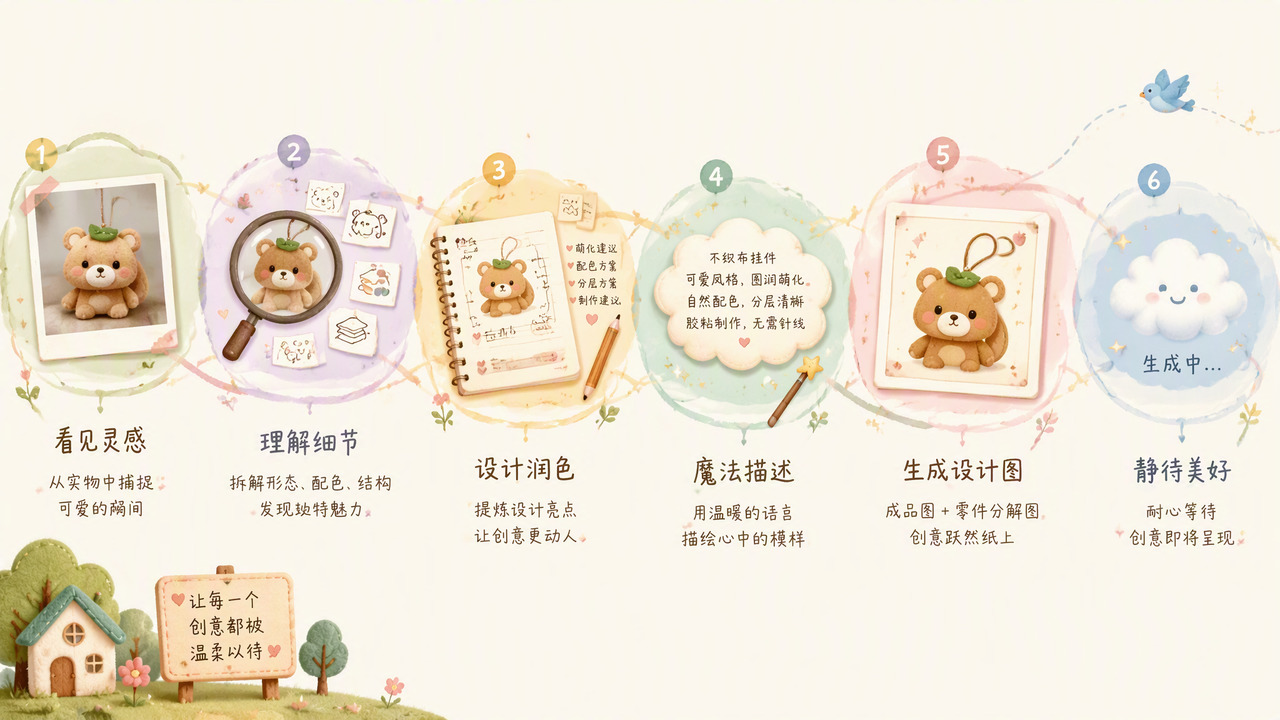
Generate felt-craft pendant designs, part breakdowns, and structured analysis from a product image or Base64 input.

A ComfyUI image-generation skill that uses a five-step dialog to collect prompts, prefill templates, confirm parameters, submit API jobs, and return results.

A design-system guidance skill for Impeccable that produces token-based rules, component states, accessibility criteria, and QA checklists.