DeepSeek Harness Plugins · Workflow
Plugins that extend DeepSeek Harness (DSH) with vision, workflows, memory, web tools and more.
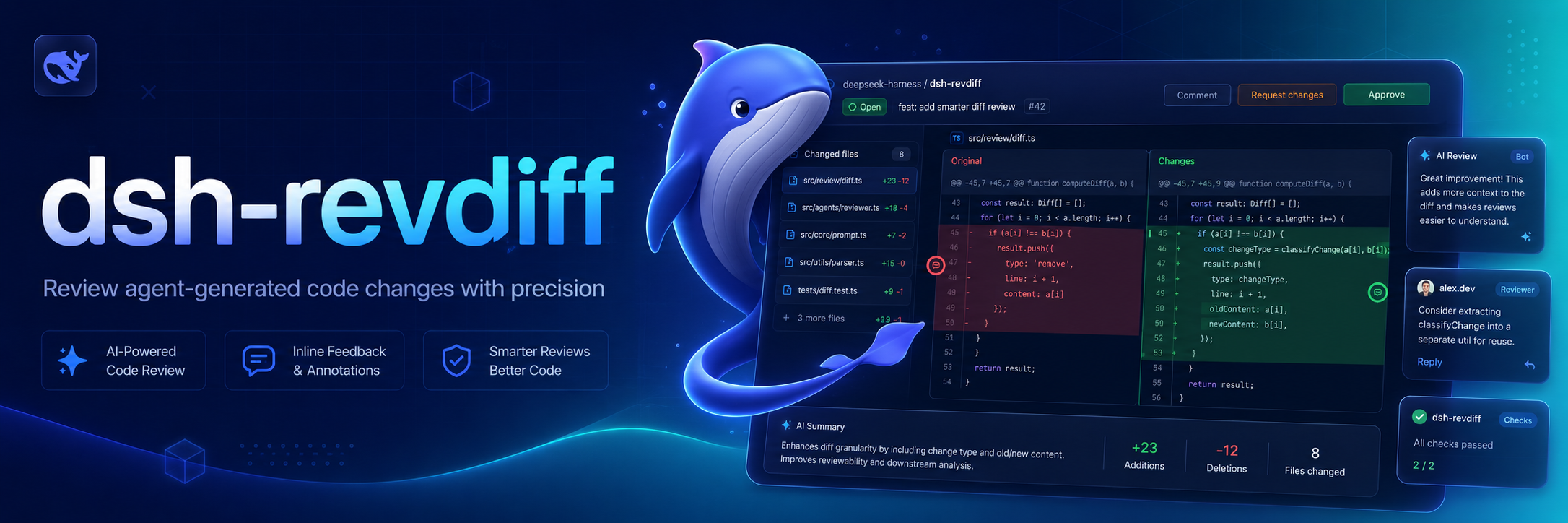
Native interactive diff review for DeepSeek Harness that parses Git diffs and queues annotations as agent durable follow-up turns.
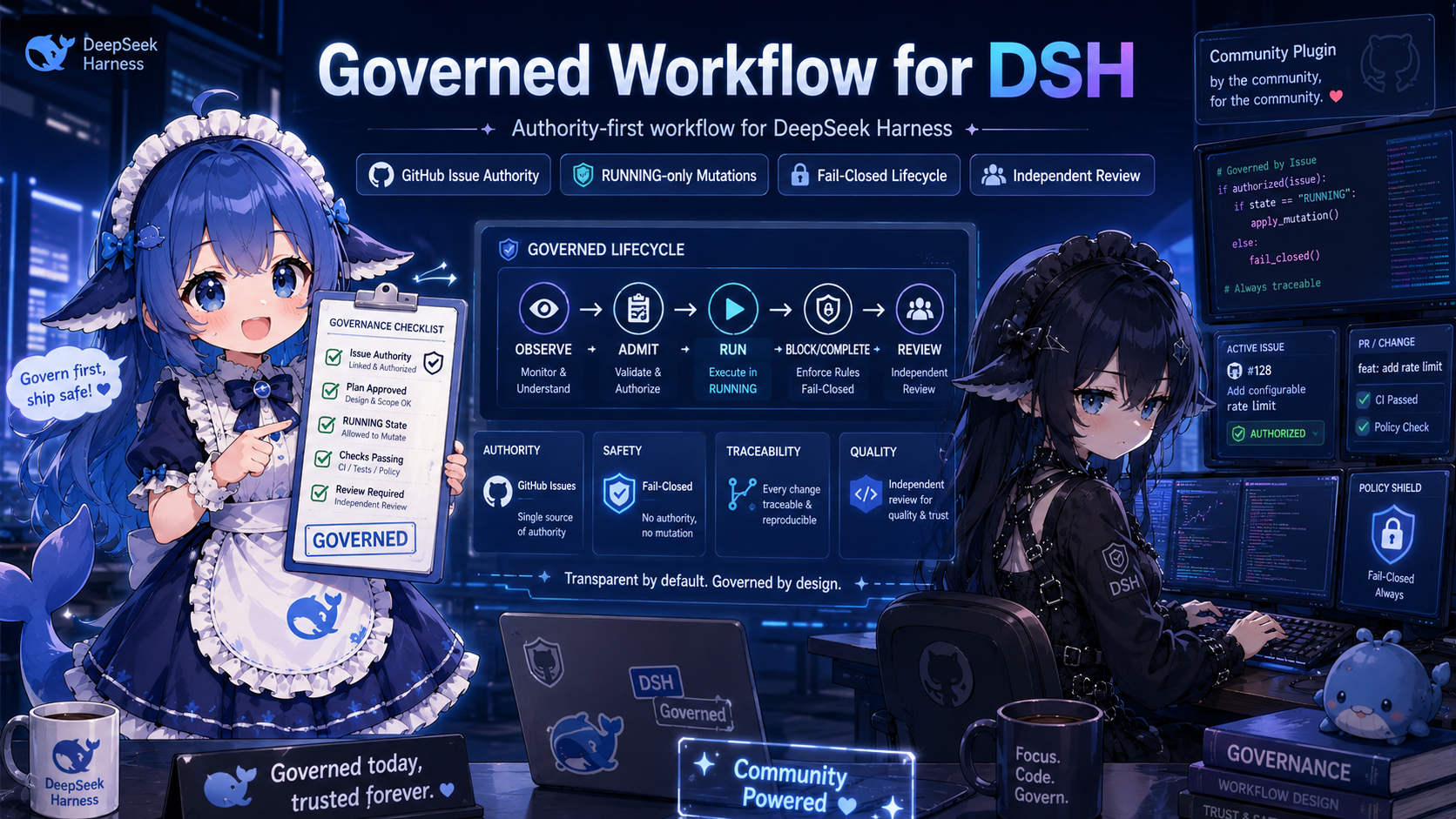
A community plugin for DeepSeek Harness that governs coding-agent work by providing task authority via GitHub Issues, managing lifecycle states, and enforcing independent review boundaries.
Enhanced subagent delegation tools for DeepSeek Harness with per-call overrides for model, provider, persona, and toolFilter, including @preset: references and composite model IDs.
dsh-fusion is a plugin that fuses multiple session model surfaces into one titled, continuable conversation with deduplication and optional planning.
ClawRouters for DeepSeek Harness: install one DSH bundle, configure one API key in the Web UI, and use chat, image generation, video generation, and web search.
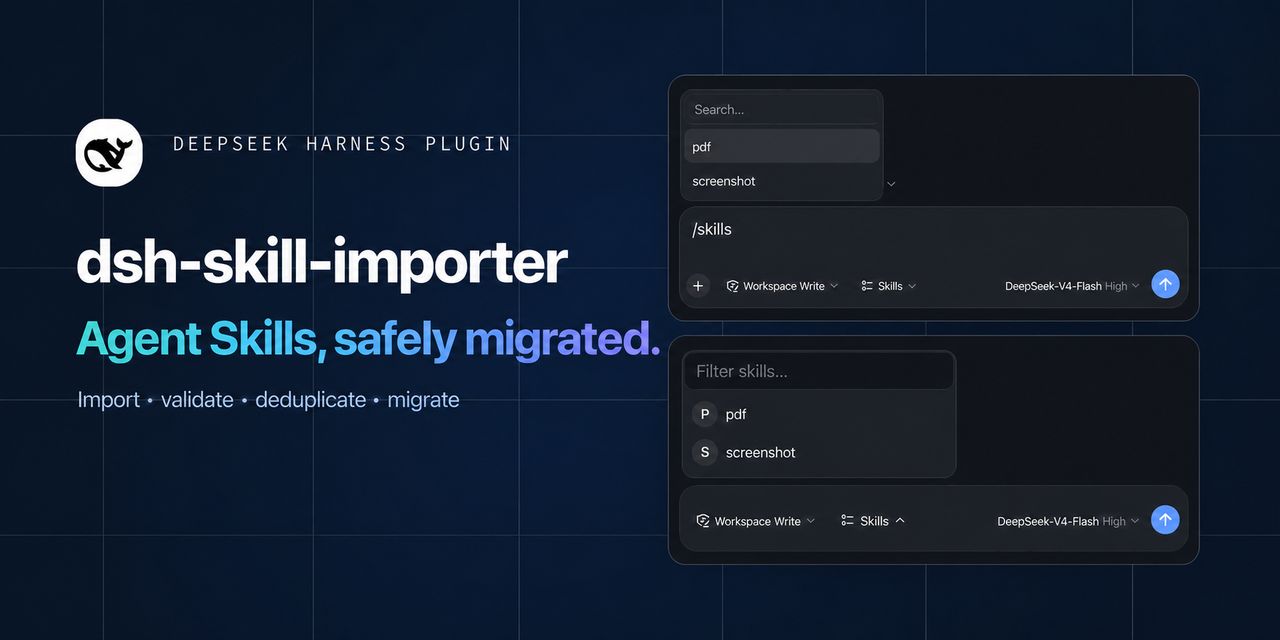
A plugin that brings skill management to the DeepSeek Harness Web UI, enabling import, validation, deduplication, and migration of skills, with discovery and invocation without sessions or model tokens.
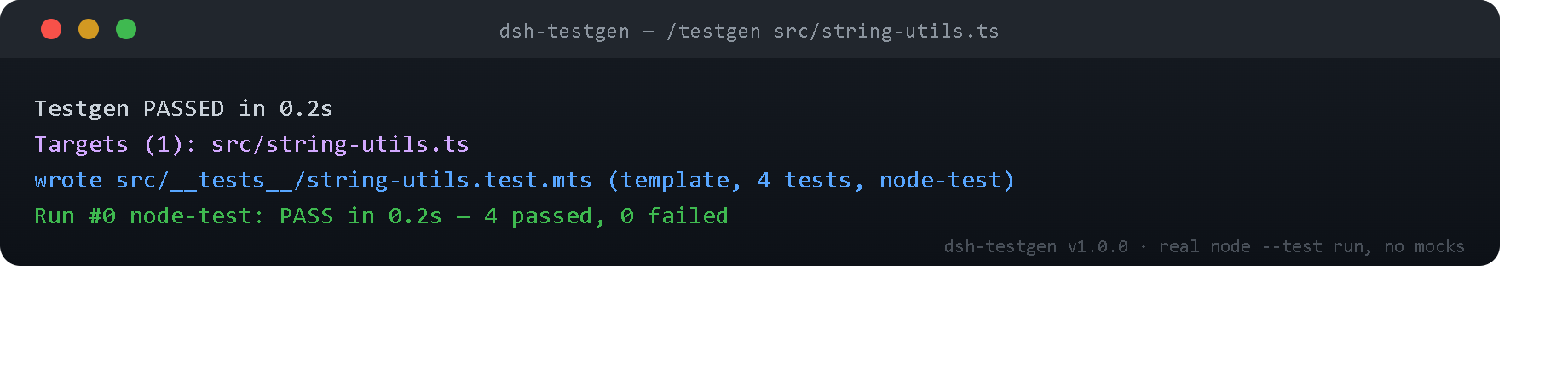
dsh-testgen automates unit test generation, execution, and fixing for DeepSeek Harness, providing a complete testing loop.
dsh-ci-doctor watches GitHub Actions for failures, converts raw logs into structured findings, and remembers error signatures to diagnose repeat failures.
A plugin collection for DeepSeek Harness agents, offering 13 tools including symbolic math, formal logic, theorem proving, and TCM diagnosis to boost computational and reasoning capabilities.
An out-of-tree DeepSeek Harness plugin that enables hot-installing, uninstalling, disabling, or enabling plugins on a running instance without restart, and provides a Web settings tab.
A bundle of five read-only skills that require an agent to show evidence before claiming memory, a finished plan, a clean benchmark, or a safe release.
Provides a skills management panel in DSH Web GUI for viewing, enabling/disabling, adding, editing, and deleting skills with persistent toggle states.