dsh-subagent-tools
Run the following command in DeepSeek Harness:
dsh plugin install lynx-gt/dsh-subagent-tools
Paste the following prompt into your AI chat to install this plugin:
To install this plugin, run `dsh plugin install lynx-gt/dsh-subagent-tools` or visit the GitHub repository for source code: https://github.com/lynx-gt/dsh-subagent-tools.
About this plugin
Out-of-the-box, the subagent delegation tools in DeepSeek Harness offer a minimal surface: you can describe a task, write a prompt, and choose background execution. This static setup becomes a bottleneck when you need to dynamically change the underlying LLM, switch the execution provider, or temporarily adjust the agent's persona for each specific sub-task.
dsh-subagent-tools is built to shatter this limitation. It provides an enhanced set of tools that replace the default ones, maintaining full backward compatibility while injecting powerful per-call overrides. The core innovation lies in four customizable parameters: you can override the child agent's model for a single call (using composite IDs like "kimi-code/k3" to switch provider and model simultaneously), change the delegation provider, inject new persona text or load a saved preset on-the-fly (via @preset: references), and fine-tune the tool allow/deny filter. All overrides are ephemeral—if not specified, the system gracefully falls back to the instance's default configuration, ensuring both flexibility and stability.
This plugin is ideal for users who require granular, context-aware control over AI sub-agents. Whether you are a researcher testing different models across project phases, a developer who needs to swiftly adapt an agent's persona for varying tasks, or an administrator managing multiple team-specific presets, it offers significant utility. It transforms workflow orchestration from a rigid "one-size-fits-all" model into a dynamic, customizable menu, greatly expanding the practical versatility of sub-agents without altering the core system.
Use Cases
- When you need to dynamically switch underlying models for testing or comparison within the same workflow.
- When you need to rapidly change a sub-agent's persona or apply a preset for a specific task.
- When sharing and quickly applying standardized sub-agent configuration templates within a team.
Best For
- Developers and engineers who need fine-grained control over sub-agent behavior.
- Researchers managing complex AI workflows requiring flexible agent configuration.
- Teams needing to define and reuse sub-agent configurations in collaborative settings.
Related Plugins
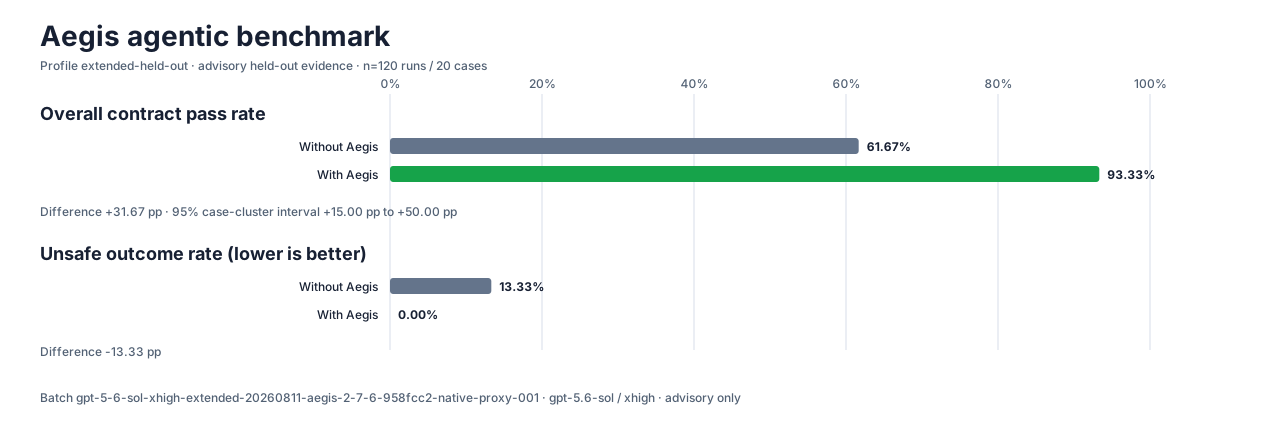
A method pack that makes AI coding agents plan against your real baseline, prove completion with fresh evidence, and reduce reworks and unsafe changes.
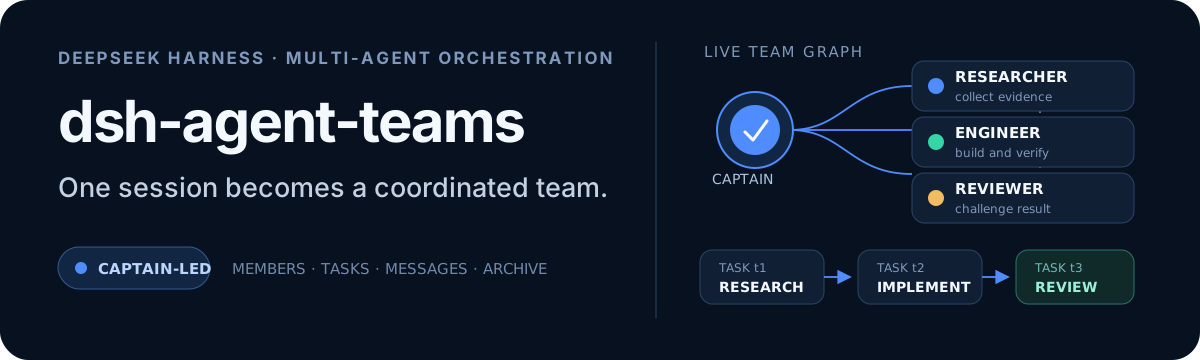
Turns the DeepSeek Harness session into a captain that builds a durable sub-agent team, splits goals into dependency-aware tasks, and coordinates work via direct messages and a live Web UI.
Gives coding agents design judgment, letting Claude Code, Cursor, and 70+ agents generate and iterate high-quality UI, presentations, and graphics right from the terminal.
Run the Pi ecosystem's plugins on DeepSeek Harness, unmodified, via a compatibility layer that implements Pi's public extension ABI on DSH's native services.