dsh-ssh-plugin
Run the following command in DeepSeek Harness:
dsh plugin install Azurer0121/dsh-ssh-plugin
Paste the following prompt into your AI chat to install this plugin:
Run dsh plugin install Azurer0121/dsh-ssh-plugin in the DeepSeek Harness terminal to install; source is at https://github.com/Azurer0121/dsh-ssh-plugin .
About this plugin
When an AI agent manages remote Linux servers, the friction rarely comes from the commands themselves but from the connect step: typing the host, port, and key path on every single call, or hanging on a password prompt until timeout. dsh-ssh-plugin removes that repeated authentication overhead by letting the model save a connection once, bind it to the current workspace, and then execute commands with sensible defaults on subsequent calls.
Two tools do the heavy lifting. ssh_exec runs key-authenticated commands (BatchMode, no password or passphrase prompts) through ssh stdin directly into bash -s, skipping any remote-shell quoting layer; a missing or unauthorized key fails fast instead of hanging. ssh_connections persists connections in the harness settings store with save, list, delete, and use operations, so a workspace can be bound to a connection label and host becomes optional. On every call the plugin also parses the local OpenSSH config, auto-discovers Host aliases, and surfaces them in list output and error suggestions, eliminating manual re-entry. A visual card in the browser settings panel lets you add, edit, or remove connections at a glance.
This plugin is well suited for developers who regularly ask the agent to pull logs, check disk usage, or run verification scripts on remote boxes and already manage SSH through key pairs. On lightweight profiles that lack settings or workspaceRegistry, the plugin degrades gracefully: ssh_exec remains fully functional with explicit arguments, and core execution is never blocked.
Use Cases
- Ask the agent to pull disk usage and recent logs on a remote box with one natural-language request
- Bind a workspace so routine inspection commands no longer need host or key path retyped
- Auto-discover Host aliases from ~/.ssh/config and skip manual connection entry
Best For
- Developers who frequently ask AI to check logs or run scripts on remote Linux hosts
- DevOps engineers using key-based SSH who want to eliminate password-prompt hangs
- Ops staff juggling multiple remote environments per workspace and preferring visual configuration
Related Plugins
A service-oriented sidebar framework for DSH, offering a full workbench with file explorer, embedded browser, real terminal, Git panel, and extensible plugin services.
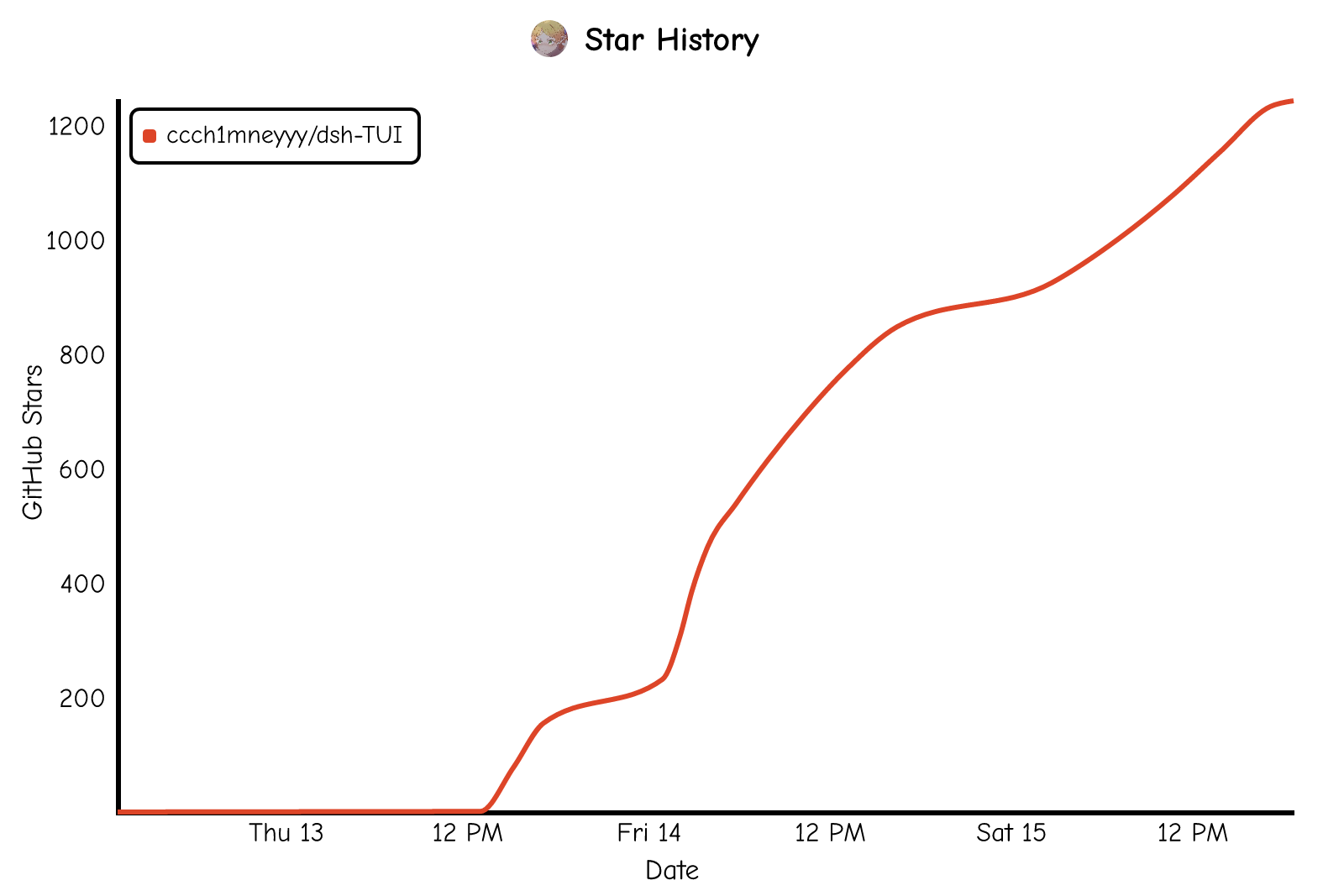
A beautiful, practical Claude Code-style TUI plugin with pixel whale top bar, flowing glow title, real-time status line, streaming thought expansion, time rewind, context progress bar and TPS gauge — zero core changes.
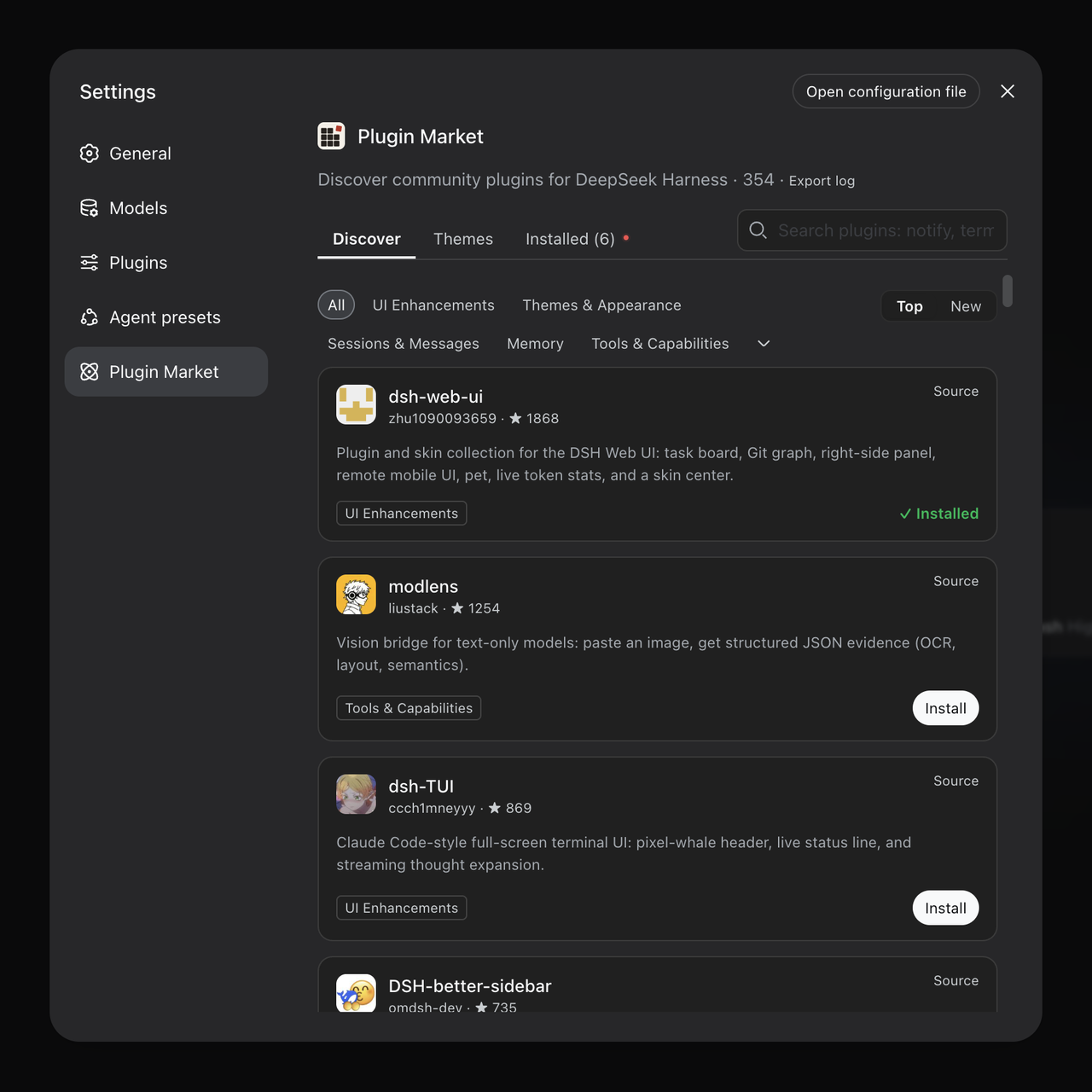
The plugin market for DeepSeek Harness: browse/search/one-click install community plugins and themes, with updates, backup/restore, hot disable, diagnostics, and AI fix.

A persistent whale widget on the DSH web UI that shows DeepSeek balance, today's usage, and per-turn cost, with drag-and-snap and sound effects.