dsh-model-switcher
Run the following command in DeepSeek Harness:
dsh plugin install 2275803244-cpu/dsh-model-switcher
Paste the following prompt into your AI chat to install this plugin:
Run dsh plugin install 2275803244-cpu/dsh-model-switcher in your terminal to install; the full source is at https://github.com/2275803244-cpu/dsh-model-switcher .
About this plugin
When juggling multiple LLM providers in the DeepSeek Harness Web GUI, switching models traditionally means opening settings, verifying each API key, and manually picking a target—a tedious loop that pulls you out of flow. dsh-model-switcher collapses that into a single click: a small toggle in the session header opens a two-level cascading panel where you pick a provider first, then a model, and the switch is done instantly.
Under the hood, the plugin replaces the native model selector in the input bar and shares the same directory-state controller as the /model command and the composer model slot, so a switch made from any entry point syncs everywhere in real time. The panel only lists providers whose API keys are actually configured, always shows the current provider and model with a blue highlight at the top, surfaces clear error messages when a directory fails to load or a provider is unreachable, and gracefully disables the entry point in sub-agent sessions where model switching is not supported.
If you routinely hop between DeepSeek, OpenAI, local Ollama, and other providers while staying in the Web GUI rather than dropping to a terminal, this plugin is built for you. It runs entirely on the browser side with zero build step—drop it in and it simply works.
Use Cases
- Switching between multiple LLM providers mid-session without opening settings
- Changing model or reasoning effort with a single click during a conversation
- Keeping model state in sync across all Web GUI entry points in real time
Best For
- DeepSeek Harness users who work across multiple LLM providers daily
- Frontend or full-stack developers who prefer the Web GUI over terminal commands
- Heavy creators who switch models and reasoning effort frequently
Related Plugins
A service-oriented sidebar framework for DSH, offering a full workbench with file explorer, embedded browser, real terminal, Git panel, and extensible plugin services.
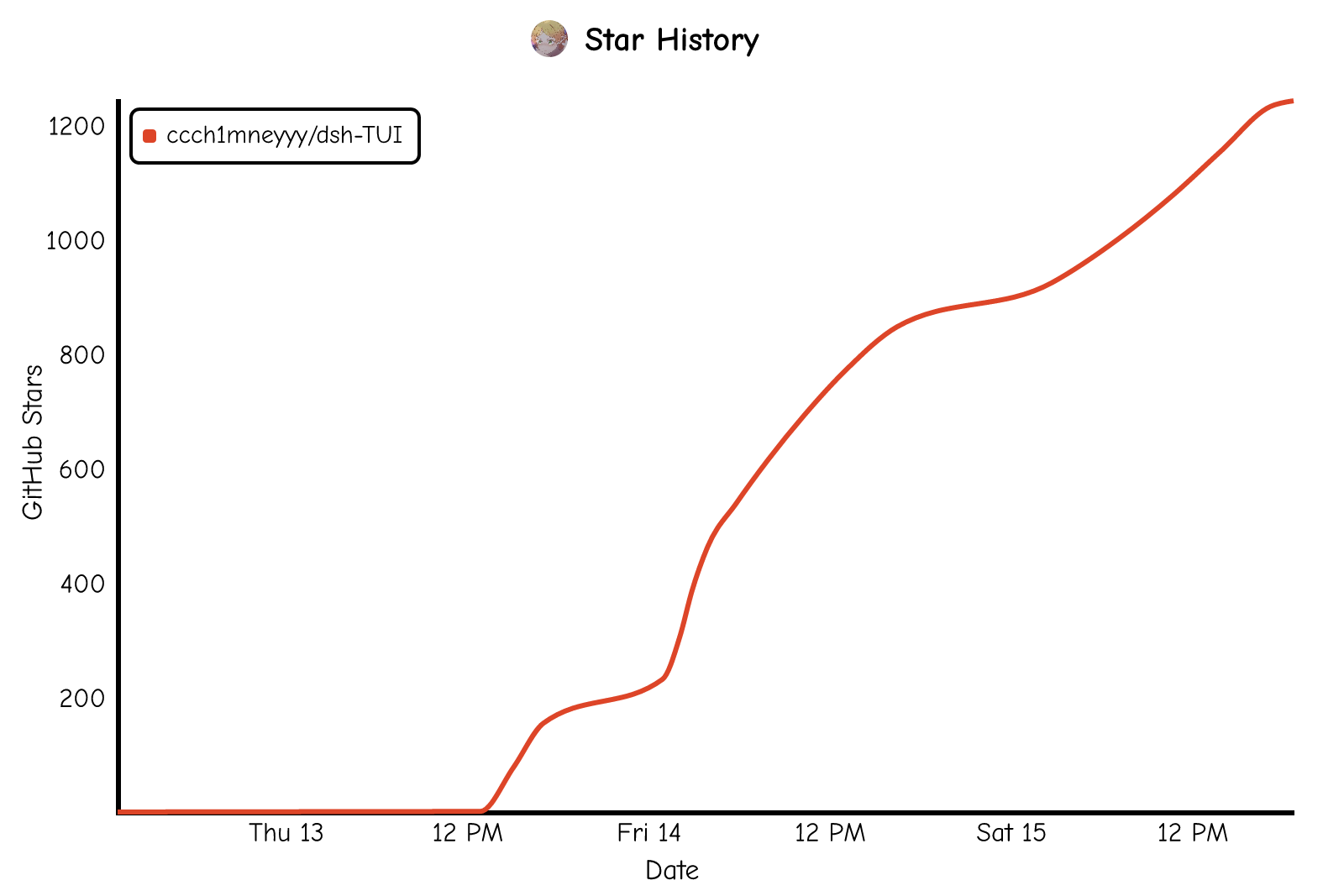
A beautiful, practical Claude Code-style TUI plugin with pixel whale top bar, flowing glow title, real-time status line, streaming thought expansion, time rewind, context progress bar and TPS gauge — zero core changes.
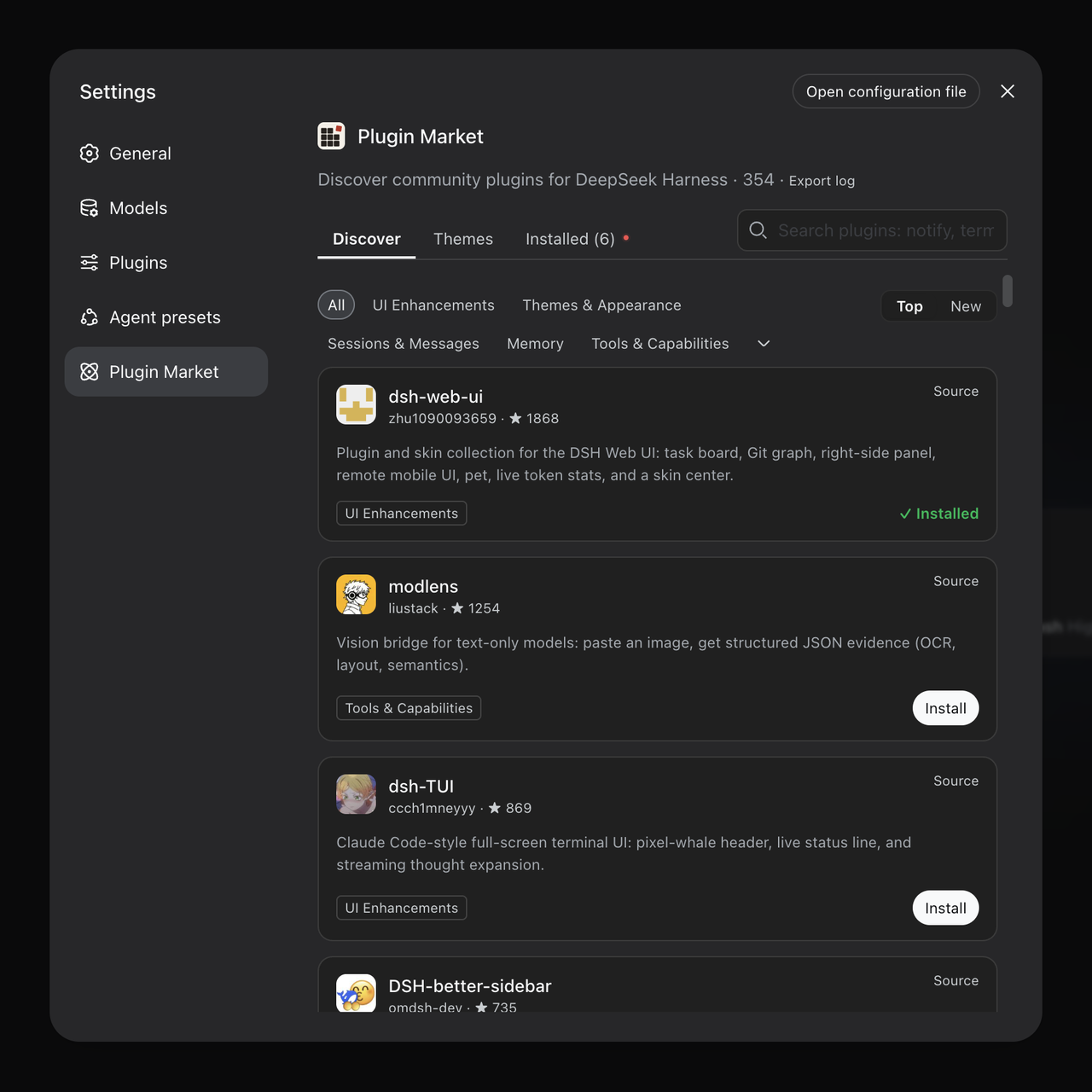
The plugin market for DeepSeek Harness: browse/search/one-click install community plugins and themes, with updates, backup/restore, hot disable, diagnostics, and AI fix.

A persistent whale widget on the DSH web UI that shows DeepSeek balance, today's usage, and per-turn cost, with drag-and-snap and sound effects.