dsh-status-bar
Run the following command in DeepSeek Harness:
dsh plugin install OuYangxin12/dsh-status-bar
Paste the following prompt into your AI chat to install this plugin:
Run dsh plugin install OuYangxin12/dsh-status-bar in your terminal to install; the source repository is https://github.com/OuYangxin12/dsh-status-bar
About this plugin
When the agent is deep into a long task in DSH's web GUI, the screen goes quiet except for a stream of blocks. You cannot tell whether it is stuck, already halfway done, or about to finish, so you end up refreshing the page or scrolling through partial blocks hoping something legible surfaces. dsh-status-bar embeds a compact strip right above the composer: it reads the live ConversationSnapshot (reasoning blocks, running tool calls, step boundaries), aggregates a rolling activity log, and distils it with an LLM into a single achievement line. The refresh is event-driven rather than polled-busy — debounced and merged during tool-call bursts, backstopped by a ceiling during long thinking-only streams, and force-refreshed the instant you type a new instruction. Expand the line and you get a sectioned progress report instead of a wall of raw blocks. It is built for anyone running multi-step agent tasks in DSH who wants at-a-glance progress while keeping their eyes on the input box. The summarizer defaults to cheap flash/mini models, and the plugin ships as a pre-built dual-side bundle (host ESM + browser closure), so there is no build step and no extra runtime dependency beyond the framework itself.
Use Cases
- Glance at live progress during multi-step agent tasks instead of scrolling through block streams
- Get automatic backstop updates during long thinking-only phases to avoid false stall detection
- Expand the one-line summary into a structured progress report for quick status checks
Best For
- Developers running long agent tasks in DSH who want less page-refreshing and log-scrolling
- Users who need lightweight progress visualization without extra build pipelines
- Efficiency-focused users who prefer event-driven refresh over fixed-interval polling
Related Plugins
A service-oriented sidebar framework for DSH, offering a full workbench with file explorer, embedded browser, real terminal, Git panel, and extensible plugin services.
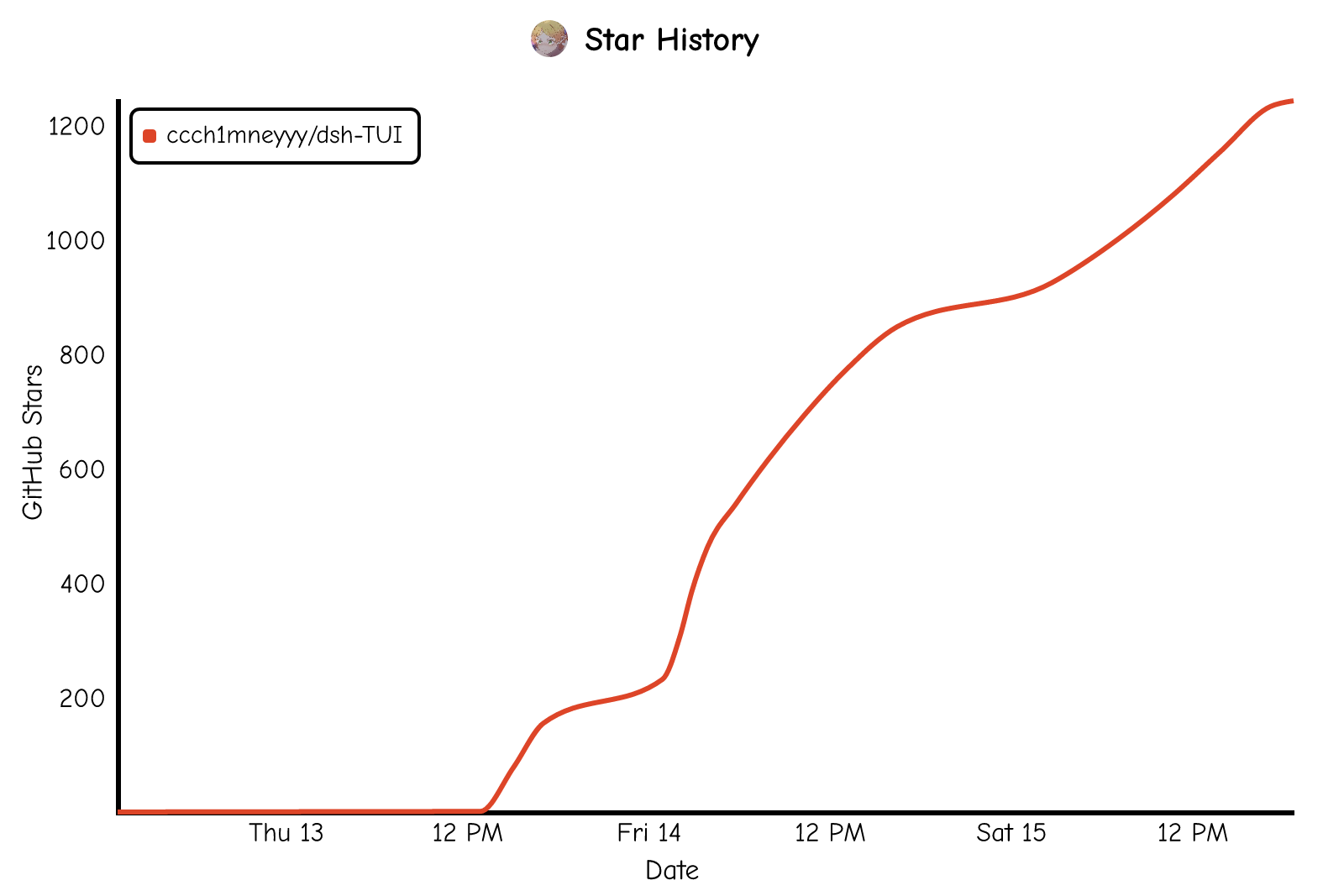
A beautiful, practical Claude Code-style TUI plugin with pixel whale top bar, flowing glow title, real-time status line, streaming thought expansion, time rewind, context progress bar and TPS gauge — zero core changes.
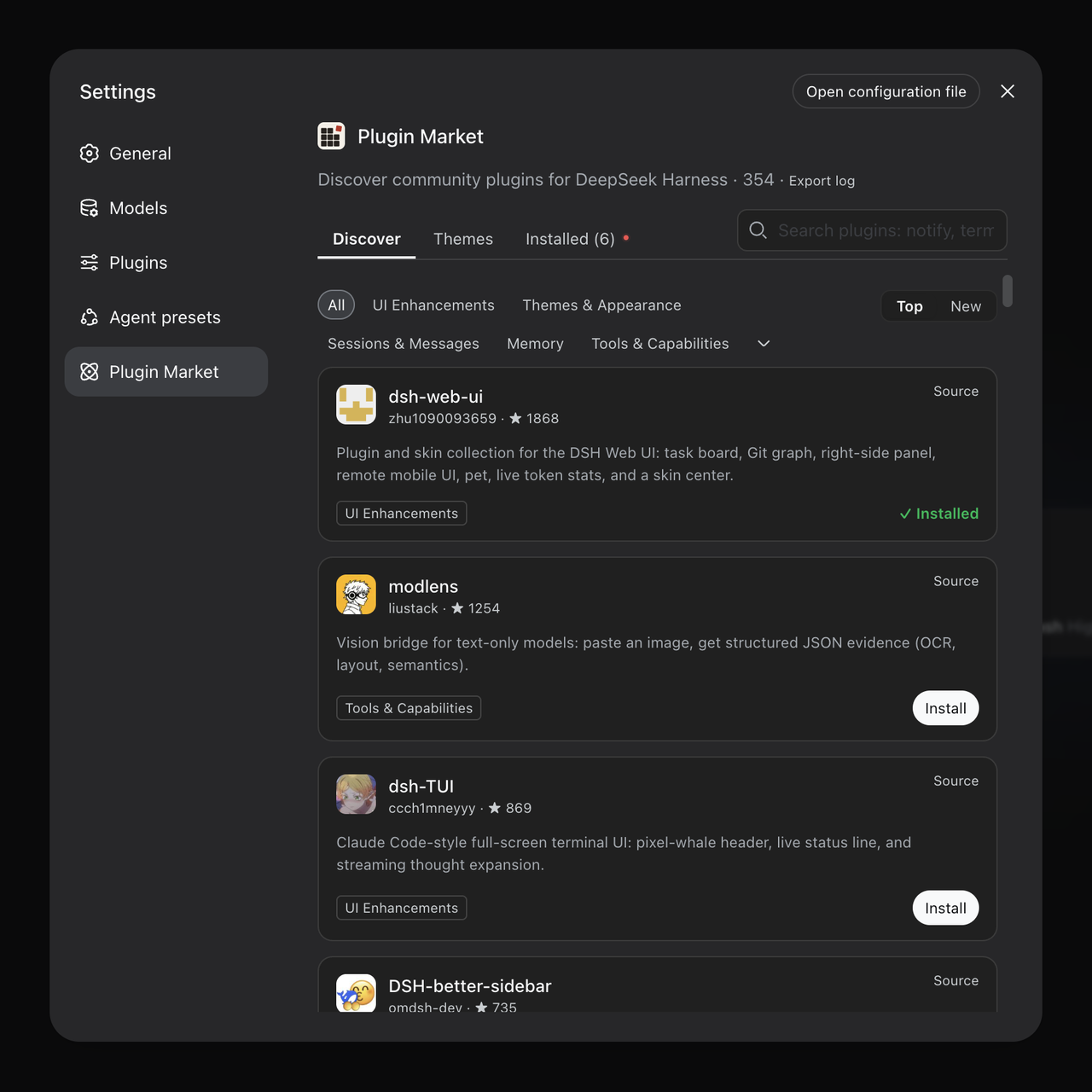
The plugin market for DeepSeek Harness: browse/search/one-click install community plugins and themes, with updates, backup/restore, hot disable, diagnostics, and AI fix.

A persistent whale widget on the DSH web UI that shows DeepSeek balance, today's usage, and per-turn cost, with drag-and-snap and sound effects.