dsh-plugin-hub
Run the following command in DeepSeek Harness:
dsh plugin install zaimokuza-yoshiteru/dsh-plugin-hub
Paste the following prompt into your AI chat to install this plugin:
Run dsh plugin install zaimokuza-yoshiteru/dsh-plugin-hub in your terminal; source code is available at https://github.com/zaimokuza-yoshiteru/dsh-plugin-hub
About this plugin
DSH users juggle Skills, MCP servers, and native plugins across separate entry points, and keeping track of them gets tedious fast. Plugin Hub pulls everything into a single native panel: open it from the corner icon, manage resources in place, close it and you are back in your session. For workflows that lean on a dozen or so Skills and several MCP services daily, that removes the constant window-hopping.
The panel is organized around three resource types. The Skill section offers workspace filtering, search, toggling, and directory access, with bodies rendered through DSH native Markdown components so edits are immediately visible. The MCP section covers JSON/YAML editing and formatting, environment-variable references, per-field help, toggling, reconnection, standalone connection tests, and deletion; validation rules are read directly from the running DSH instance to avoid config drift. The Plugin section lists non-official native plugins with version and origin, and on desktop surfaces a native management-window hint. An experimental area also handles Agent Teams enablement and toggling, available in the browser and on desktop builds that expose the required API.
Plugin Hub is built for power users who treat DSH as their daily driver and rely on multiple Skills and MCP services at once, especially in teams that need consistent bilingual configuration conventions. Every management action is scoped to the current instance profile: toggling a Skill never touches shared files, and deleting an MCP entry only removes the definition created by the Hub or that profile. Those clear boundaries make it safe to explore configurations without risking a global misfire.
Use Cases
- Daily maintenance of multiple Skills and MCP services with quick toggling and connection tests
- Sharing DSH configuration conventions within a team with consistent validation and field help
- Unified viewing and management of native plugins and experimental features across web and desktop
Best For
- Power users relying on multiple Skills and MCP services in DSH
- Teams requiring bilingual UI for configuration management
- Developers seeking unified native resource management across web and desktop
Related Plugins
A service-oriented sidebar framework for DSH, offering a full workbench with file explorer, embedded browser, real terminal, Git panel, and extensible plugin services.
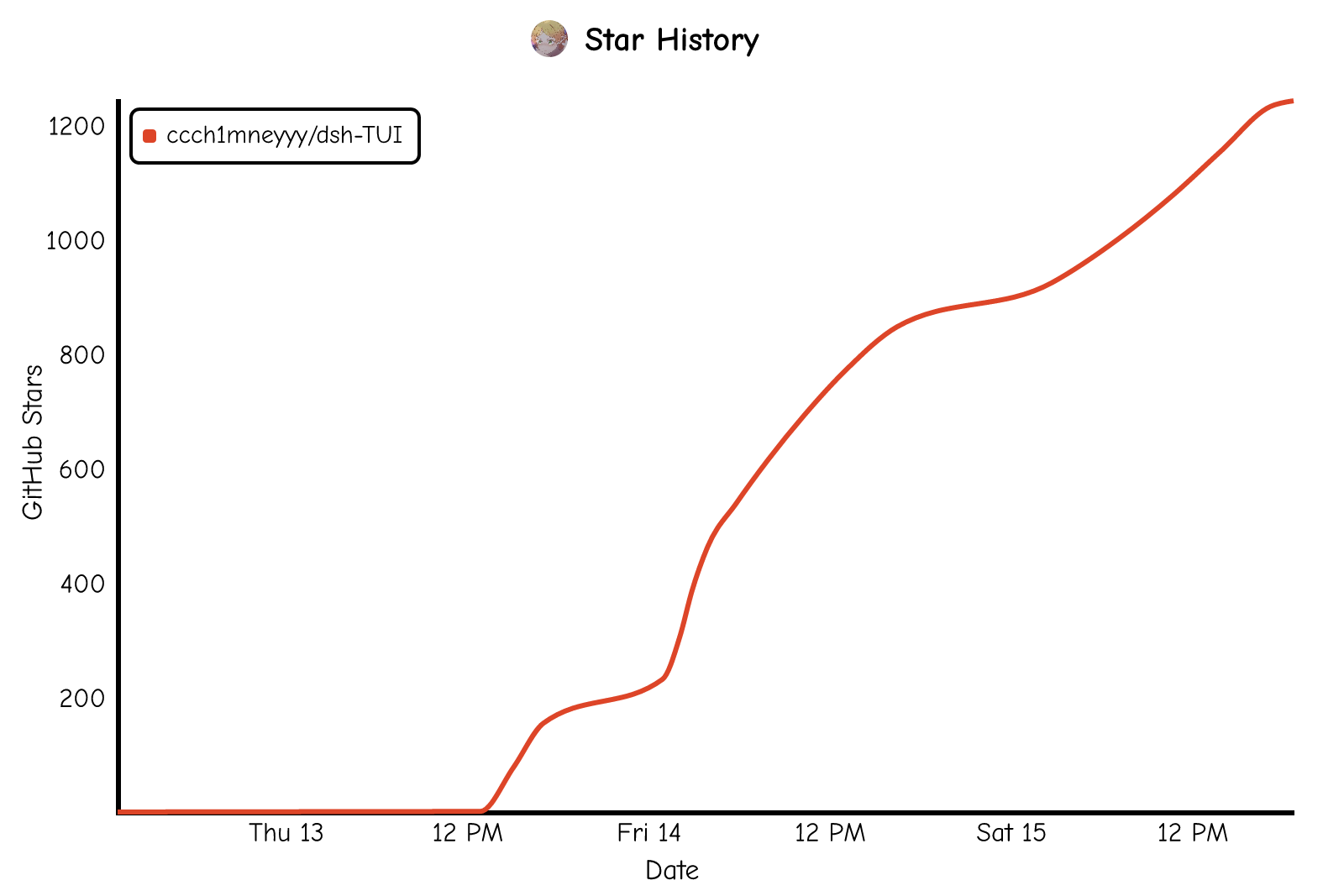
A beautiful, practical Claude Code-style TUI plugin with pixel whale top bar, flowing glow title, real-time status line, streaming thought expansion, time rewind, context progress bar and TPS gauge — zero core changes.
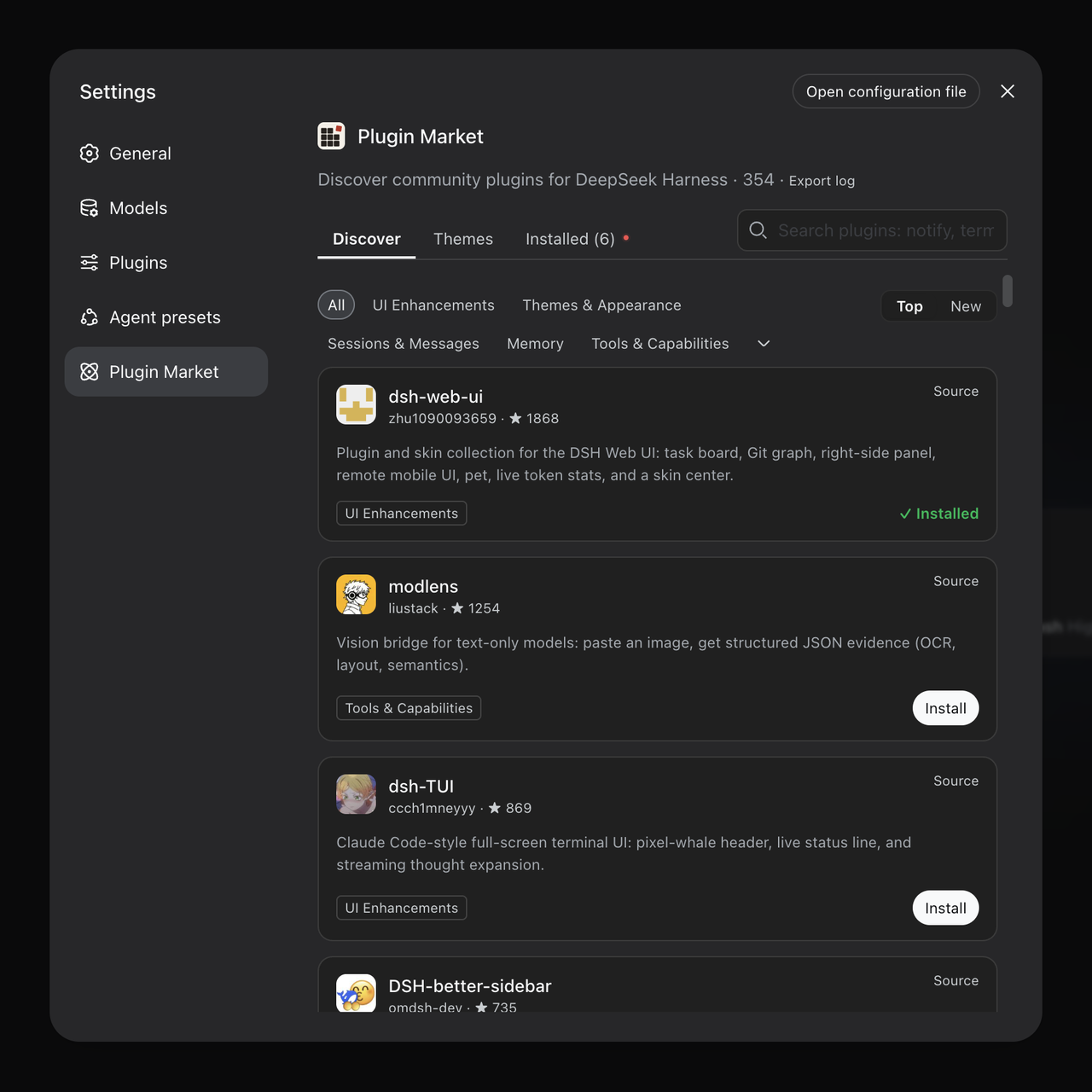
The plugin market for DeepSeek Harness: browse/search/one-click install community plugins and themes, with updates, backup/restore, hot disable, diagnostics, and AI fix.

A persistent whale widget on the DSH web UI that shows DeepSeek balance, today's usage, and per-turn cost, with drag-and-snap and sound effects.