dsh-docker
Run the following command in DeepSeek Harness:
dsh plugin install somebdly/dsh-docker
Paste the following prompt into your AI chat to install this plugin:
Run dsh plugin install somebdly/dsh-docker in the terminal to add this plugin to DeepSeek Harness; the source code is available at https://github.com/somebdly/dsh-docker
About this plugin
The Docker MCP ecosystem is expanding quickly, yet day-to-day operations remain fragmented: starting and stopping the MCP Gateway, adding and removing dozens of servers in a profile, searching and deploying from the official Catalog, managing container lifecycles and image cleanup - these tasks usually live across multiple terminal windows, SSH sessions, and documentation tabs. dsh-docker consolidates all of them into a single sidebar panel inside the DeepSeek Harness Web GUI. An MCP tab (Deployed and Catalog sub-pages) sits alongside a Containers and Images tab, with a target selector at the top that switches between the local CLI and a remote SSH host in one click, so every action immediately points at the correct daemon without opening a new shell or retyping an address.
Security is handled end to end: the panel HTTP server binds to loopback only, SSH passwords are encrypted at rest with Windows DPAPI and never written in plain text, container IDs, image names, ports, and paths are validated against allow-list regexes before being interpolated into any command, and every destructive operation (stop, restart, delete, prune) triggers a two-step confirmation. An interactive terminal supports docker exec -it sessions over SSH with full PTY and window-resize capability. Quality-of-life details such as batch image deletion, dangling-image cleanup by ID, and a default keep-alive for newly created containers cover the high-frequency tasks that are easy to botch in a real workload.
The plugin is aimed at developers and SREs who already use the DeepSeek Harness Web GUI, work with the Docker MCP Gateway regularly, and juggle both a local dev machine and one or more remote servers. It does not replace docker CLI or Docker Desktop; it simply saves you a few windows and a few copy-paste cycles while you are already working in the browser.
Use Cases
- Start or stop the Docker MCP Gateway and deploy or remove MCP servers from a web panel
- Manage remote container and image operations over SSH without juggling multiple terminals
- Bulk-delete dangling images and open interactive container terminals for debugging
Best For
- Developers who work with the Docker MCP Gateway on a daily basis
- SREs managing both local dev machines and one or more remote servers
- Users who prefer browser-based operations to minimize terminal switching
Related Plugins
A service-oriented sidebar framework for DSH, offering a full workbench with file explorer, embedded browser, real terminal, Git panel, and extensible plugin services.
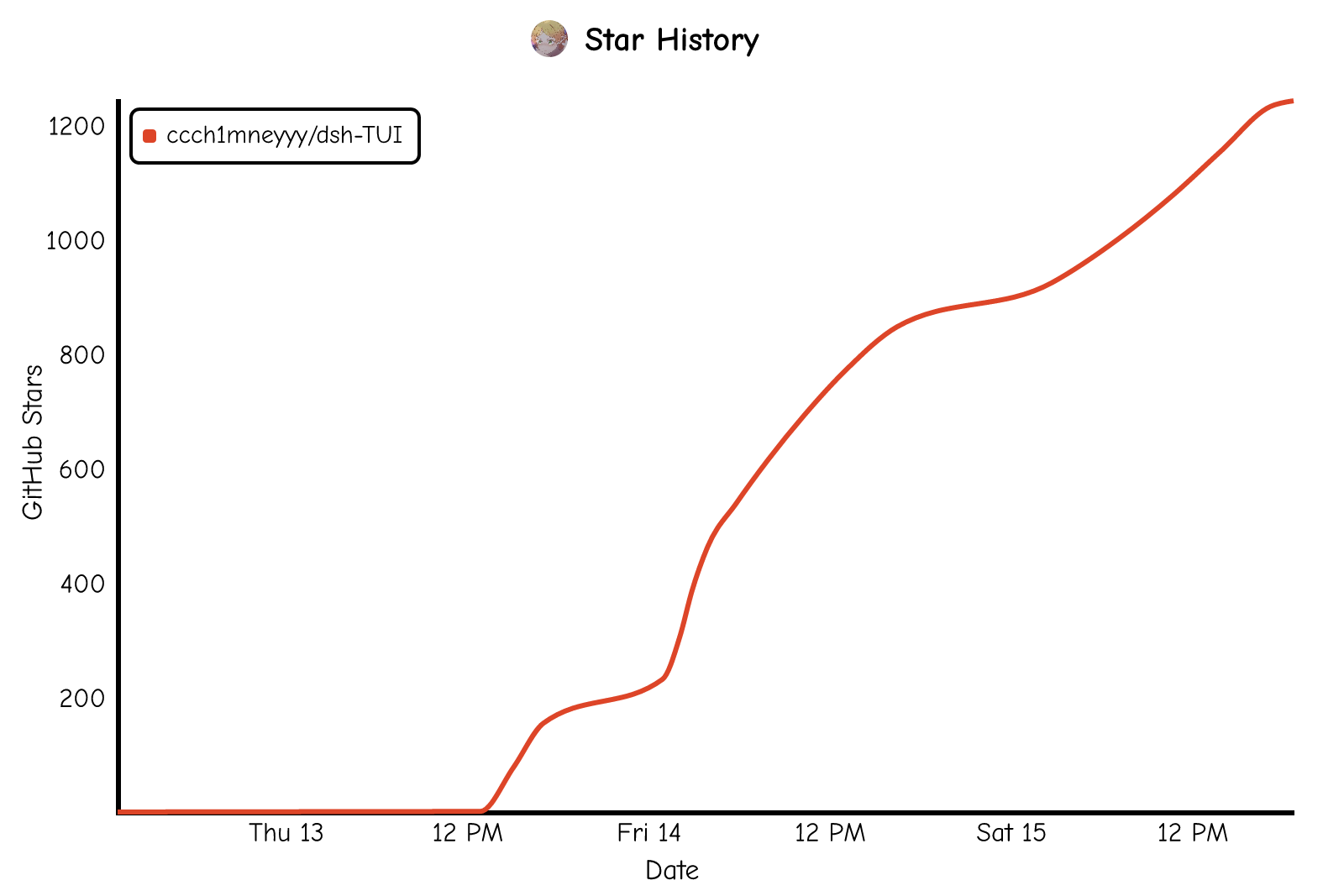
A beautiful, practical Claude Code-style TUI plugin with pixel whale top bar, flowing glow title, real-time status line, streaming thought expansion, time rewind, context progress bar and TPS gauge — zero core changes.
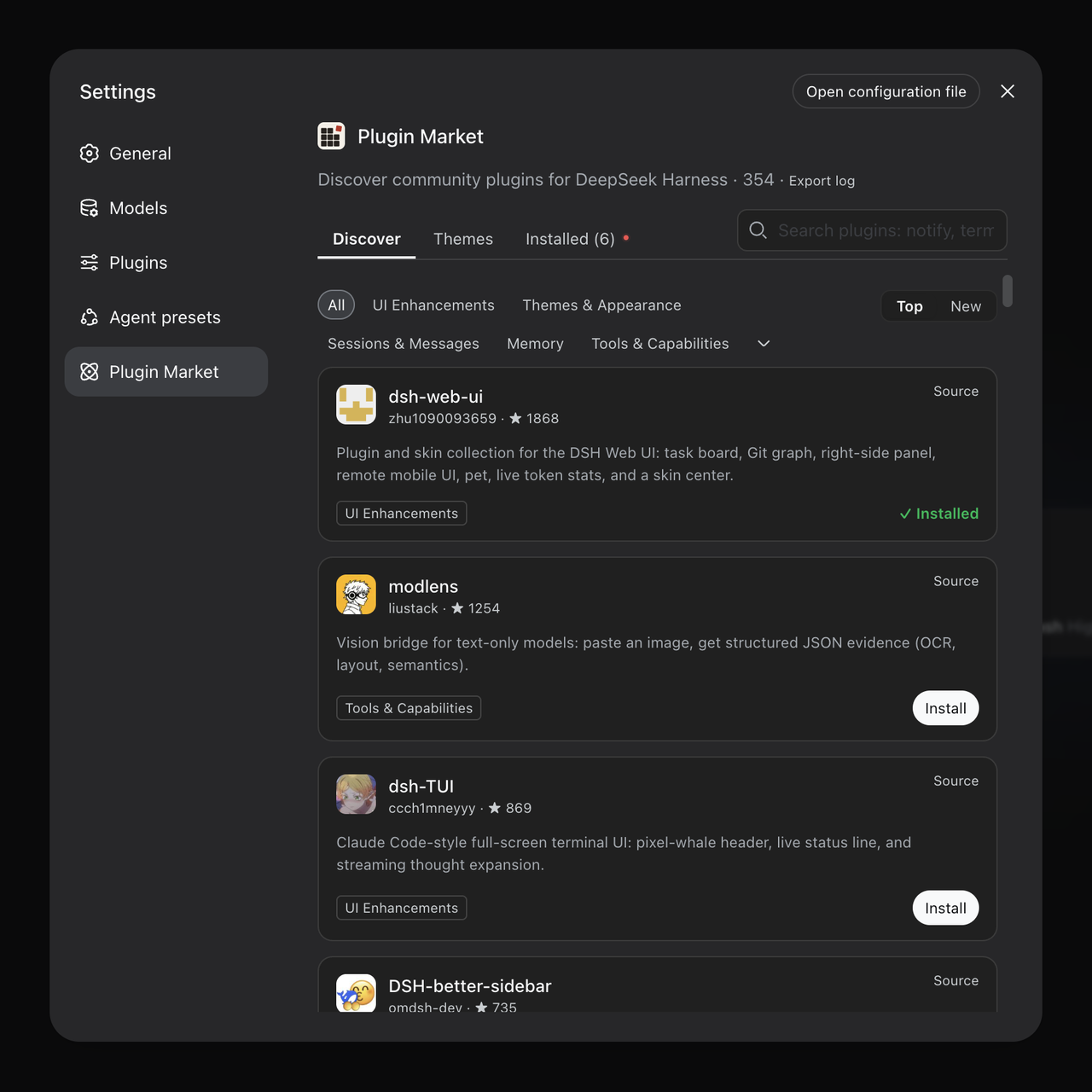
The plugin market for DeepSeek Harness: browse/search/one-click install community plugins and themes, with updates, backup/restore, hot disable, diagnostics, and AI fix.

A persistent whale widget on the DSH web UI that shows DeepSeek balance, today's usage, and per-turn cost, with drag-and-snap and sound effects.