dsh-nexus
Run the following command in DeepSeek Harness:
dsh plugin install chenqiuyushuang/dsh-nexus
Paste the following prompt into your AI chat to install this plugin:
Run dsh plugin install chenqiuyushuang/dsh-nexus in DeepSeek Harness to install this plugin; the source code is available at https://github.com/chenqiuyushuang/dsh-nexus and can be installed from a local tarball or the GitHub source.
About this plugin
In a DeepSeek Harness setup, cross-session memory has traditionally been handled by appending raw text to a file — unstructured, unaudited, and blind to token budgets. dsh-nexus reframes memory as a three-tier structure of atomic units, gating, and auditability: each memory is an indivisible data element scored and ownership-checked before writing, allocated against a fixed byte budget at injection time, and fully traceable and reversible throughout its lifecycle.
Three capabilities stand out. First, cost self-protection: the default mode is zero-token and zero-external-service, extraction is purely deterministic, injection is capped at 1024 bytes, and the system auto-degrades to write-only after seven idle days. Second, transparency and control: the panel header reads exactly how many entries and bytes made it into context against the budget, every excluded entry carries one of six explicit reasons, and a one-click fix is offered per reason — shorten, reassign project, or confirm active. Third, reversible deletion: archive, recycle bin, and permanent erase form three isolated stages, a misfire can be undone within five seconds, and conflicting entries are resolved through a three-way verdict rather than blind overwrite.
This plugin is for DeepSeek Harness developers who need persistent cross-session memory and treat memory as structured data, not a log. If you want every write to be auditable and rollback-able, want a zero-token default that needs no external embedding service, and prefer a dark-mode panel to visually manage budget, ownership, and confidence at a glance, dsh-nexus is built for that workflow.
Use Cases
- Managing persistent cross-session memory in DeepSeek Harness
- Allocating and filtering memory entries against a byte-level injection budget
- Auditing, archiving, and adjudicating memory writes after they land
Best For
- DeepSeek Harness developers who need persistent cross-session memory
- Teams that want zero-token, zero-external-service defaults out of the box
- Users who demand auditable, rollback-able, per-entry memory governance
Related Plugins
A service-oriented sidebar framework for DSH, offering a full workbench with file explorer, embedded browser, real terminal, Git panel, and extensible plugin services.
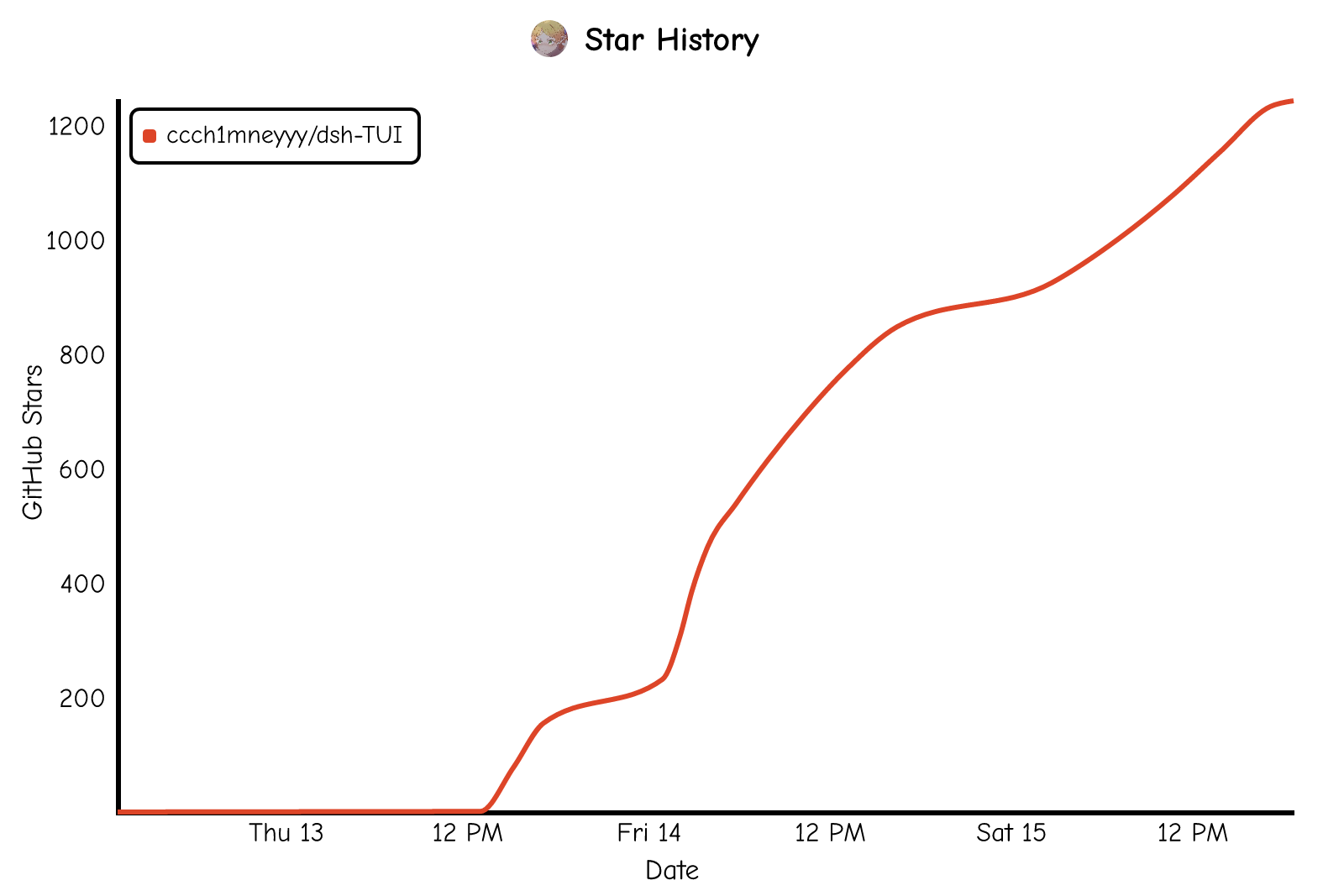
A beautiful, practical Claude Code-style TUI plugin with pixel whale top bar, flowing glow title, real-time status line, streaming thought expansion, time rewind, context progress bar and TPS gauge — zero core changes.
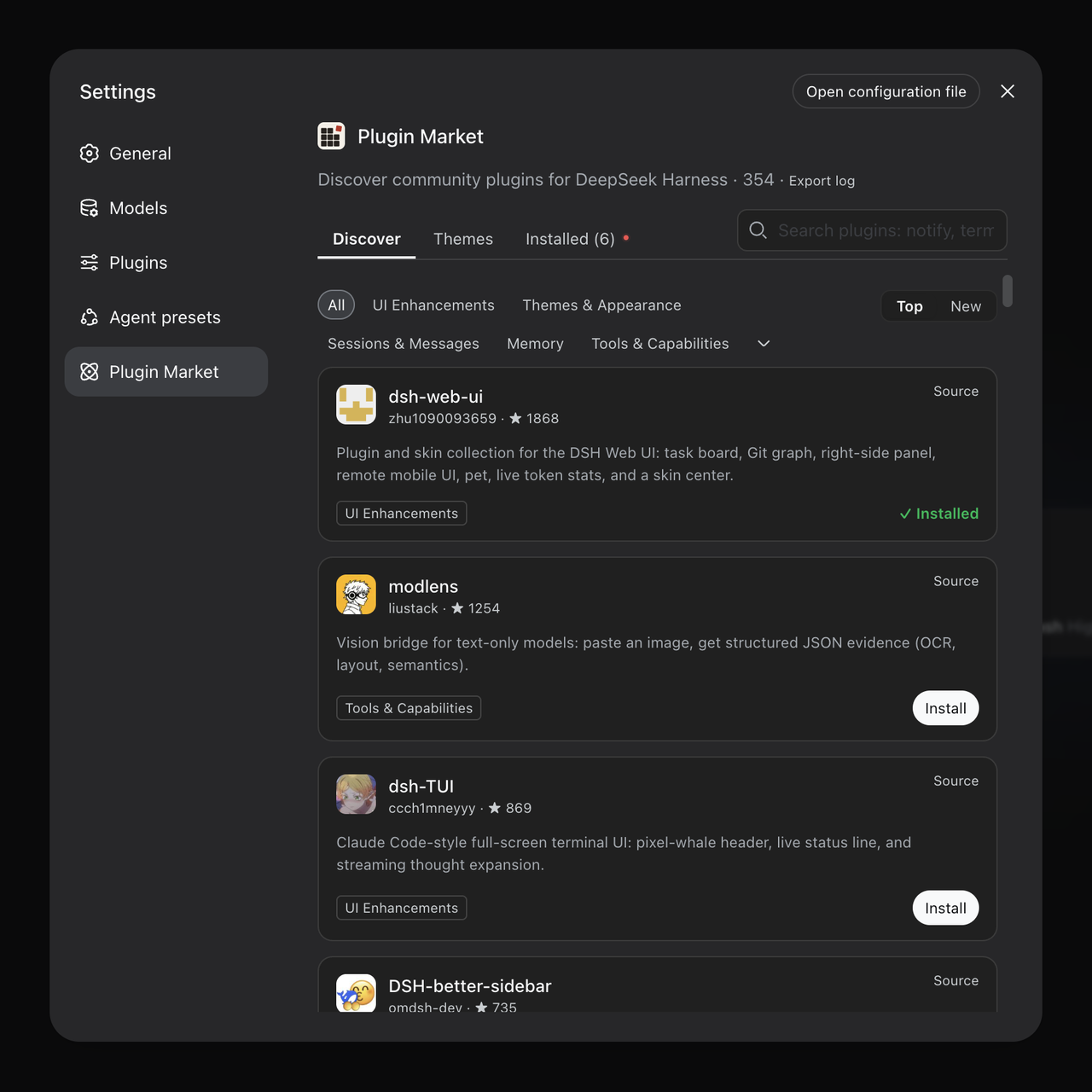
The plugin market for DeepSeek Harness: browse/search/one-click install community plugins and themes, with updates, backup/restore, hot disable, diagnostics, and AI fix.

A persistent whale widget on the DSH web UI that shows DeepSeek balance, today's usage, and per-turn cost, with drag-and-snap and sound effects.