dsh-files-pane
Run the following command in DeepSeek Harness:
dsh plugin install liooil/dsh-files-pane
Paste the following prompt into your AI chat to install this plugin:
Clone the repository at https://github.com/liooil/dsh-files-pane and mount it as a single row in your profile patch layer at ~/.dsh/profiles/<profile>/cordis.patch.yml, or run dsh plugin install liooil/dsh-files-pane to install by name, then restart dsh to activate.
About this plugin
dsh web runs on the machine that holds the files, but the browser usually does not. When a tool card or @path mention in a conversation is clicked, the system calls openWorkspacePath, which on a headless host spawns xdg-open into thin air. dsh-files-pane intercepts that single call and renders the file inside the page, using the chat window and its own MarkdownText and Shiki CodeBlock so the output looks identical to the surrounding conversation. No desktop opener required.
The files view sits as a third Session View tab beside Chat and Trajectory, full width, one view at a time. A two-column directory panel on the left makes sideways navigation quick without crawling back to the root. The header path is editable: click, type, press Enter. Relative images inside Markdown are fetched from the host and rendered inline. Text is capped at 400 KB per file, images at 4 MB; binary files are announced rather than dumped. A collapse toggle, loading feedback, and fish-style path shortening all serve one goal: reading without distraction.
This plugin is built for users who operate DeepSeek Harness from a browser while the files live on a headless Linux box with no desktop environment to pop a window. There is no build step and no external dependency: clone and refresh, or install by name and restart. Edit the browser bundle and reload; change the host routes and restart dsh. That is the whole loop.
Use Cases
- Clicking a file reference in a conversation on a headless server opens it in-page instead of invoking a desktop opener
- Reading host-side Markdown and code files with the same highlighting the chat window uses
- Browsing directory structures sideways via two-column navigation or typing a path in the header
- Relative images inside Markdown are fetched from the host and rendered inline beside the text
Best For
- Users operating DSH from a browser on a headless Linux box
- Deployments where files live on the host and no desktop environment is available for xdg-open
- Users who want file reading to match chat rendering exactly, with zero build step and zero dependencies
Related Plugins
A service-oriented sidebar framework for DSH, offering a full workbench with file explorer, embedded browser, real terminal, Git panel, and extensible plugin services.
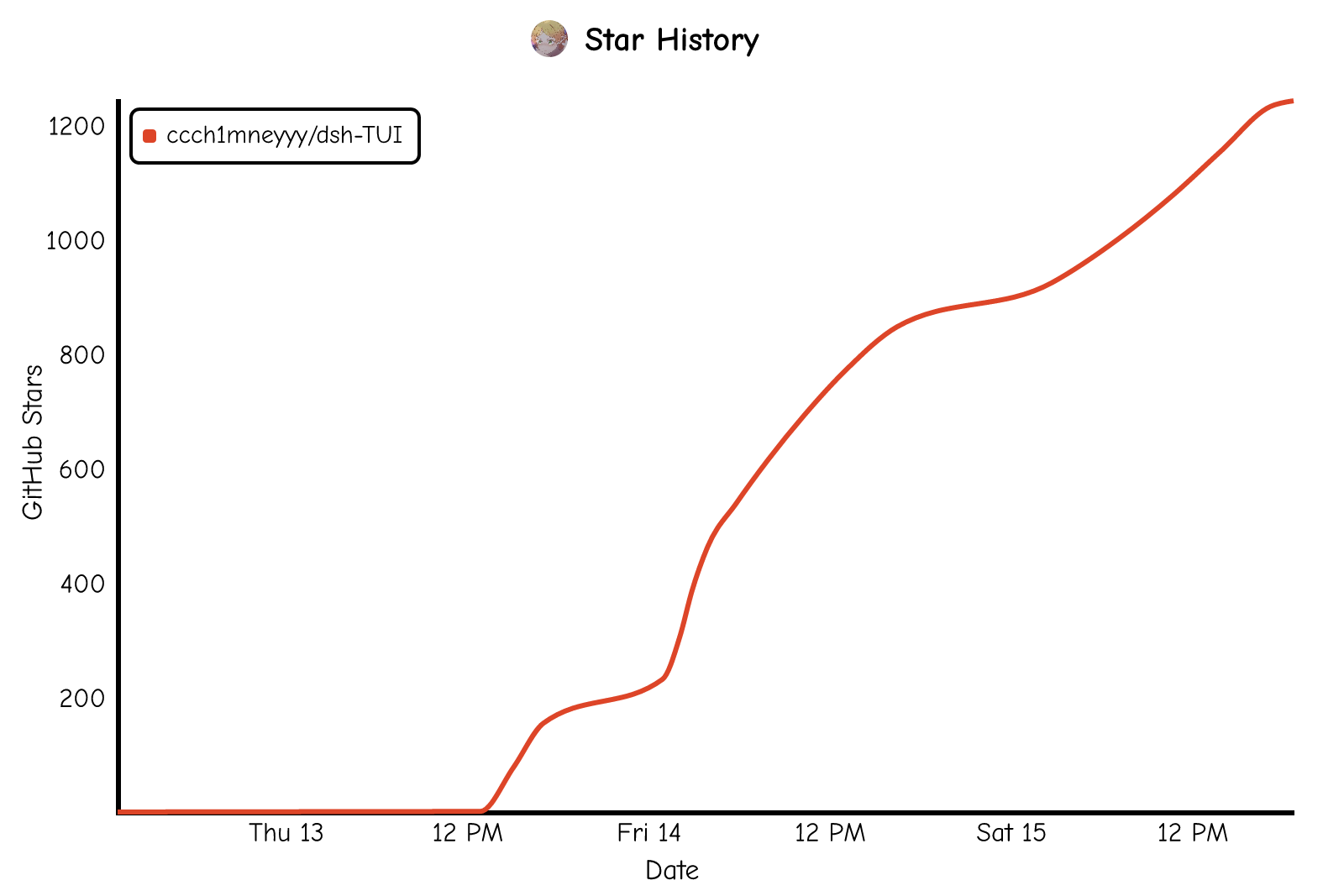
A beautiful, practical Claude Code-style TUI plugin with pixel whale top bar, flowing glow title, real-time status line, streaming thought expansion, time rewind, context progress bar and TPS gauge — zero core changes.
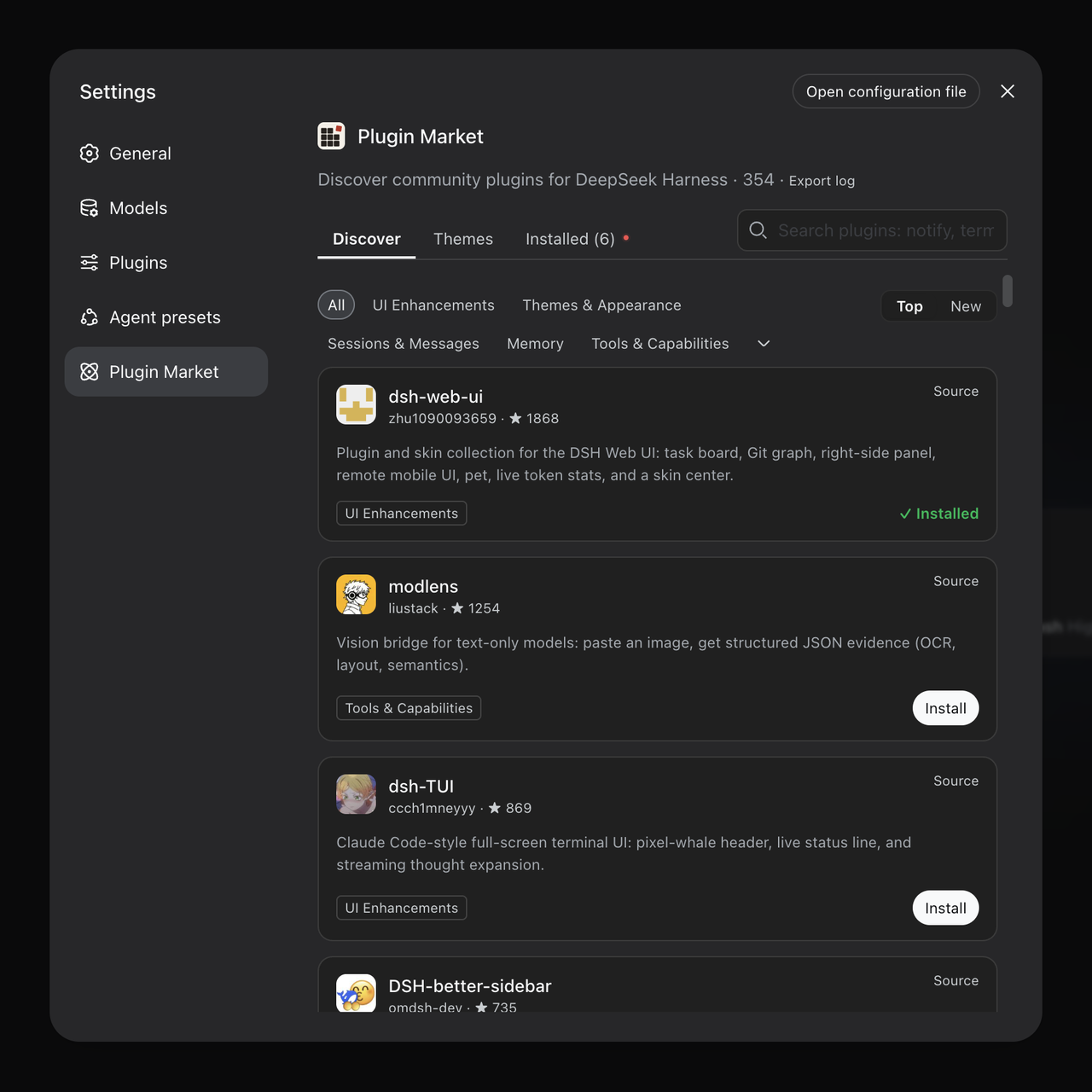
The plugin market for DeepSeek Harness: browse/search/one-click install community plugins and themes, with updates, backup/restore, hot disable, diagnostics, and AI fix.

A persistent whale widget on the DSH web UI that shows DeepSeek balance, today's usage, and per-turn cost, with drag-and-snap and sound effects.