dsh-ssh-workspace-manager
Run the following command in DeepSeek Harness:
dsh plugin install telagod/dsh-ssh-workspace-manager
Paste the following prompt into your AI chat to install this plugin:
Run dsh plugin install telagod/dsh-ssh-workspace-manager in your DeepSeek Harness terminal to complete the installation; the source code is available at https://github.com/telagod/dsh-ssh-workspace-manager.
About this plugin
"Deploy this to the server" is the kind of sentence that stalls an agent: it does not know which host to target, guesses a remote path, and shells out to ssh with a command the sandbox may refuse. dsh-ssh-workspace-manager moves the deciding facts—host, credentials, remote directory, container runtime—out of the prompt and into a settings page, so a human configures them once and the agent reuses them every turn.
The plugin adds an "SSH Remote" tab to DSH Settings where you manage hosts, inspect bindings, tune defaults, and run connection tests or remote environment probes. On the agent side, tools like ssh_status, ssh_bind, ssh_exec, ssh_sync, ssh_compose, and ssh_inspect let it execute commands, push files, and drive Docker or Podman Compose inside the bound remote directory—no ad-hoc ssh, no path guessing each turn.
It is built for developers who already work through an agent-assisted workflow and frequently target remote servers: you add the host, pick the key, press Test Connection; the agent handles binding the workspace, running the deploy, syncing code, and bringing containers up. Each side does what it is good at, and nothing gets re-derived.
Use Cases
- Tell the agent to deploy and let it bind the host and run SSH commands automatically
- Push local project code to a remote directory via rsync and manage Docker Compose services
- Add multiple hosts in Settings, test connections, and inspect remote environments and containers
Best For
- Developers who frequently work with remote servers and want to minimize manual SSH commands
- Backend or full-stack engineers managing multi-project deployments through an agent workflow
- Ops engineers who need to manage multi-environment host configurations within DSH
Related Plugins
A service-oriented sidebar framework for DSH, offering a full workbench with file explorer, embedded browser, real terminal, Git panel, and extensible plugin services.
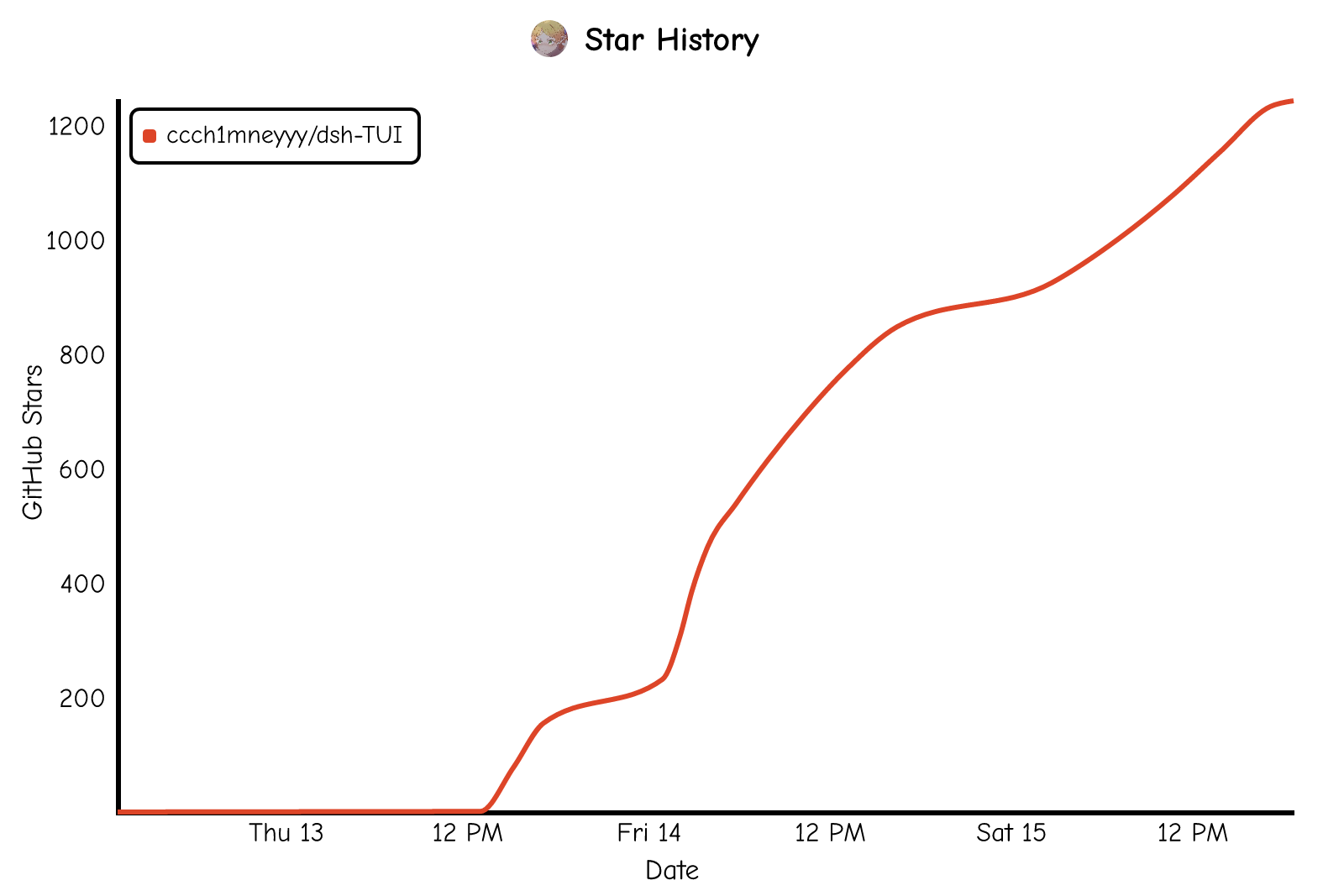
A beautiful, practical Claude Code-style TUI plugin with pixel whale top bar, flowing glow title, real-time status line, streaming thought expansion, time rewind, context progress bar and TPS gauge — zero core changes.
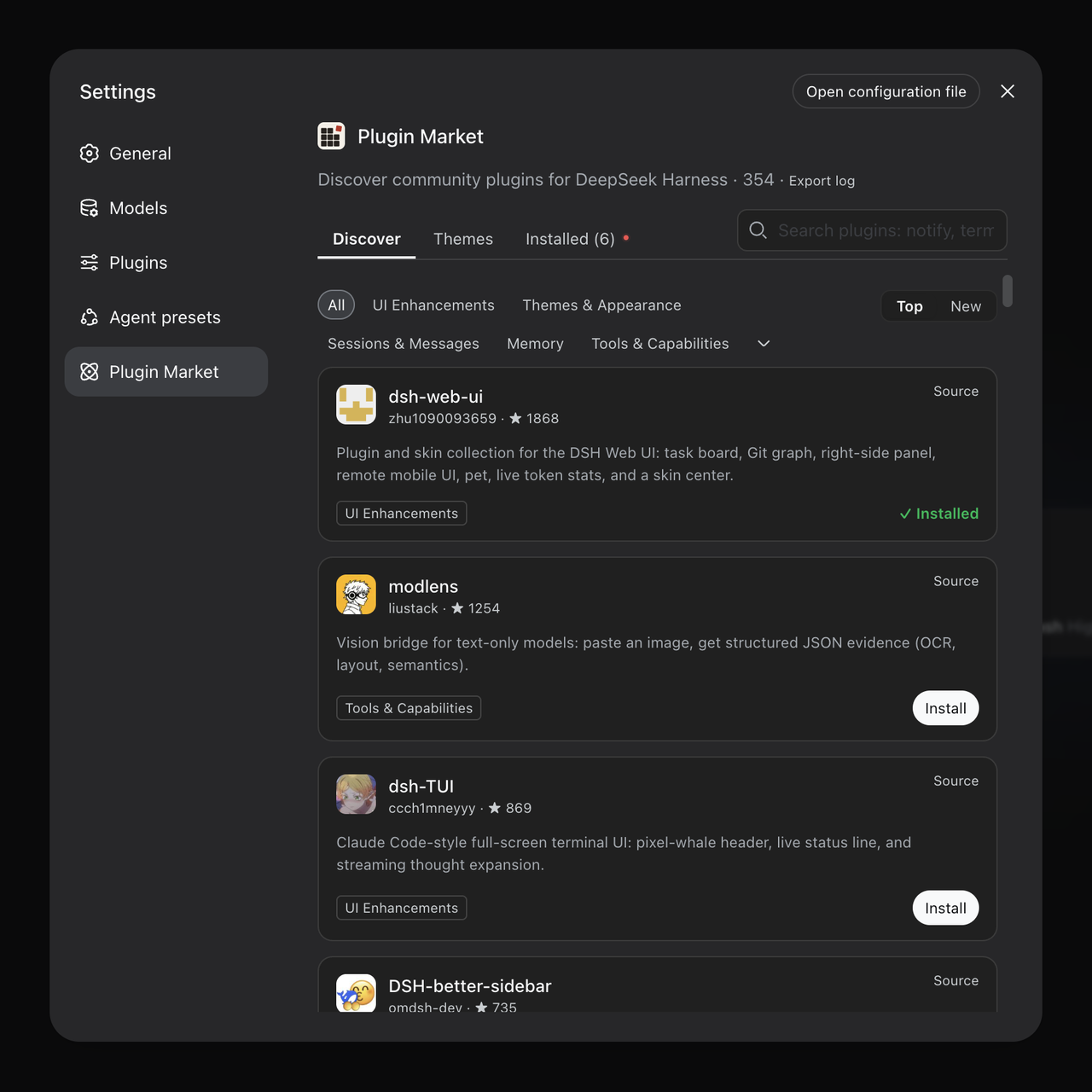
The plugin market for DeepSeek Harness: browse/search/one-click install community plugins and themes, with updates, backup/restore, hot disable, diagnostics, and AI fix.

A persistent whale widget on the DSH web UI that shows DeepSeek balance, today's usage, and per-turn cost, with drag-and-snap and sound effects.