quick-research-campaign
Run the following command in DeepSeek Harness:
dsh plugin install wswbx/quick-research-campaign
Paste the following prompt into your AI chat to install this plugin:
Install the plugin in your DeepSeek Harness profile by running dsh plugin install wswbx/quick-research-campaign; source code is available at https://github.com/wswbx/quick-research-campaign and the plugin activates after a profile restart.
About this plugin
The hardest part of ML parameter tuning is rarely “finding a good config.” It is usually the aftermath: twenty trials later you realize gate_type never tested one of its values, rope_base is perfectly locked to it, and the ablation table simply does not exist. quick-research-campaign turns that mess into a pipeline—define the target, pick a repo, align the baseline, make the minimal change, sweep at scale, pick the winner, attribute via the ingredient list, and ship the write-up—with a tool backing each step instead of relying on chat-log archaeology.
It ships three tools and one loadable skill. research_sweep_plan expands the search space into a bounded, de-confounded trial matrix: full cartesian product when the budget allows, uniform sampling rather than fixed-step truncation when it does not, plus explicit reports on which values were never tested and which parameter pairs are confounded. research_sweep_record logs every run as ok, failed, or pruned with metrics—failures and pruned runs count, because an unbounded search space cannot support an experimental section. research_sweep_report ranks by a single metric, prints the gap against the pinned baseline and SOTA target, flags whether the top ranks sit inside noise, computes each parameter’s marginal effect, runs a confound check, and emits a paper material checklist where every unchecked item is exactly what your methods section still owes.
Built for researchers and engineers running systematic tuning campaigns who need a reproducible ablation table and a defensible “why this config” narrative. It deliberately does not train, schedule, or build UIs: the ledger is per-session process state, and the agent plus shell do the actual running. You handle the hands-on work; it handles making sure you can explain the result.
Use Cases
- Identify untested values and confounded parameter pairs after a large-scale sweep
- Build a defensible ablation table with per-parameter marginal effects and baseline gaps
- Produce a full report with noise analysis, confound checks, and a paper material checklist
Best For
- Researchers running systematic ML tuning who need a reproducible ablation table
- Engineers who must justify why a specific hyperparameter set was chosen
- Developers building research pipelines in DeepSeek Harness who need ledger-style experiment tracking
Related Plugins
A service-oriented sidebar framework for DSH, offering a full workbench with file explorer, embedded browser, real terminal, Git panel, and extensible plugin services.
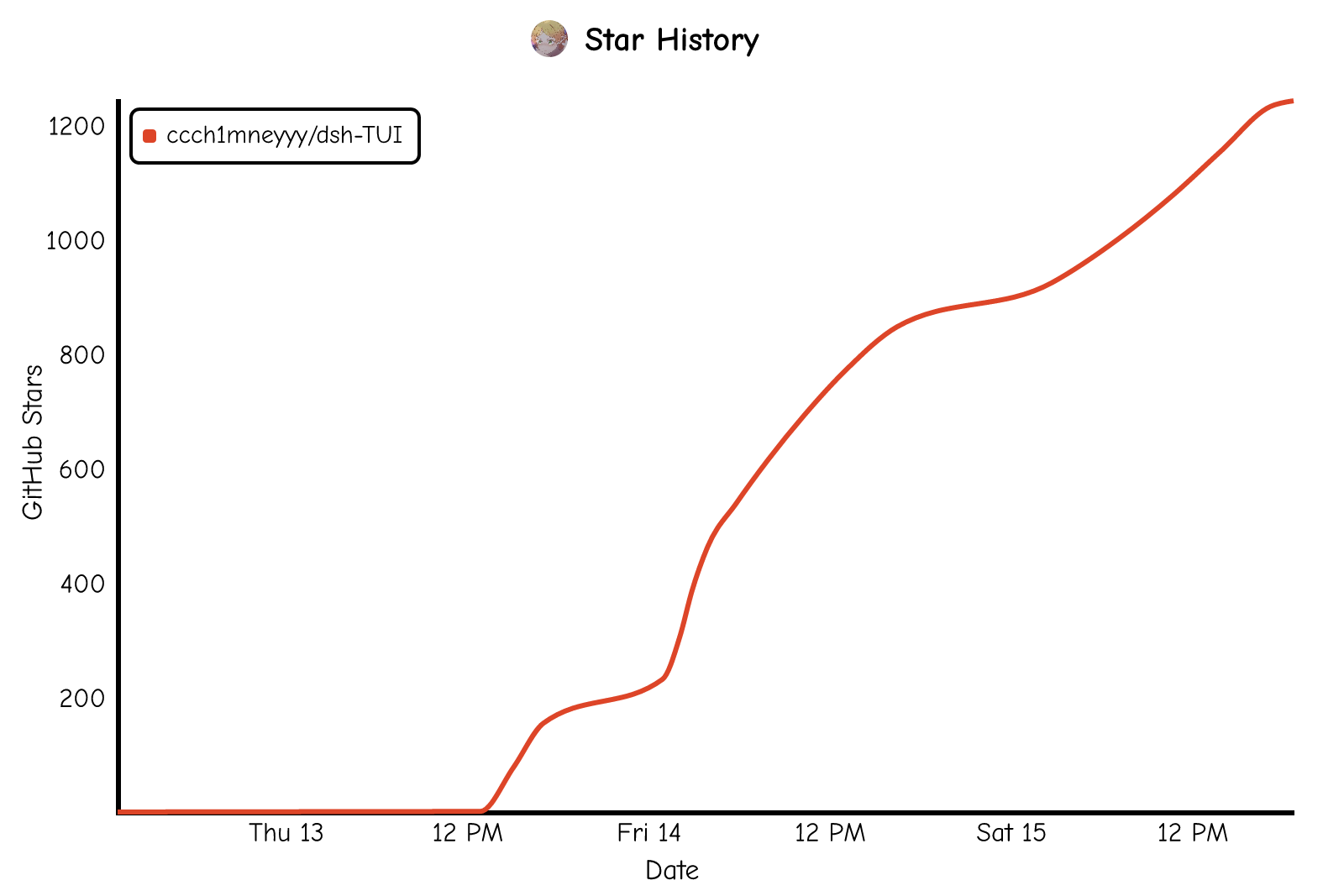
A beautiful, practical Claude Code-style TUI plugin with pixel whale top bar, flowing glow title, real-time status line, streaming thought expansion, time rewind, context progress bar and TPS gauge — zero core changes.
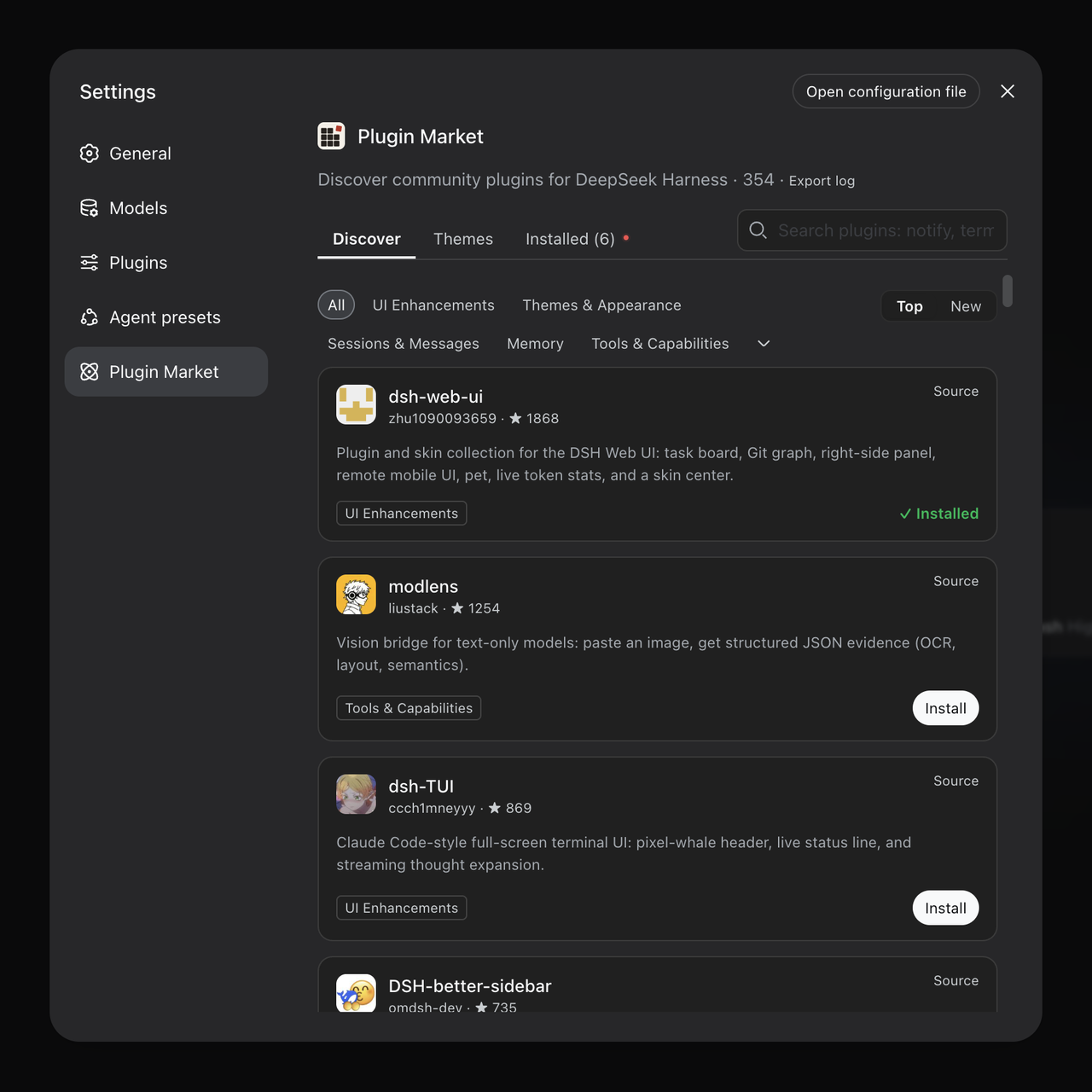
The plugin market for DeepSeek Harness: browse/search/one-click install community plugins and themes, with updates, backup/restore, hot disable, diagnostics, and AI fix.

A persistent whale widget on the DSH web UI that shows DeepSeek balance, today's usage, and per-turn cost, with drag-and-snap and sound effects.