dsh-user-plugins
Run the following command in DeepSeek Harness:
dsh plugin install inxups/dsh-user-plugins
Paste the following prompt into your AI chat to install this plugin:
Run dsh plugin install inxups/dsh-user-plugins in the DeepSeek Harness terminal to install this plugin; the full source repository is available at https://github.com/inxups/dsh-user-plugins .
About this plugin
DSH ships with a built-in Plugin list that lumps official and third-party packs into one table, with no install source, no version number, and no indication of which profile they belong to. Once you have a handful of github links, local paths, and version ranges scattered across multiple profiles via dsh plugin add, it becomes hard to quickly see what you actually installed, where, and whether it is loading correctly. dsh-user-plugins exists to close exactly that gap.
It adds an Installed Plugins tab under Settings > Plugins that shows only third-party packages you explicitly installed into a profile, silently filtering out every @deepseek-ai/* official entry. Each row displays the install source spec (github:, link:, or version range), the on-disk manifest version, the bundle type (plugin pack / frontend / library), and a live status dot (done, ongoing, error, idle) reflecting the current loader. The panel is strictly read-only with no toggle or uninstall actions, yet the data layer still returns a full snapshot including shipped flags; all filtering lives in a single front-end function called selectUserPlugins() and is covered by unit tests.
The host side has zero runtime dependencies (only node:fs and node:path), and the browser side relies solely on the platform's built-in React primitives and design tokens, so theme switching and dark-mode changes follow automatically with no third-party UI library. The refresh button spins its icon and disables itself while fetching; on failure the last good result stays visible with an inline error above it. This plugin is ideal for developers juggling multiple DSH profiles who install third-party packs from diverse sources and want a single GUI view to confirm what they installed and how it is running.
Use Cases
- Quickly confirm which third-party plugins each profile has installed and their versions
- Debug a failing third-party plugin by inspecting its source spec and live status dot
- Present the current profile's third-party plugin inventory to a team and verify bundle types
Best For
- DSH users who install third-party plugins from diverse sources frequently
- Developers managing multiple DSH profiles and auditing their dependencies
- Ops engineers who need a centralized GUI view of plugin install status
Related Plugins
A service-oriented sidebar framework for DSH, offering a full workbench with file explorer, embedded browser, real terminal, Git panel, and extensible plugin services.
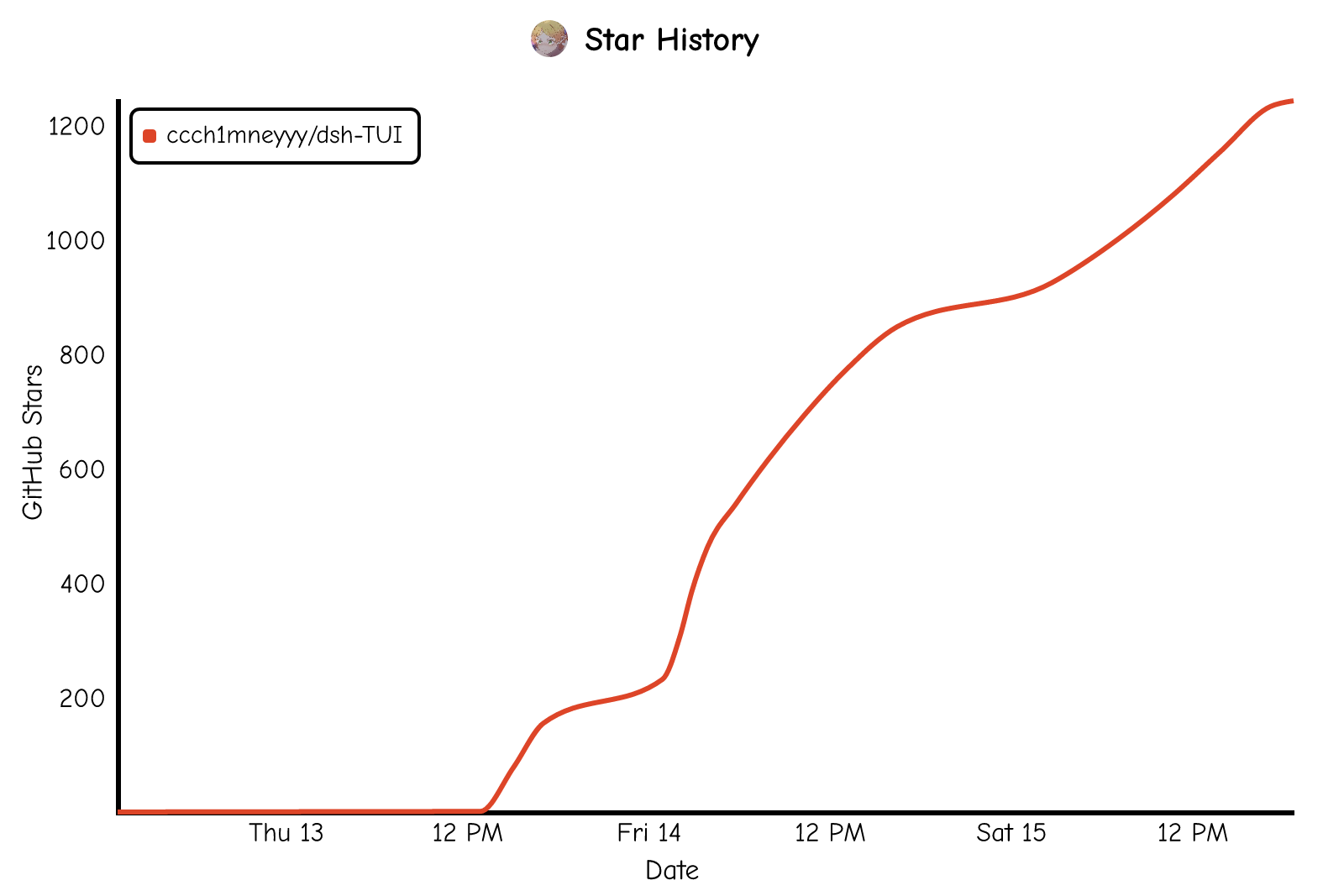
A beautiful, practical Claude Code-style TUI plugin with pixel whale top bar, flowing glow title, real-time status line, streaming thought expansion, time rewind, context progress bar and TPS gauge — zero core changes.
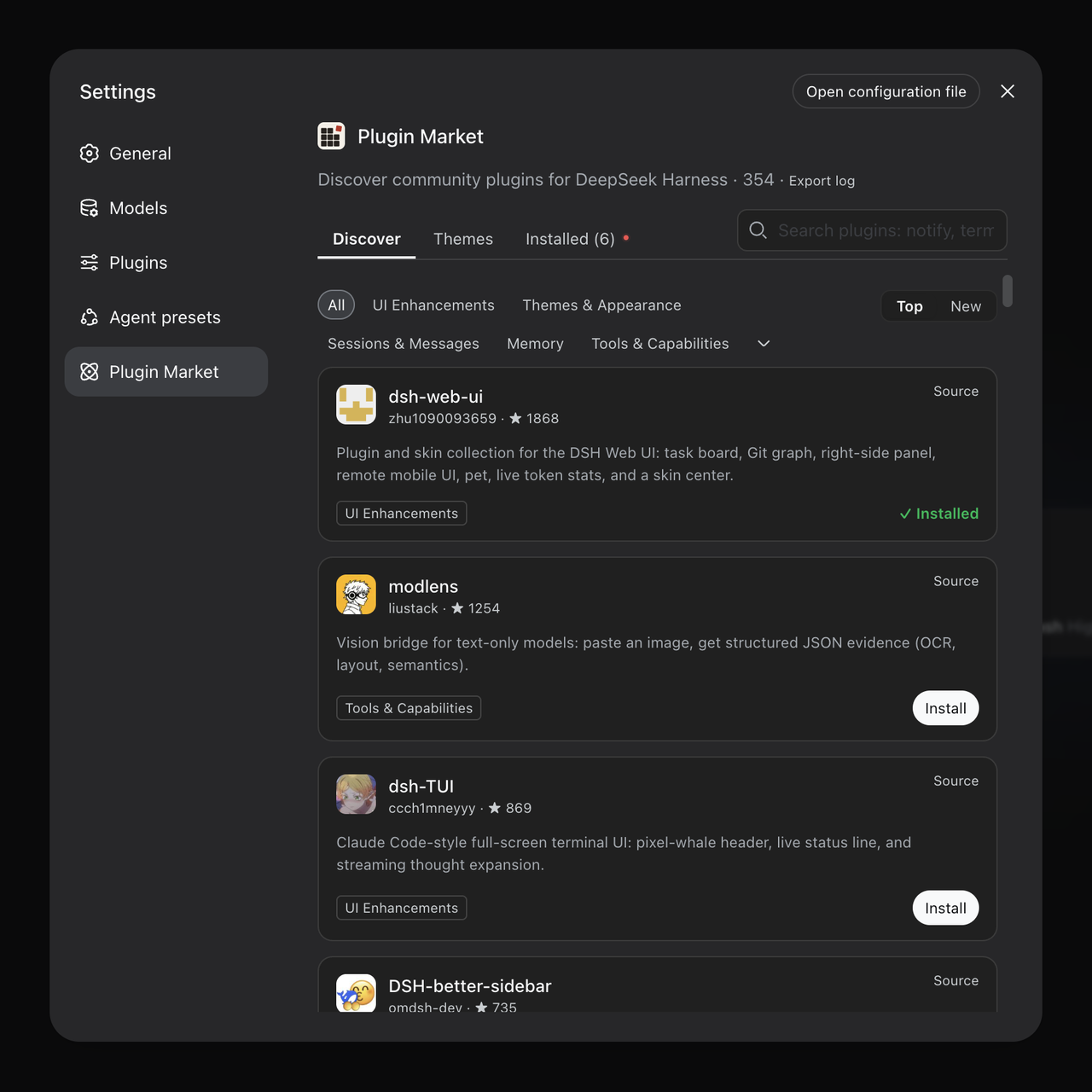
The plugin market for DeepSeek Harness: browse/search/one-click install community plugins and themes, with updates, backup/restore, hot disable, diagnostics, and AI fix.

A persistent whale widget on the DSH web UI that shows DeepSeek balance, today's usage, and per-turn cost, with drag-and-snap and sound effects.