dsh-restart-button
Run the following command in DeepSeek Harness:
dsh plugin install AllenLogo/dsh-restart-button
Paste the following prompt into your AI chat to install this plugin:
Run dsh plugin install AllenLogo/dsh-restart-button in your terminal to install the plugin; source code: https://github.com/AllenLogo/dsh-restart-button
About this plugin
Restarting the host process behind the DeepSeek Harness Web GUI used to mean hunting down the terminal window or systemctl unit that originally launched dsh web. dsh-restart-button adds a single Restart-now pill in Settings → General so the operation lives right where you are — no terminal, no systemctl, no guessing which window started the server.
On click, the plugin flushes the current response before the host exits. Under systemd it relies on Restart=always to bring the process back, preventing a detached child from racing the supervisor for the port or escaping its cgroup. In a bare terminal or pnpm dev setup a lightweight detached helper waits for the port to free and relaunches the exact same command line, logging to a temporary file under /tmp. The page then polls a boot identifier and reloads itself once the replacement host answers, within a 60-second budget. Sessions are persisted per event on disk, so a restart does not erase them; if the browser is not on loopback the row degrades to a read-only hint rather than a button that could not possibly work.
Built for developers who use DeepSeek Harness daily through the browser and occasionally need to restart the host without reaching for a terminal — especially when dsh web runs behind a service manager or on a remote box and you interact purely through the page.
Use Cases
- One-click restart of dsh web from the settings page without switching terminals
- Safe restart under systemd without port or cgroup conflicts
- Quickly relaunch the host in dev mode (pnpm dev) after a code change
Best For
- Developers who use DeepSeek Harness daily through the browser
- Operators running dsh web behind a service manager like systemd
- Users who prefer GUI-first operations and avoid opening a terminal frequently
Related Plugins
A service-oriented sidebar framework for DSH, offering a full workbench with file explorer, embedded browser, real terminal, Git panel, and extensible plugin services.
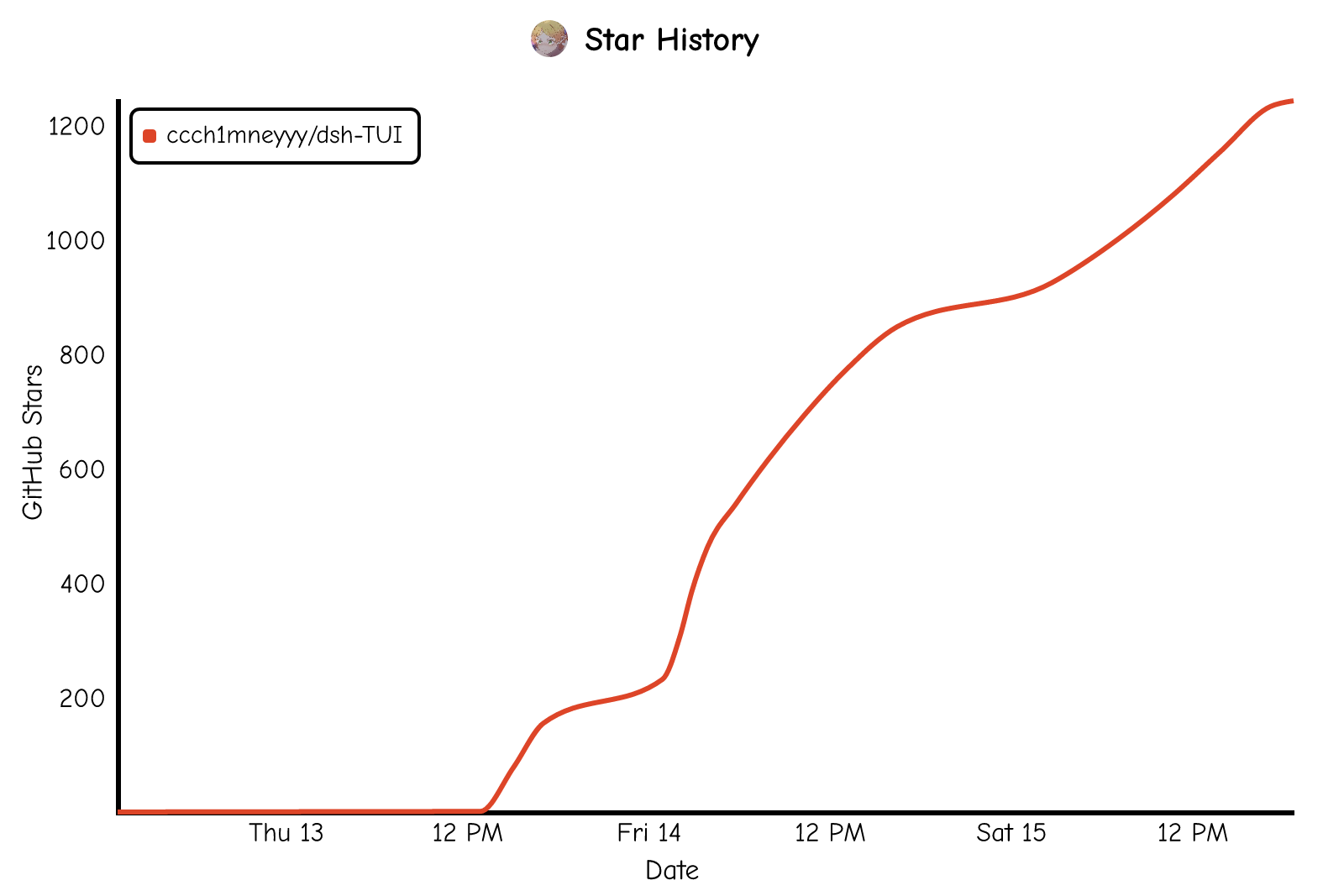
A beautiful, practical Claude Code-style TUI plugin with pixel whale top bar, flowing glow title, real-time status line, streaming thought expansion, time rewind, context progress bar and TPS gauge — zero core changes.
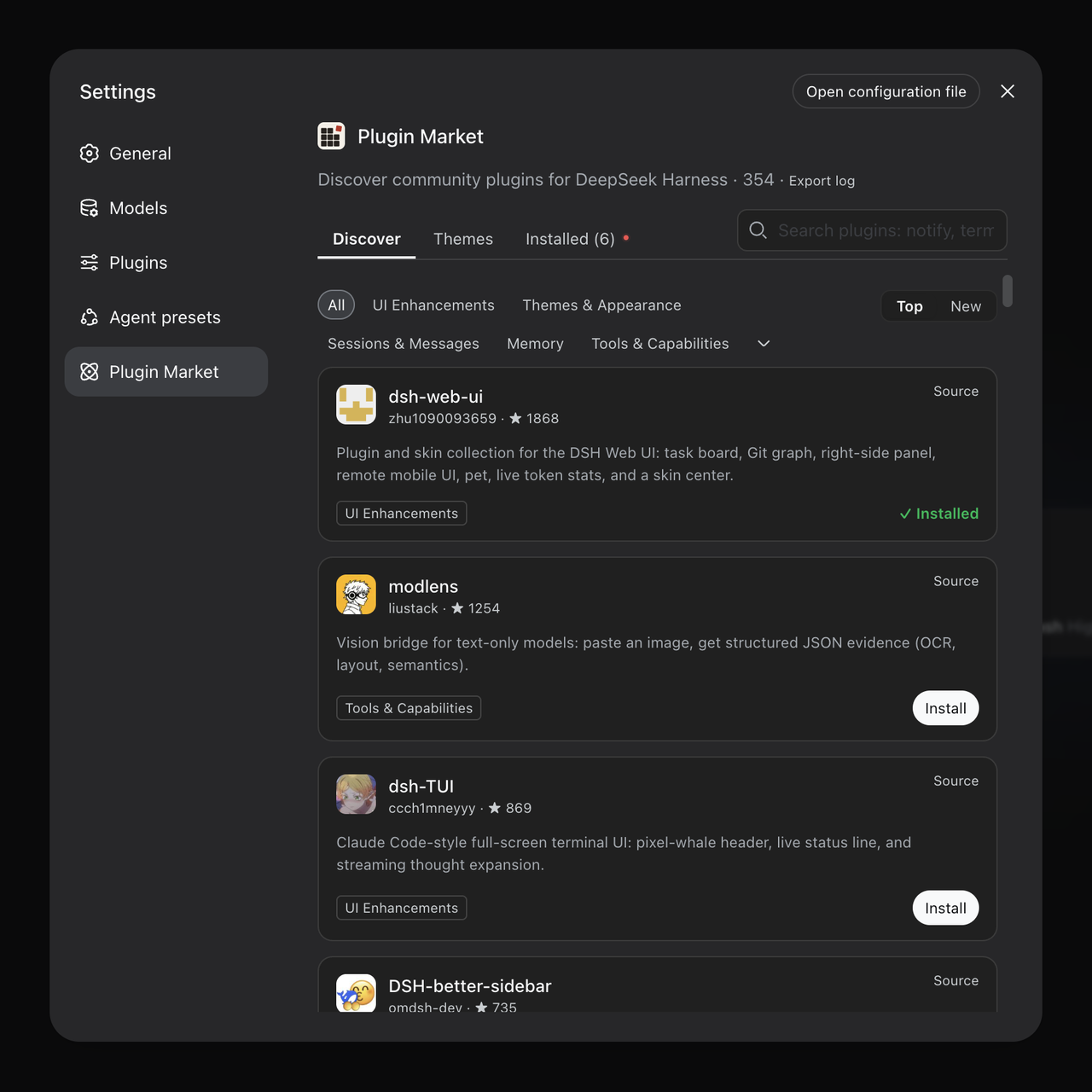
The plugin market for DeepSeek Harness: browse/search/one-click install community plugins and themes, with updates, backup/restore, hot disable, diagnostics, and AI fix.

A persistent whale widget on the DSH web UI that shows DeepSeek balance, today's usage, and per-turn cost, with drag-and-snap and sound effects.