dsh-session-turn-eta
Run the following command in DeepSeek Harness:
dsh plugin install 778672151/dsh-session-turn-eta
Paste the following prompt into your AI chat to install this plugin:
Install the plugin by running dsh plugin install 778672151/dsh-session-turn-eta inside DeepSeek Harness; the source repository is at https://github.com/778672151/dsh-session-turn-eta.
About this plugin
When a DeepSeek Harness turn chains multiple steps it can easily last several minutes, yet the interface offers no progress feedback at all. dsh-session-turn-eta renders a live progress bar under the input composer, showing a ticking percentage and a human-readable time-remaining label, turning blind waiting into something tangible.
The prediction is not a simple linear extrapolation. It blends the current turn observed per-step rate with the session median historical step duration, so one long idle gap cannot skew the estimate, and it re-anchors the bar the moment a turn outruns its own projection instead of freezing at a misleading zero or 100 percent. Once the turn exceeds the estimate the bar fills and pulses with a finishing label; if the turn fails or is interrupted the bar turns red and reads progress interrupted.
It is aimed at developers who regularly fire multi-step, long-running DSH instructions and want to cut down on the anxiety of repeated blind waits during iterative development. The plugin works entirely through read-only session projections, mutates no session state, registers no model-visible capability, and ships prebuilt so installation requires no build step.
Use Cases
- Multi-step turns take minutes and you want a live remaining-time readout
- A turn outruns its estimate and you need honest status feedback instead of a misleading zero
- Iterative development with frequent long-running generations where wait anxiety is a real cost
Best For
- Developers who frequently run multi-step, long-running DSH instructions
- Product or front-end engineers who care about the client-side wait experience
- Technical users triggering complex generation workflows repeatedly during iteration
Related Plugins
A service-oriented sidebar framework for DSH, offering a full workbench with file explorer, embedded browser, real terminal, Git panel, and extensible plugin services.
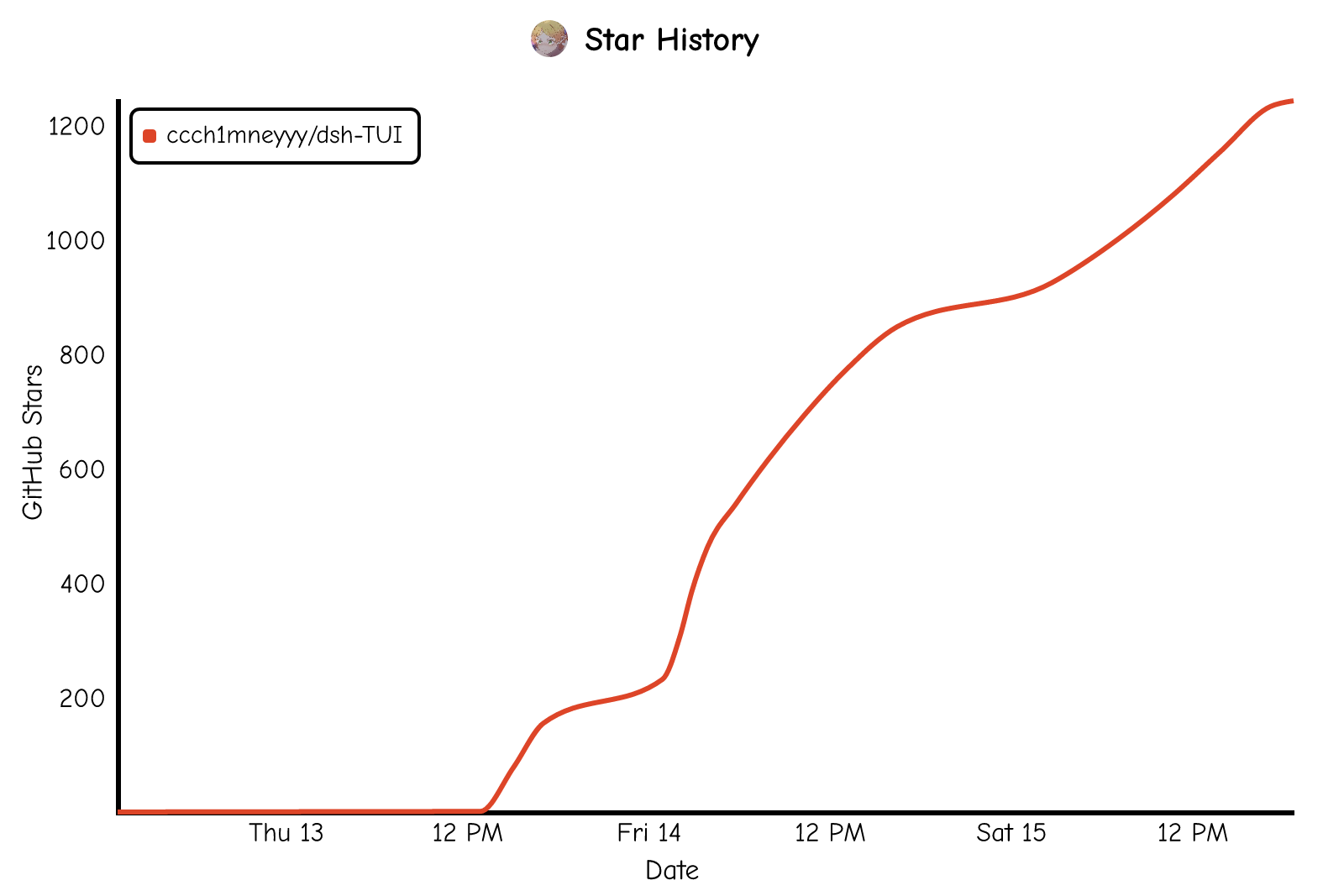
A beautiful, practical Claude Code-style TUI plugin with pixel whale top bar, flowing glow title, real-time status line, streaming thought expansion, time rewind, context progress bar and TPS gauge — zero core changes.
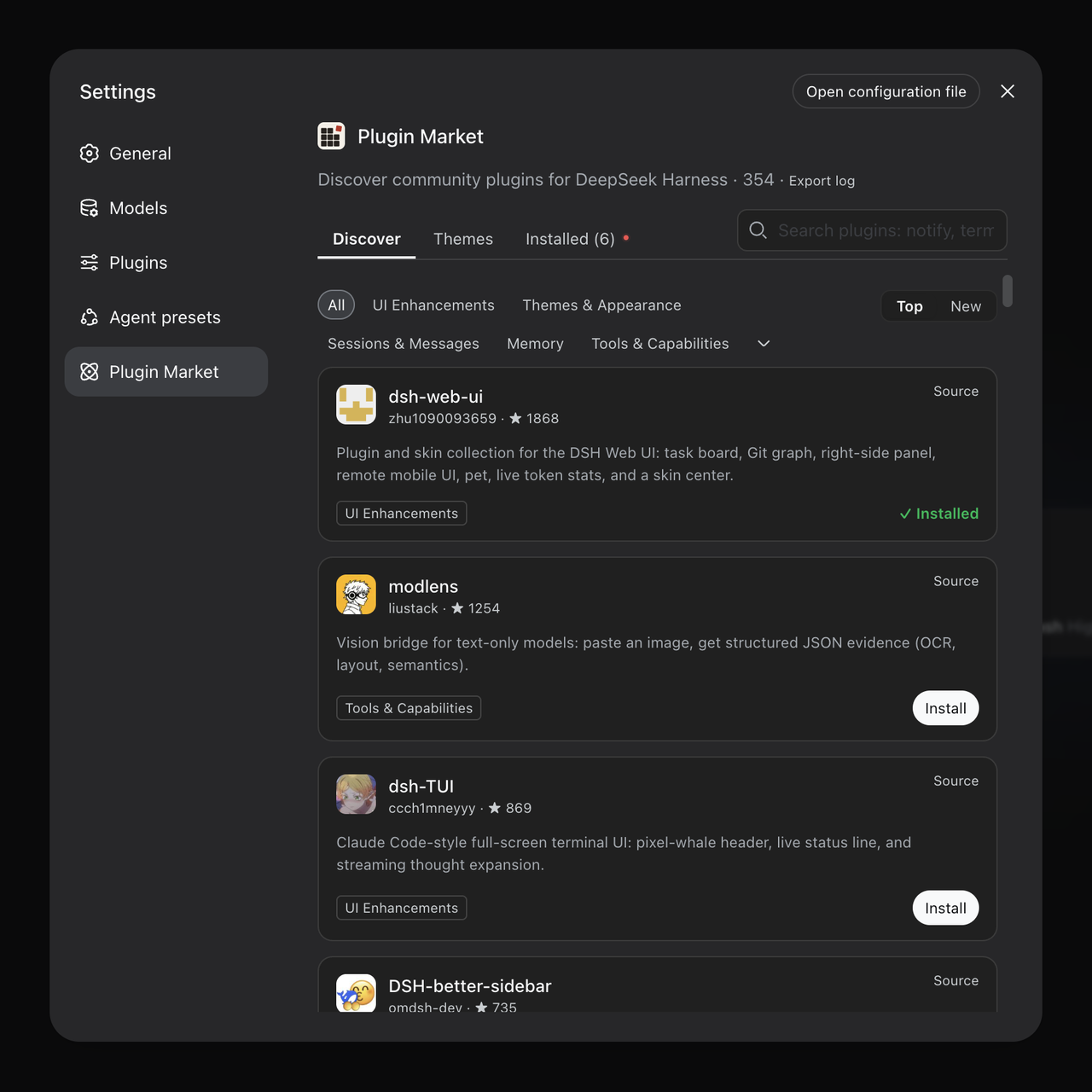
The plugin market for DeepSeek Harness: browse/search/one-click install community plugins and themes, with updates, backup/restore, hot disable, diagnostics, and AI fix.

A persistent whale widget on the DSH web UI that shows DeepSeek balance, today's usage, and per-turn cost, with drag-and-snap and sound effects.