dsh-bio-graft
Run the following command in DeepSeek Harness:
dsh plugin install moonbowterfly/dsh-bio-graft
Paste the following prompt into your AI chat to install this plugin:
Run dsh plugin install moonbowterfly/dsh-bio-graft in the DeepSeek Harness terminal to install this plugin; the source code is available at https://github.com/moonbowterfly/dsh-bio-graft.
About this plugin
The real challenge in gene-editing design is not running a single Cas-OFFinder query. It is the entire chain from I want to delete this exon to which guide to pick, which editor to deploy, how to bound the off-target search, and why the recommendation drifted between iterations. Every step demands explicit coordinate conventions, an auditable evidence trail, and reproducible decision records. dsh-bio-graft operationalizes the principle desired edit first, tool second: you describe the target edit, the plugin first compares modalities (nuclease / base editing / prime editing / HDR / paired deletion), then enumerates candidates with full score vectors, performs structured off-target scans, and commits the outcome to an append-only .editplan.json ledger. When the reference, backend, or ranking policy changes, the ledger answers precisely why candidate B was recommended yesterday and D today, instead of leaving you with an unreproducible chat transcript.
Eleven semantic tools cover the complete design loop. sgRNA candidate enumeration performs a bidirectional PAM scan, emits GC / homopolymer / self-complementarity / seed score vectors, is IUPAC-aware, and attaches a cut site with 0-based half-open bounds plus an explicit cut_site_convention string. Declarative ranking supports pareto, lexicographic, and weighted modes, producing a policy_id with digest and per-candidate exclusion reasons. Cas-OFFinder batch off-target scanning returns structured hits, a search_completeness field listing dimensions that were not searched, an explicit refusal of any safety conclusion, and a zero-hit false-negative warning enumerating common causes (genome version mismatch, query strand, mismatch threshold too strict, N gaps, bulge not enabled). Base-editing window design handles CBE and ABE with bystander effects, codon consequences (synonymous / missense / nonsense / stop_loss), and the three-part strand semantics. Multi-guide strategy evaluation assesses deletion pairs (predicted span, length, junction, frameshift), paired nickase hetero-strand spacing, and pairwise off-target composition rather than naive risk addition. The validation plan stratifies requirements by modality and host tier (required / recommended / conditional) and enforces EditOutcomeMetrics that forbid bare efficiency statements. Every editor profile carries a verified flag plus pam_source; entries not yet cross-checked against primary literature are honestly flagged, and downstream consumers must relay that status faithfully.
If your workflow involves CRISPR or base-editor candidate design, structured multi-candidate comparison, explicit off-target search boundary declaration, and auditable design decision trails for peer review or reproducibility, dsh-bio-graft is built for that. It sits in the dsh-bio ecosystem g-series family alongside genie (the general bioinformatics host) and gem (the metabolic-model specialist), and once installed all eleven tools are immediately callable inside the dsh agent with no separate deployment.
Use Cases
- Enumerate sgRNA candidates for a target exon, retain full score vectors, and run structured off-target scans
- Compare base editing vs. nuclease strategies, evaluate bystander effects and codon consequences
- Design multi-guide paired deletion strategies with a fully traceable decision timeline in the EditPlan ledger
Best For
- Genomics research teams designing CRISPR or base-editor candidates
- Translational medicine labs requiring reproducible design decision records for peer review
- Bioinformatics engineers building automated gene-editing pipelines
Related Plugins
A service-oriented sidebar framework for DSH, offering a full workbench with file explorer, embedded browser, real terminal, Git panel, and extensible plugin services.
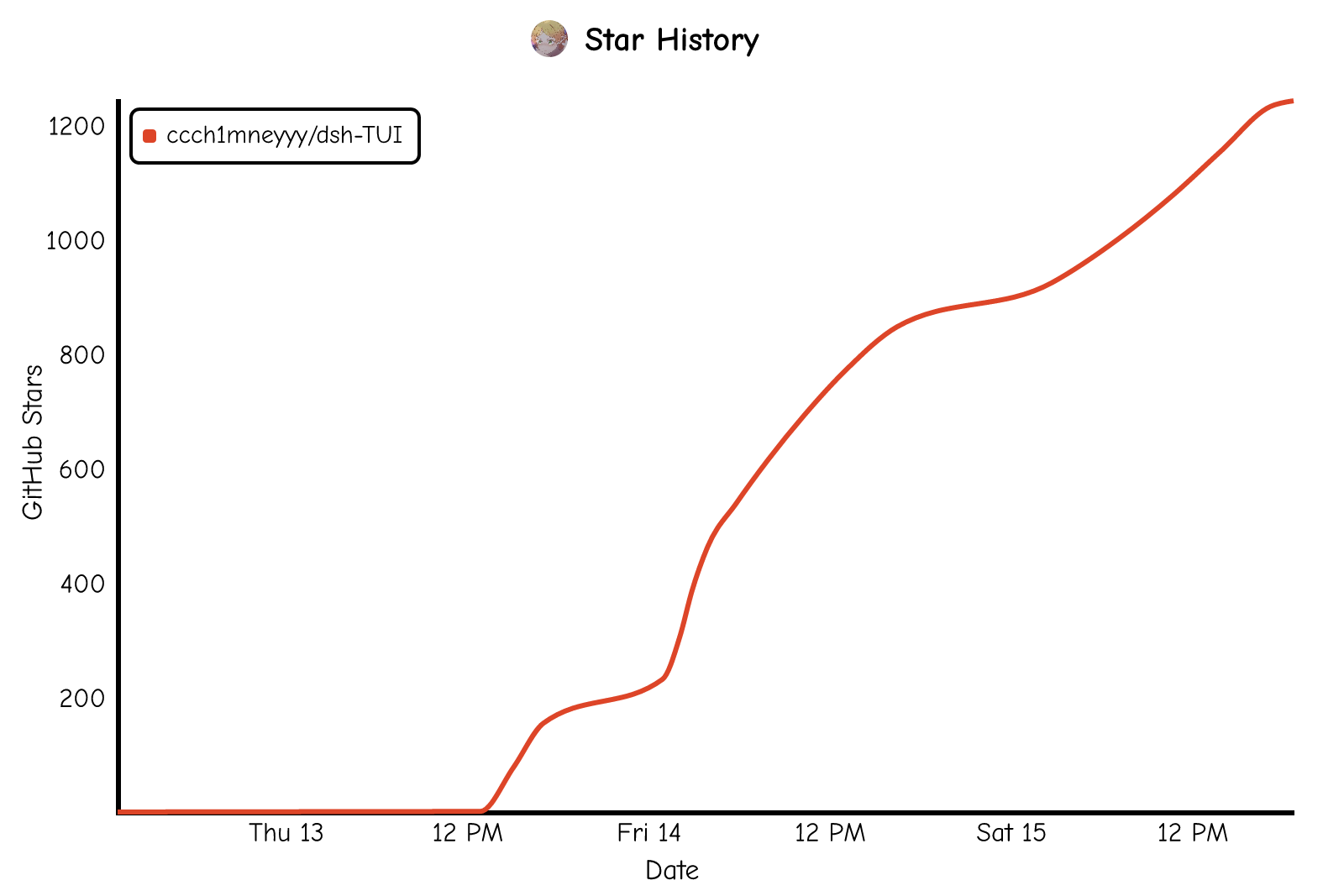
A beautiful, practical Claude Code-style TUI plugin with pixel whale top bar, flowing glow title, real-time status line, streaming thought expansion, time rewind, context progress bar and TPS gauge — zero core changes.
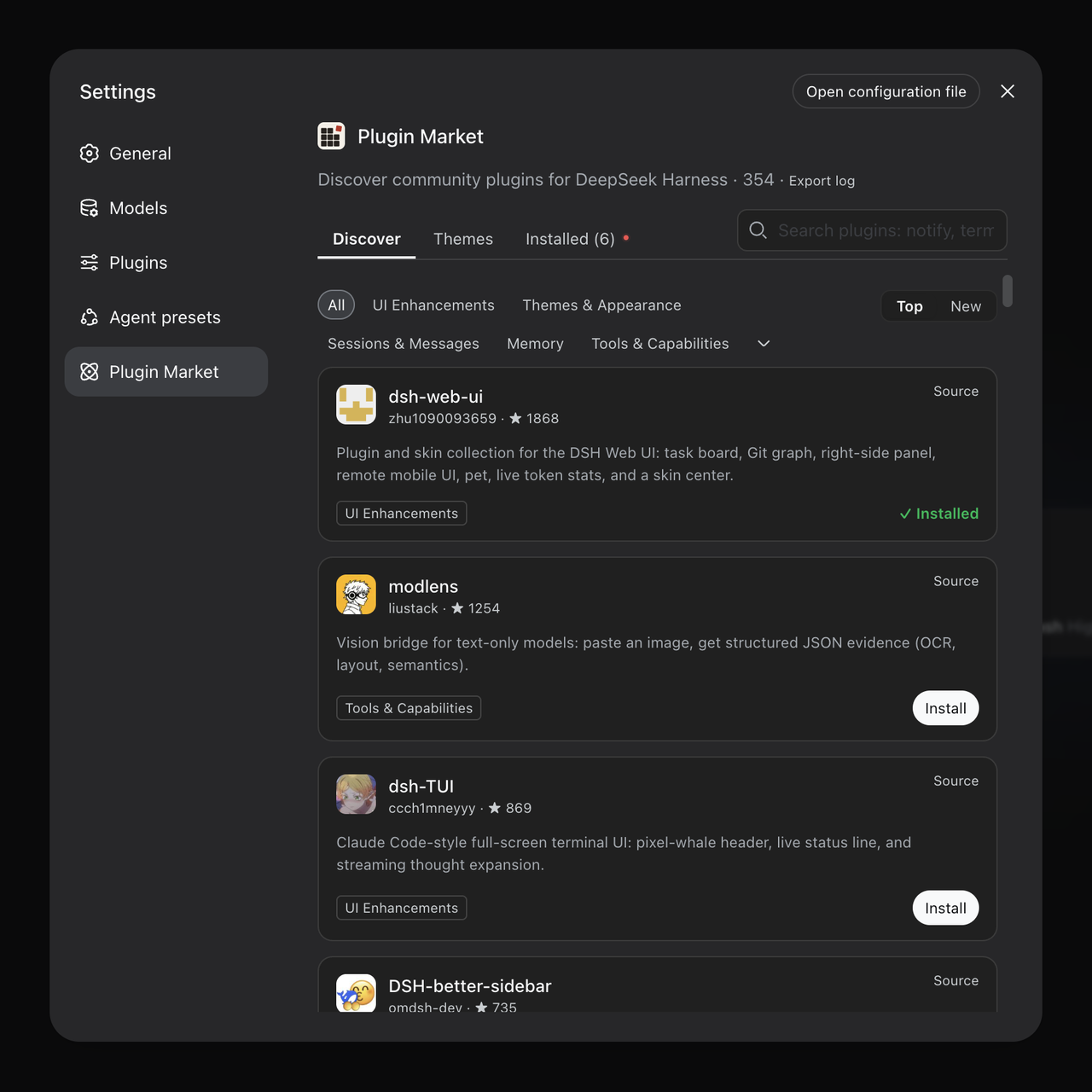
The plugin market for DeepSeek Harness: browse/search/one-click install community plugins and themes, with updates, backup/restore, hot disable, diagnostics, and AI fix.

A persistent whale widget on the DSH web UI that shows DeepSeek balance, today's usage, and per-turn cost, with drag-and-snap and sound effects.