dsh-issue-reporter
Run the following command in DeepSeek Harness:
dsh plugin install GooDAnDReaDY/dsh-issue-reporter
Paste the following prompt into your AI chat to install this plugin:
Run dsh plugin install GooDAnDReaDY/dsh-issue-reporter in your terminal to add the plugin to the current DeepSeek Harness instance; source code is at https://github.com/GooDAnDReaDY/dsh-issue-reporter
About this plugin
Running community plugins inside DeepSeek Harness means third-party packages surface bugs with surprising frequency, yet turning a crash into a clean upstream issue is usually a tedious manual chore: hunting down the repository, assembling reproduction steps, and the constant risk of accidentally pasting an API key or an absolute filesystem path into the report. dsh-issue-reporter collapses that entire workflow into a single scan, edit, confirm, submit loop. It inspects the live plugin composition, groups native @deepseek-ai/ packages separately from third-party community extensions, opens a structured report editor, and automatically redacts bearer tokens, credential URLs, local absolute paths, and email addresses, showing a live redacted preview with an itemized sanitization count.
Before anything is written, the reporter queries the target repository for up to five likely duplicates ranked by normalized tokens drawn from the title and body, preventing duplicate noise. Screenshots can be pasted from the clipboard or drag-and-dropped, with a hard cap of five files at eight MiB each and twenty MiB total; images remain in browser memory and a temporary directory that is wiped the moment the GitHub CLI upload exits. A one-click AI polish rewrites unstructured error notes into reproducible steps and an actionable issue title, and the plugin recommends matching upstream labels such as bug, ui, performance, or auth. When no GitHub account is connected, it degrades gracefully to a pre-filled issue-form link for manual submission.
Every write operation requires an explicit user confirmation checkbox, and OAuth tokens live exclusively in DSH Credentials, never appearing in the UI, logs, URLs, or issue bodies. The renderer supports both GitHub and self-hosted Gitea or Forgejo instances. It is built for developers who daily orchestrate several community plugins in a DSH profile and want to report the issues they hit without guesswork, without privacy risk, and without the friction of switching to a browser tab.
Use Cases
- After a community plugin crashes, compose a structured upstream issue with auto-recommended labels in one click
- Auto-redact API keys, absolute paths, and emails before submission, with a live preview and redaction count
- Batch-check open/closed status and comment counts of all submitted issues in the My Reports tab
Best For
- DeepSeek Harness developers who orchestrate multiple community plugins daily
- Ops engineers who report bugs without leaking credentials or internal paths
- Tech leads responsible for tracking upstream plugin quality and response speed
Related Plugins
A service-oriented sidebar framework for DSH, offering a full workbench with file explorer, embedded browser, real terminal, Git panel, and extensible plugin services.
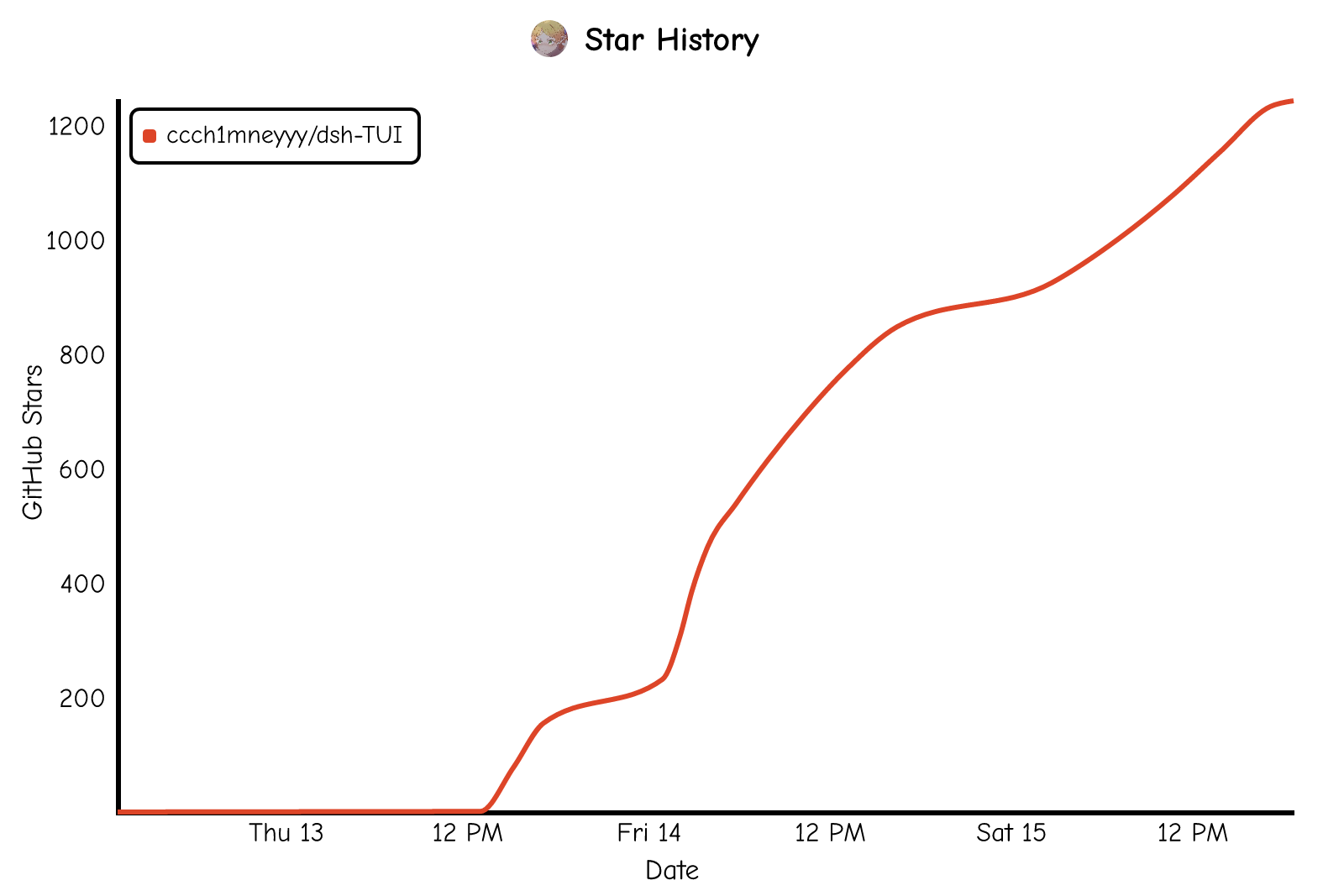
A beautiful, practical Claude Code-style TUI plugin with pixel whale top bar, flowing glow title, real-time status line, streaming thought expansion, time rewind, context progress bar and TPS gauge — zero core changes.
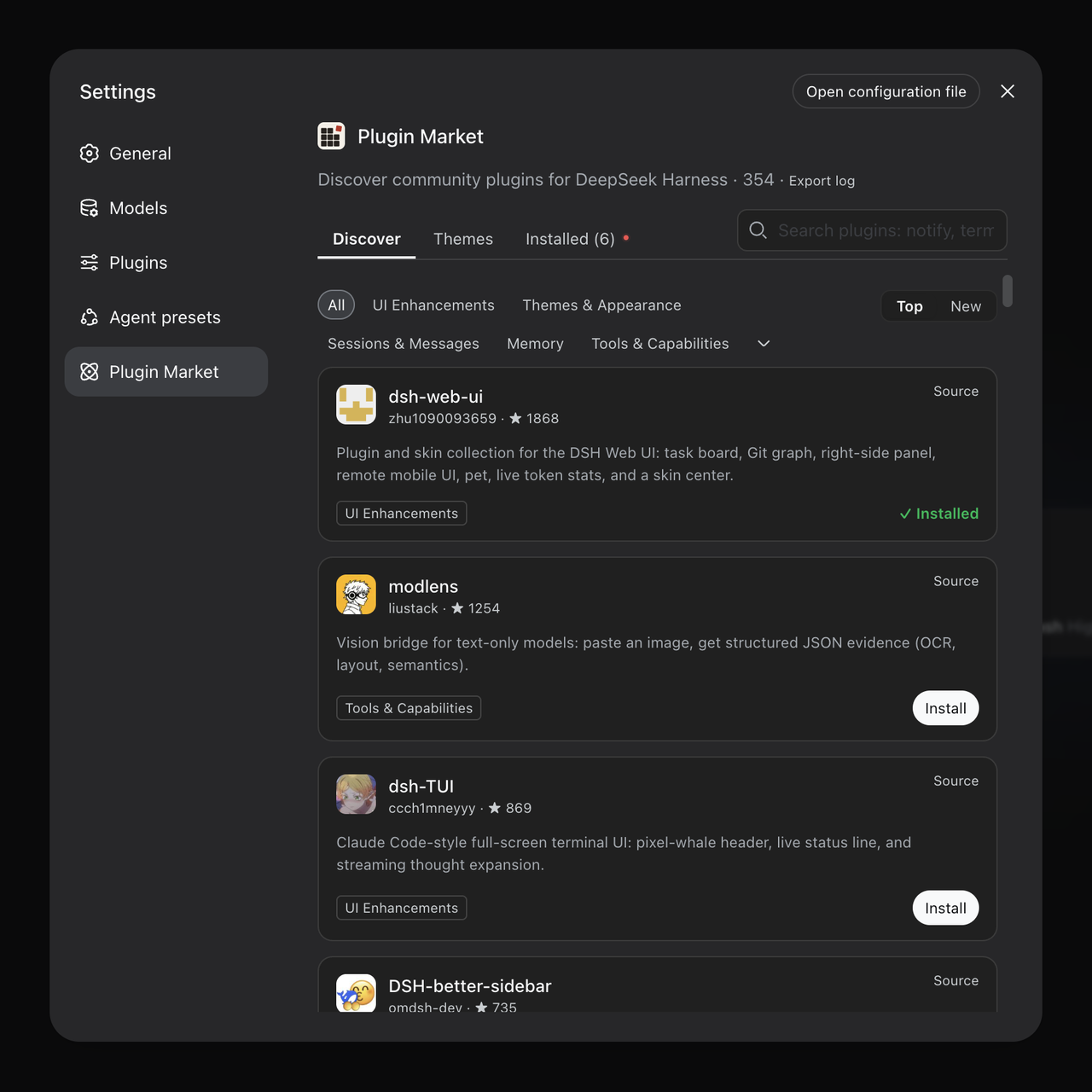
The plugin market for DeepSeek Harness: browse/search/one-click install community plugins and themes, with updates, backup/restore, hot disable, diagnostics, and AI fix.

A persistent whale widget on the DSH web UI that shows DeepSeek balance, today's usage, and per-turn cost, with drag-and-snap and sound effects.