dsh-reasoning-merge
Run the following command in DeepSeek Harness:
dsh plugin install zhourenke/dsh-reasoning-merge
Paste the following prompt into your AI chat to install this plugin:
Run dsh plugin install zhourenke/dsh-reasoning-merge inside DSH to install this plugin (source: https://github.com/zhourenke/dsh-reasoning-merge); restart DSH after installation to apply the change.
About this plugin
DSH renders model responses block by block, as returned by the provider. When a single model call splits its reasoning into several segments, the UI stacks one thinking area after another, making the output feel noisy and hard to follow. dsh-reasoning-merge solves exactly that: within a single model call it joins adjacent reasoning segments into one cohesive block, inserting a single blank line between them, so the interface shows just one clean thinking area.\n\nThe plugin operates purely at the chunk-joining level. The reasoning text is neither added to nor trimmed, and everything else—text output, tool calls, token usage, finish reason—passes through untouched. There are no settings and no extra UI controls; install it, restart DSH, and it simply works. One boundary to keep in mind: merging only applies to adjacent reasoning segments inside the same model call. The moment a text block or tool call appears in between, the current segment closes and subsequent reasoning starts a fresh block, which feels perfectly natural.\n\nIt is a good fit for anyone who uses DSH as a daily client and whose provider tends to emit reasoning in multiple chunks. Zero configuration, zero interface overhead—just one clean, continuous thinking section where there used to be several.
Use Cases
- Provider splits reasoning into multiple segments, stacking thinking areas and breaking reading flow
- Want one cohesive thinking block per model call instead of scattered segments
- Seeking a zero-config, no-UI-overhead enhancement to the DSH client
Best For
- DSH daily users whose provider tends to emit reasoning in multiple chunks
- Developers sensitive to UI density who value a continuous reading flow
- Plug-and-play enthusiasts who prefer zero-config tools with no extra overhead
Related Plugins
A service-oriented sidebar framework for DSH, offering a full workbench with file explorer, embedded browser, real terminal, Git panel, and extensible plugin services.
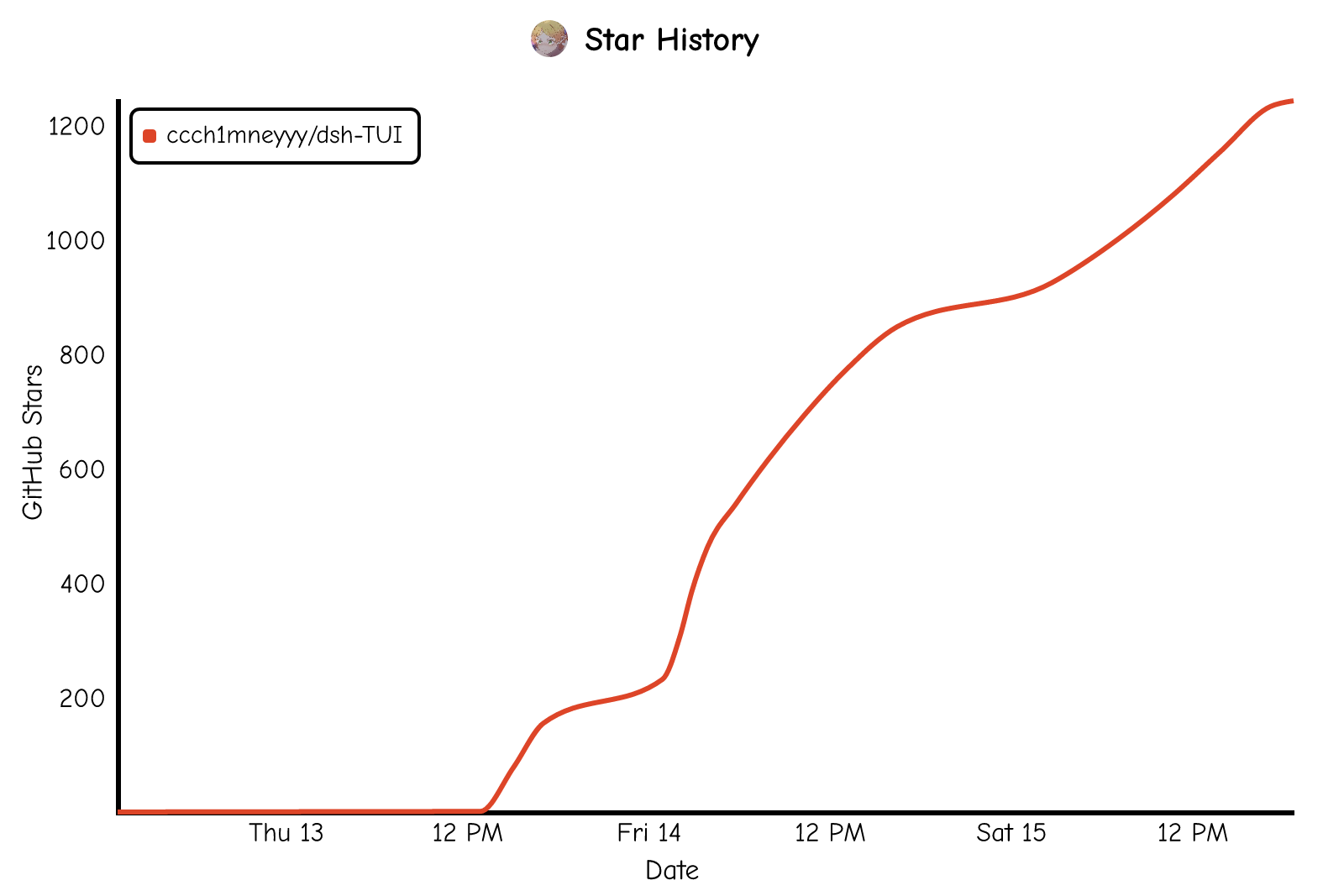
A beautiful, practical Claude Code-style TUI plugin with pixel whale top bar, flowing glow title, real-time status line, streaming thought expansion, time rewind, context progress bar and TPS gauge — zero core changes.
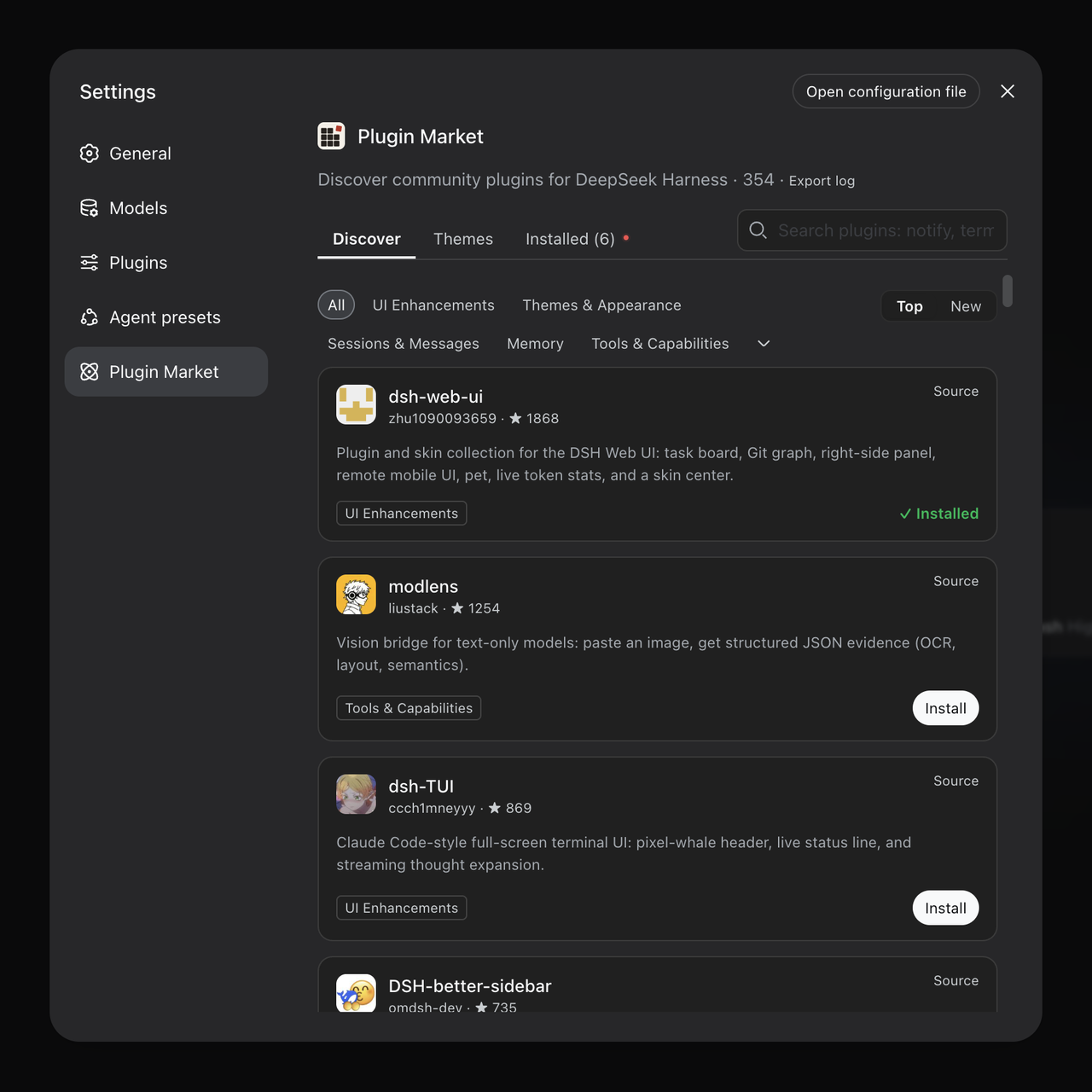
The plugin market for DeepSeek Harness: browse/search/one-click install community plugins and themes, with updates, backup/restore, hot disable, diagnostics, and AI fix.

A persistent whale widget on the DSH web UI that shows DeepSeek balance, today's usage, and per-turn cost, with drag-and-snap and sound effects.