dsh-3301
Run the following command in DeepSeek Harness:
dsh plugin install Aztech-Lab/dsh-3301
Paste the following prompt into your AI chat to install this plugin:
Install it from the DeepSeek Harness terminal by running dsh plugin install Aztech-Lab/dsh-3301; the source repository is available at https://github.com/Aztech-Lab/dsh-3301
About this plugin
DeepSeek Harness binds its Web GUI to 127.0.0.1 only, so a phone, tablet, or second machine on the same LAN has no direct route to it. dsh-3301 runs as a native DSH plugin, opening a 0.0.0.0:3301 reverse proxy inside the DSH process so any device that can reach that port gets a full browser-based DSH console, while DSH itself keeps listening on loopback alone and never exposes itself to the LAN.
The proxy forwards both HTTP and WebSocket traffic, so streaming output, tool-call interactions, and other real-time features work unmodified. Authentication is a form login backed by a salted scrypt verifier; the session rides in an HMAC-SHA256-signed, HttpOnly cookie with a configurable lifetime (30 days by default). Repeated wrong passwords trigger a per-IP lockout. The plugin ships zero external dependencies beyond what DSH already bundles, starts and stops with DSH, and exposes every setting through the DSH settings card — no separate daemon, no launchd entry, no cron job.
This is the right fit for anyone who wants to monitor or drive DeepSeek Harness from a phone or a second computer on a trusted LAN. If the network itself is not fully trusted, the README recommends placing port 3301 behind a VPN such as Tailscale or WireGuard so the password and cookie are not the only line of defence.
Use Cases
- Monitoring a live DSH conversation from a phone browser at your desk
- Driving DSH tool calls and settings remotely from a second computer over the LAN
- Accessing the DSH Web GUI from any device on the same home or office network without a VPN
Best For
- Developers who juggle multiple devices and want to check DSH sessions on the go
- Engineers who need to manage DSH remotely within their office or home LAN
- Individual users who want LAN access to DSH without spinning up a separate VPN or port-forward rule
Related Plugins
A service-oriented sidebar framework for DSH, offering a full workbench with file explorer, embedded browser, real terminal, Git panel, and extensible plugin services.
A beautiful, practical Claude Code-style TUI plugin with pixel whale top bar, flowing glow title, real-time status line, streaming thought expansion, time rewind, context progress bar and TPS gauge — zero core changes.
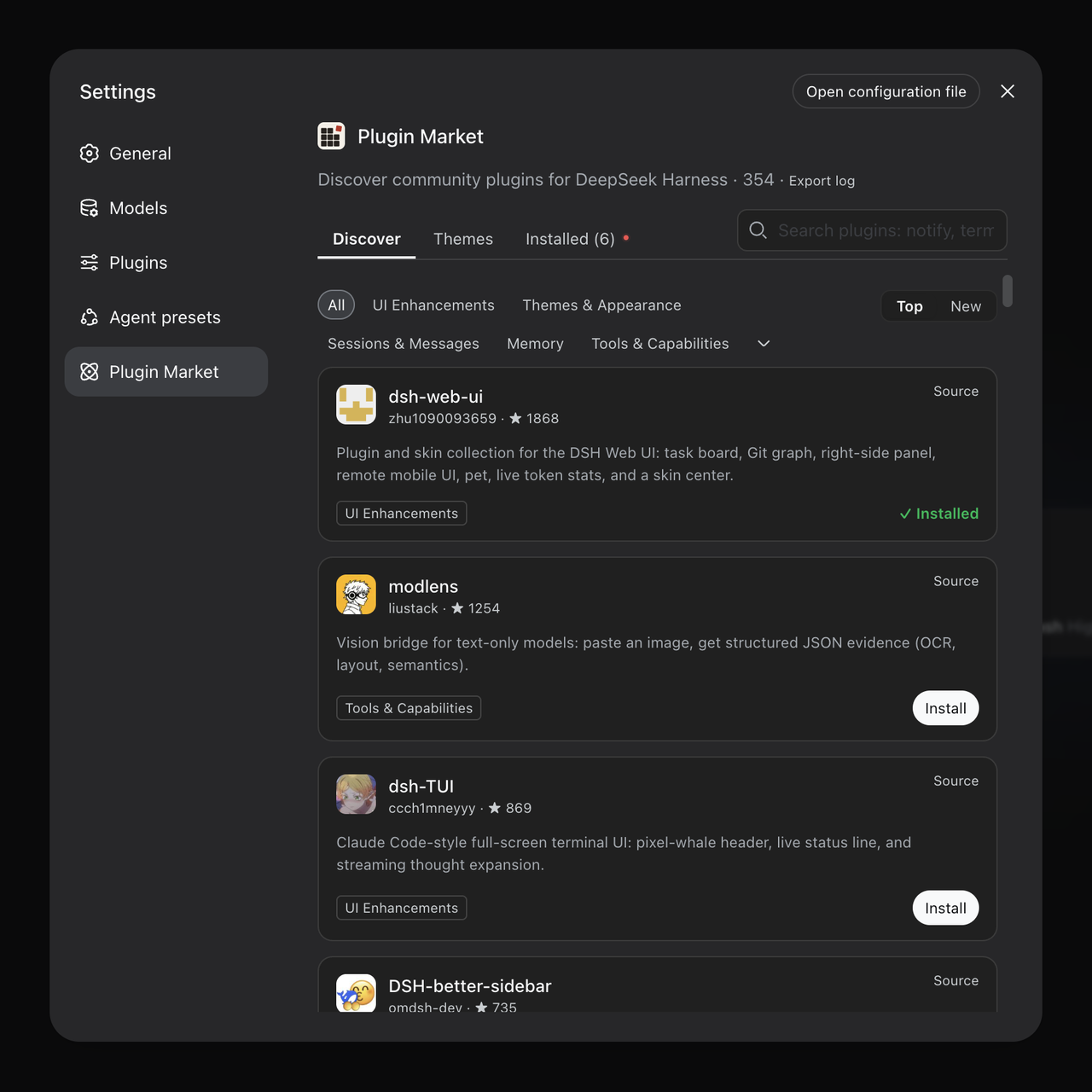
The plugin market for DeepSeek Harness: browse/search/one-click install community plugins and themes, with updates, backup/restore, hot disable, diagnostics, and AI fix.

A persistent whale widget on the DSH web UI that shows DeepSeek balance, today's usage, and per-turn cost, with drag-and-snap and sound effects.