dsh-effort-slider
Run the following command in DeepSeek Harness:
dsh plugin install CroissanTTs/dsh-effort-slider
Paste the following prompt into your AI chat to install this plugin:
Run dsh plugin install CroissanTTs/dsh-effort-slider in DeepSeek Harness to install this plugin; the full source code is available at https://github.com/CroissanTTs/dsh-effort-slider
About this plugin
Switching models in DeepSeek Harness silently resets reasoning effort: when the target model has no reasoning route configured, the level falls back to undefined, which is equivalent to enable_thinking: false, and thinking is quietly turned off. dsh-effort-slider closes that gap by injecting a draggable effort slider into the conversation input dock, scoped to the current session so other chats stay untouched.
Three core capabilities stand out. First, the slider renders only the tiers the active model declares, auto-hiding itself for single-tier or zero-tier models. Second, it remembers the last level you explicitly chose for each provider/model pair, then carries and clamps that value onto the target model ladder on a switch, guaranteeing it can never silently demote thinking to no-thinking. Third, if you have never picked a level it honestly shows a default state rather than pretending a value was set. The whole bundle is a static module with zero build tooling and zero dependencies, and can optionally back dsh-bailian-models.
Built for Harness users who frequently switch between multiple models and want precise, persistent control over reasoning depth. Drag once, switch freely, and your effort level follows.
Use Cases
- Frequently switching between models in Harness and re-adjusting reasoning depth every time
- Controlling thinking tiers per session without affecting other conversations
- Auditing plugin source with zero build tooling and static readability
- Adding a generic effort slider on top of the Bailian model plugin
Best For
- Heavy DeepSeek Harness users who hop between multiple models
- Developers seeking fine-grained control over reasoning depth (off to max)
- Plugin consumers who value zero dependencies, zero build, and static auditability
Related Plugins
A service-oriented sidebar framework for DSH, offering a full workbench with file explorer, embedded browser, real terminal, Git panel, and extensible plugin services.
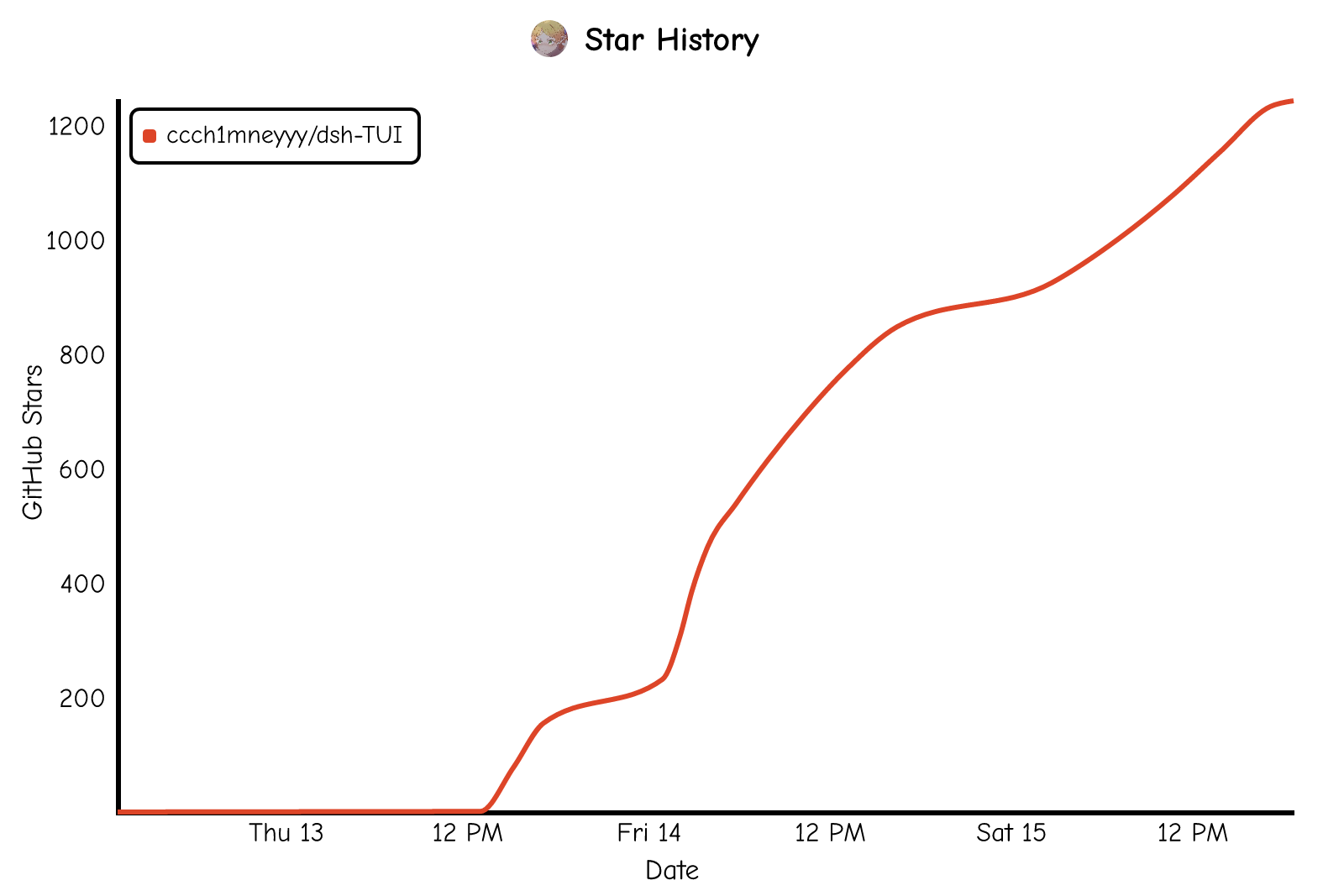
A beautiful, practical Claude Code-style TUI plugin with pixel whale top bar, flowing glow title, real-time status line, streaming thought expansion, time rewind, context progress bar and TPS gauge — zero core changes.
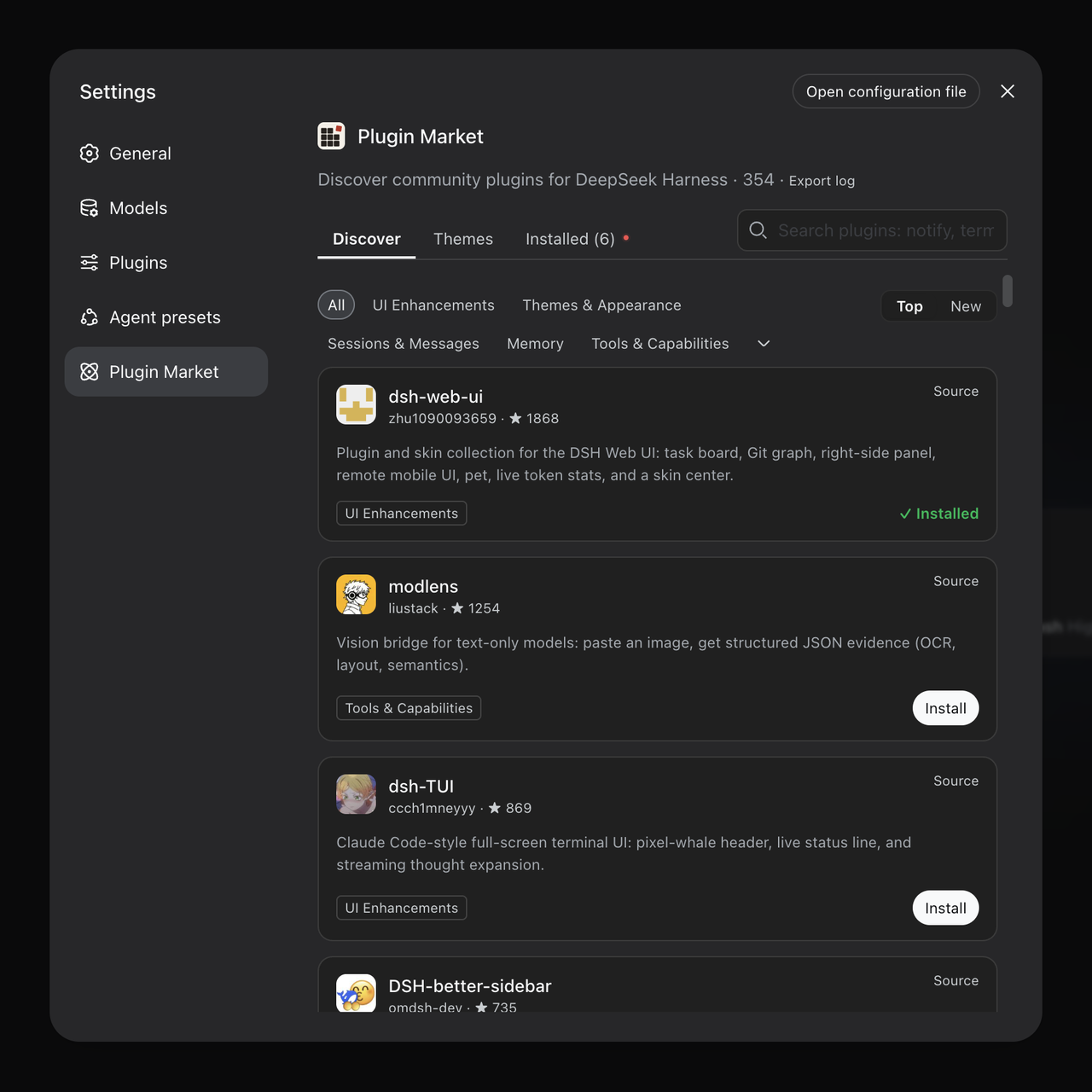
The plugin market for DeepSeek Harness: browse/search/one-click install community plugins and themes, with updates, backup/restore, hot disable, diagnostics, and AI fix.

A persistent whale widget on the DSH web UI that shows DeepSeek balance, today's usage, and per-turn cost, with drag-and-snap and sound effects.