DSH-Balance-Mini
Run the following command in DeepSeek Harness:
dsh plugin install DaYanHCD/DSH-Balance-Mini
Paste the following prompt into your AI chat to install this plugin:
Open a terminal in DeepSeek Harness and run dsh plugin install DaYanHCD/DSH-Balance-Mini to install the plugin. The full source is available at https://github.com/DaYanHCD/DSH-Balance-Mini. After installation, restart dsh web and hard-refresh the browser (Ctrl+Shift+R) to see the balance badge in the bottom-left corner.
About this plugin
If you run models through DeepSeek Harness on a daily basis, there is one question that keeps nagging at you: how much credit is left? Opening a vendor dashboard, waiting for it to load, then switching back to keep writing prompts is a small friction that multiplies when you are juggling two or three providers at once. DSH-Balance-Mini collapses that ritual into a single glance. A tiny persistent badge sits in the bottom-left corner of the harness UI. You do not need to open a new tab or switch context; a quick look and you are back to work.
The plugin ships with native support for DeepSeek, Kimi (Moonshot AI), and OpenRouter. Whatever provider API key you have configured in Harness settings simply works out of the box, with zero extra configuration and zero dependencies. The badge silently refreshes the balance every sixty seconds. When you collapse the sidebar, the badge shrinks into a small traffic-light dot: red below ten yuan, amber between ten and twenty, green above twenty, so a peripheral glance tells you whether your credit is running low. Expanding the panel also reveals whether you are currently in a peak or off-peak pricing window (DeepSeek peak hours are Beijing time Monday to Friday, 9:00–12:00 and 14:00–18:00) along with a live countdown to the next switch, helping you decide whether sending a request right now will cost more or less.
On the security side, the plugin interface accepts only loopback (127.0.0.1) connections. API keys are read from your local DSH credentials file inside the harness process and sent directly to each vendor's official endpoint. They are never written to disk, never proxied through a third party. The plugin is aimed at Harness users who operate two or three model APIs, care about cost and the difference between peak and off-peak pricing, and want a lightweight always-on balance indicator without installing a full dashboard.
Use Cases
- Glancing at remaining credit mid-prompt without opening a new tab
- Checking the current pricing tier before sending a request during peak hours
- Rotating between multiple providers without toggling to vendor dashboards
Best For
- Daily Harness users who juggle two or three model APIs
- Heavy users who care about peak versus off-peak pricing differences
- Developers who prefer zero-config lightweight tools over full dashboards
Related Plugins
A service-oriented sidebar framework for DSH, offering a full workbench with file explorer, embedded browser, real terminal, Git panel, and extensible plugin services.
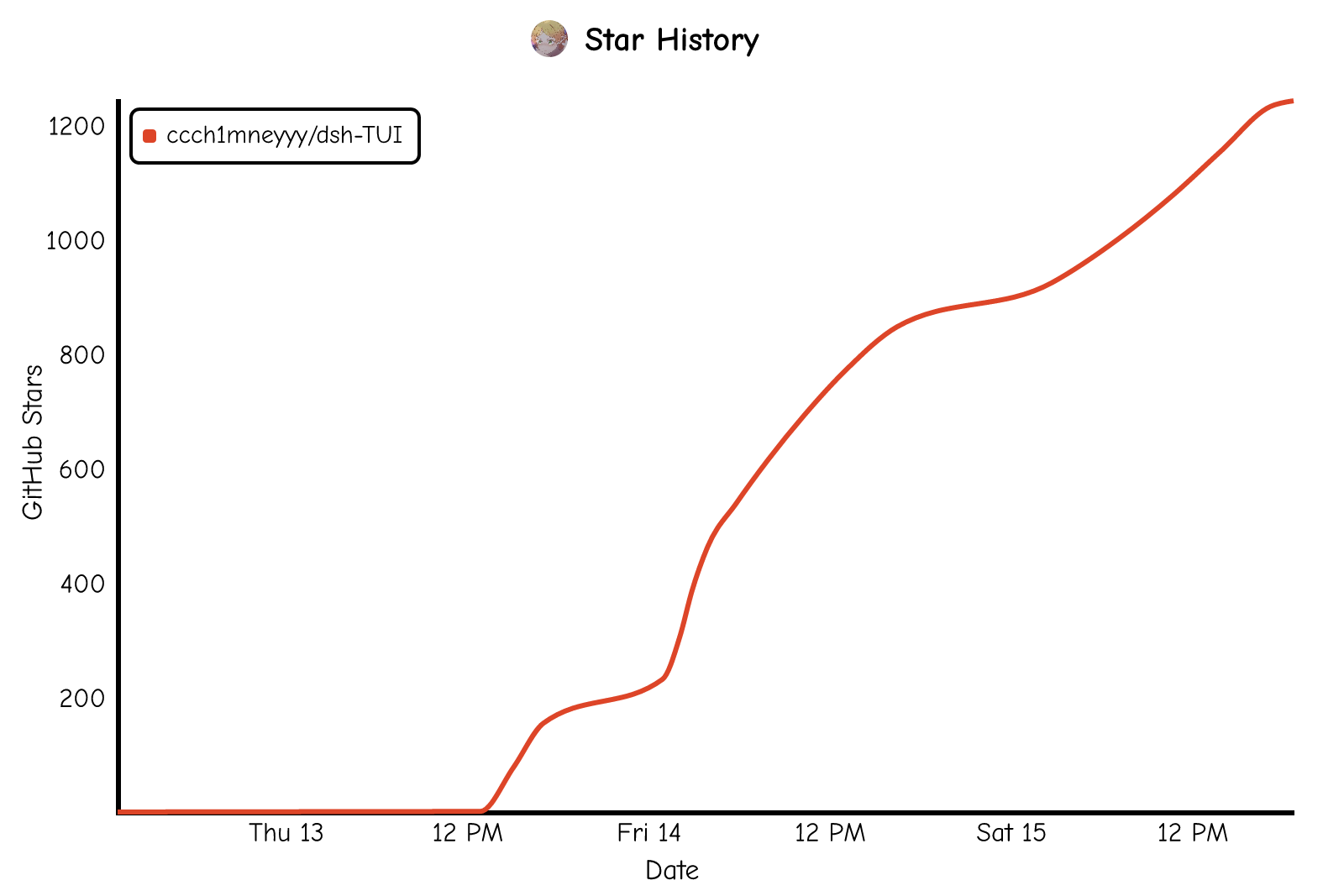
A beautiful, practical Claude Code-style TUI plugin with pixel whale top bar, flowing glow title, real-time status line, streaming thought expansion, time rewind, context progress bar and TPS gauge — zero core changes.
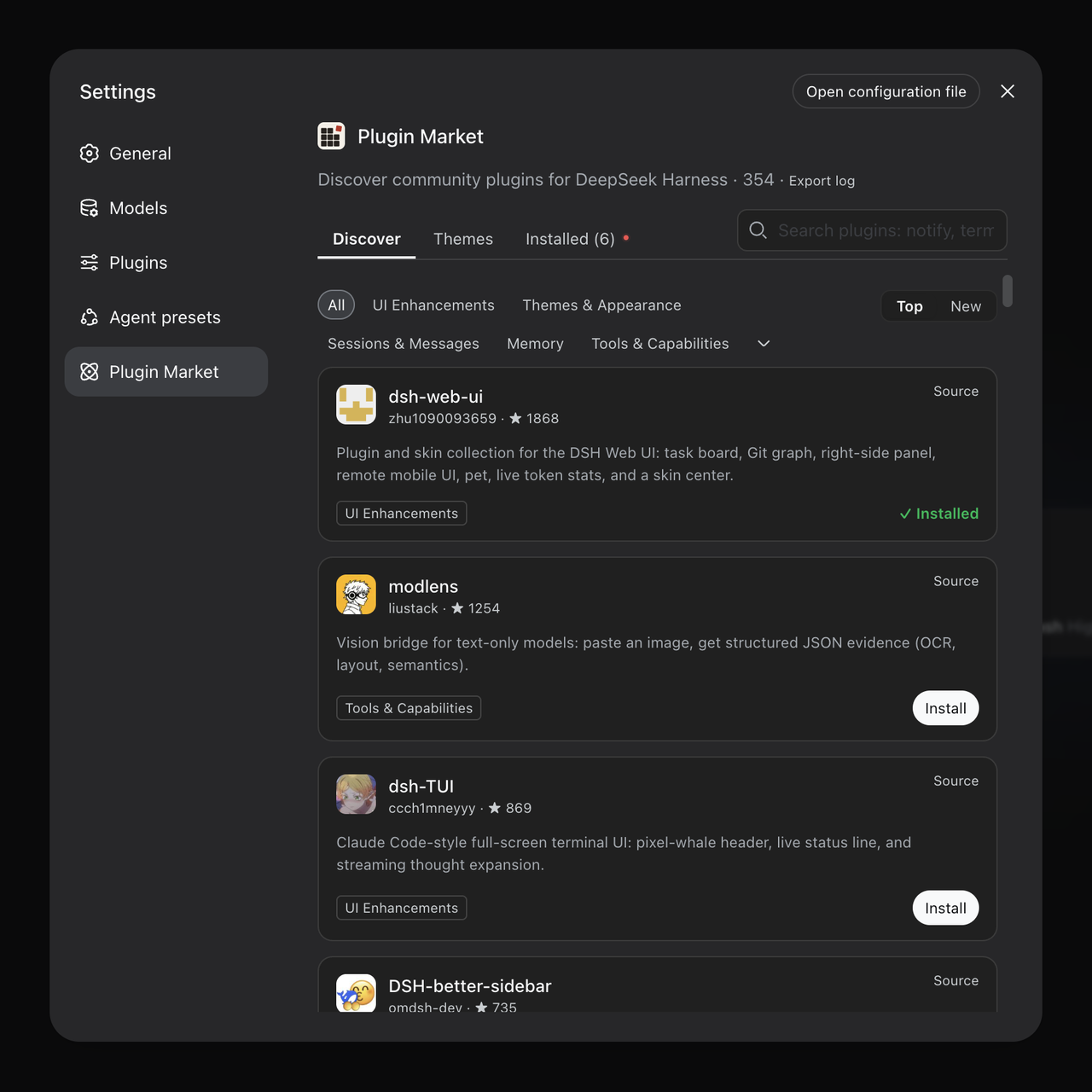
The plugin market for DeepSeek Harness: browse/search/one-click install community plugins and themes, with updates, backup/restore, hot disable, diagnostics, and AI fix.

A persistent whale widget on the DSH web UI that shows DeepSeek balance, today's usage, and per-turn cost, with drag-and-snap and sound effects.