dsh-mobile-access
Run the following command in DeepSeek Harness:
dsh plugin install huanlanmie/dsh-mobile-access
Paste the following prompt into your AI chat to install this plugin:
Run dsh plugin install huanlanalie/dsh-mobile-access in the DeepSeek Harness terminal. The source is at https://github.com/huanlanmie/dsh-mobile-access. After installing, restart dsh web to see the Mobile access settings card.
About this plugin
DSH web UI binds to loopback only, so files, terminals, and settings never leak to the network. The flip side: once you walk away from the PC, there is no chat on your phone. dsh-mobile-access fills that gap with a narrow HTTP listener on an isolated port that serves nothing but chat, leaving the desktop surface completely untouched.
After a PIN login you get a workspace-grouped session list, streaming replies with inline tool-call steps, per-session model and permission-preset switching, session stats that mirror the desktop (turns, tokens, LLM time, cost), and a round-navigation rail with hover preview. Network modes cover plain LAN, Tailscale, cloudflared, or cpolar tunnels, or any combination.
Defaults are safe: the surface is off and loopback-only until a PIN is set. The PIN is stored as a scrypt hash, logins are rate-limited, every write carries CSRF protection, and a host allow-list guards the isolated listener. The desktop web UI never binds 0.0.0.0, so DSH trust boundaries stay exactly where they were.
This is for anyone who wants to pick up a DeepSeek Harness session on a phone or a second laptop without widening the attack surface. Set the PIN in the desktop settings card, scan the QR code, and continue chatting at /m/ in your mobile browser.
Use Cases
- Continue a DeepSeek Harness session from a phone browser while away
- Connect a phone over Wi-Fi via LAN mode with a QR code
- Reach chat from anywhere through a Tailscale or cloudflared tunnel
Best For
- Users who want to pick up DSH sessions across devices
- Developers who refuse to expose the desktop UI and only need chat
- Developers who already rely on Tailscale or cpolar for remote access
Related Plugins
A service-oriented sidebar framework for DSH, offering a full workbench with file explorer, embedded browser, real terminal, Git panel, and extensible plugin services.
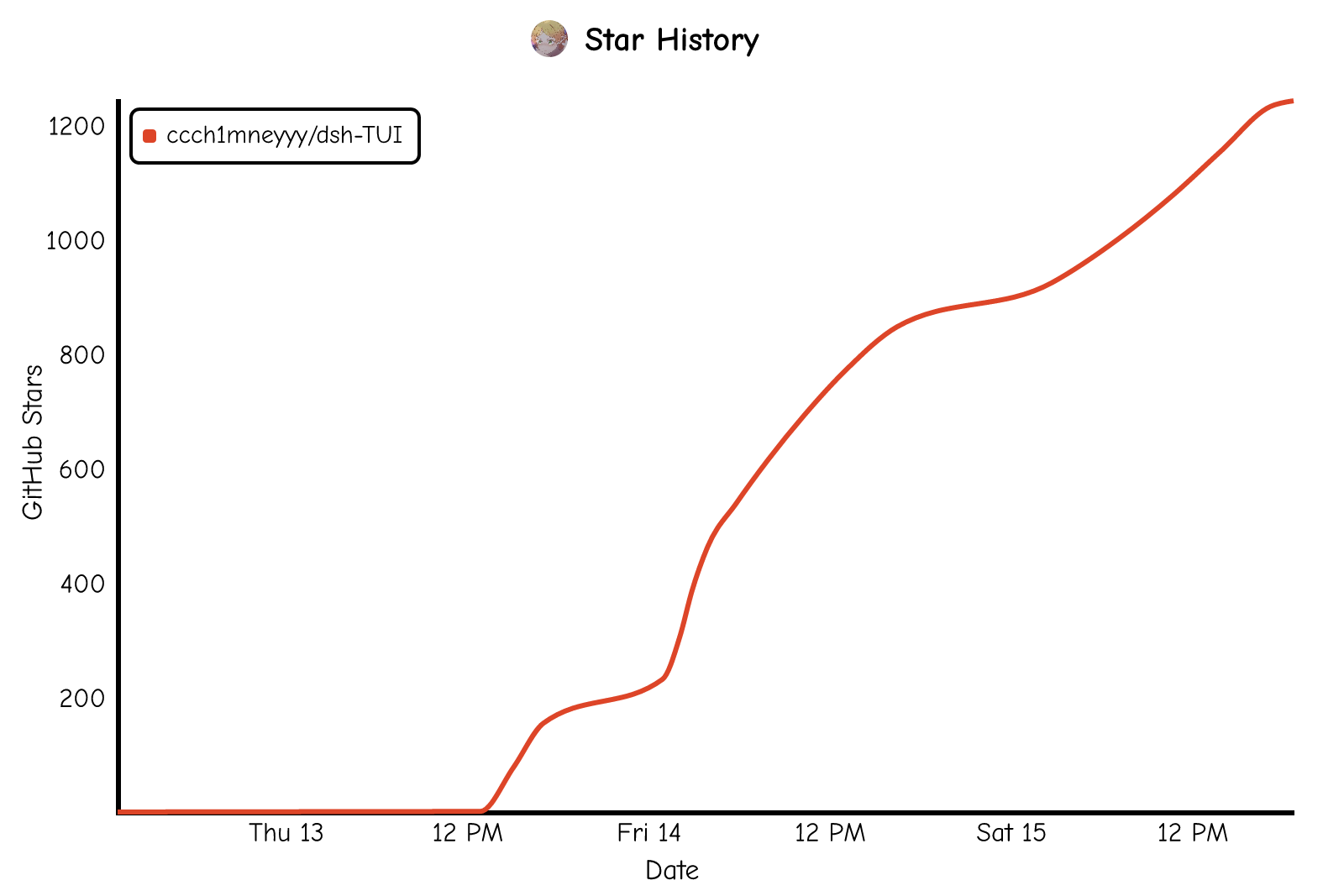
A beautiful, practical Claude Code-style TUI plugin with pixel whale top bar, flowing glow title, real-time status line, streaming thought expansion, time rewind, context progress bar and TPS gauge — zero core changes.
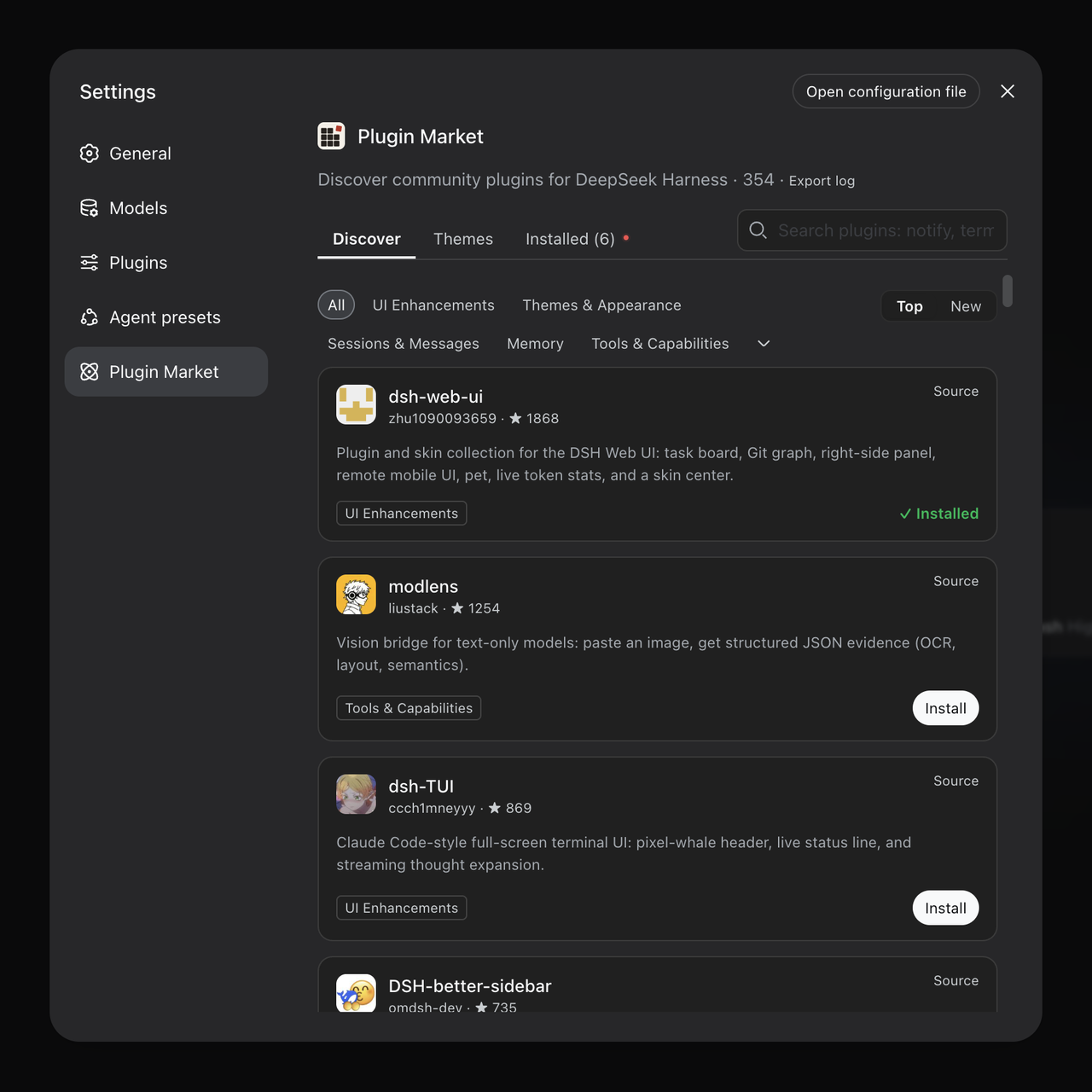
The plugin market for DeepSeek Harness: browse/search/one-click install community plugins and themes, with updates, backup/restore, hot disable, diagnostics, and AI fix.

A persistent whale widget on the DSH web UI that shows DeepSeek balance, today's usage, and per-turn cost, with drag-and-snap and sound effects.