dsh-remote-ssh-tools
Run the following command in DeepSeek Harness:
dsh plugin install Sycada/dsh-remote-ssh-tools
Paste the following prompt into your AI chat to install this plugin:
Add dsh-remote-ssh-tools as a GitHub dependency in your DSH profile package.json, pointing to the repository https://github.com/Sycada/dsh-remote-ssh-tools, then run pnpm install and restart DSH to activate the plugin.
About this plugin
When you frequently reach out to remote servers from DeepSeek Harness, connection details tend to scatter across chat messages, shell scripts, and environment variables, and any password or private key that lands in the conversation context is effectively exposed. dsh-remote-ssh-tools consolidates SSH connection profiles, credentials, and remote operations into a single unified plugin: you maintain host, port, user, and authentication method in a dedicated settings page, while passwords and key passphrases are stored only as named references in the DSH credential center and never appear in the UI, tool parameters, or Agent output.
The plugin exposes 13 Agent tools that cover the full remote-work lifecycle. ssh_run executes a single command and returns stdout, stderr, exit code, and elapsed time. ssh_session_open launches an in-browser xterm interactive terminal that supports window resizing, survives page refreshes, and tears down the remote session on close. ssh_sftp_upload, download, and list handle file transfer with auto-creation of remote directories and default overwrite protection. Host key fingerprints are cached on first contact, with an optional strict mode that rejects unknown hosts or mismatched fingerprints to guard against man-in-the-middle attacks.
Under the hood the plugin uses the pure-JavaScript ssh2 engine, so there is no dependency on a system ssh binary and the interactive terminal works on Windows, macOS, and Linux alike. Agents need zero extra configuration: the plugin automatically announces available tools and the list of saved hosts to every session, so a simple phrase like "run df -h on the prod profile" is all it takes to trigger a remote command. This makes it a natural fit for DSH users and teams who need Agents to securely operate multiple remote hosts while keeping credentials completely out of the conversation.
Use Cases
- Ask the Agent to run a remote command in one line and get structured stdout, stderr, and exit code
- Open an in-browser interactive terminal for long-running edits or live service logs
- Upload and download files over SFTP with auto-creation of remote directories and default overwrite protection
Best For
- DSH users and teams who need Agents to securely operate multiple remote hosts
- Developers and ops engineers managing scattered server connections with zero credential leakage
- AI-workflow practitioners who want remote commands, interactive terminal, and file transfer all in one conversation
Related Plugins
A service-oriented sidebar framework for DSH, offering a full workbench with file explorer, embedded browser, real terminal, Git panel, and extensible plugin services.
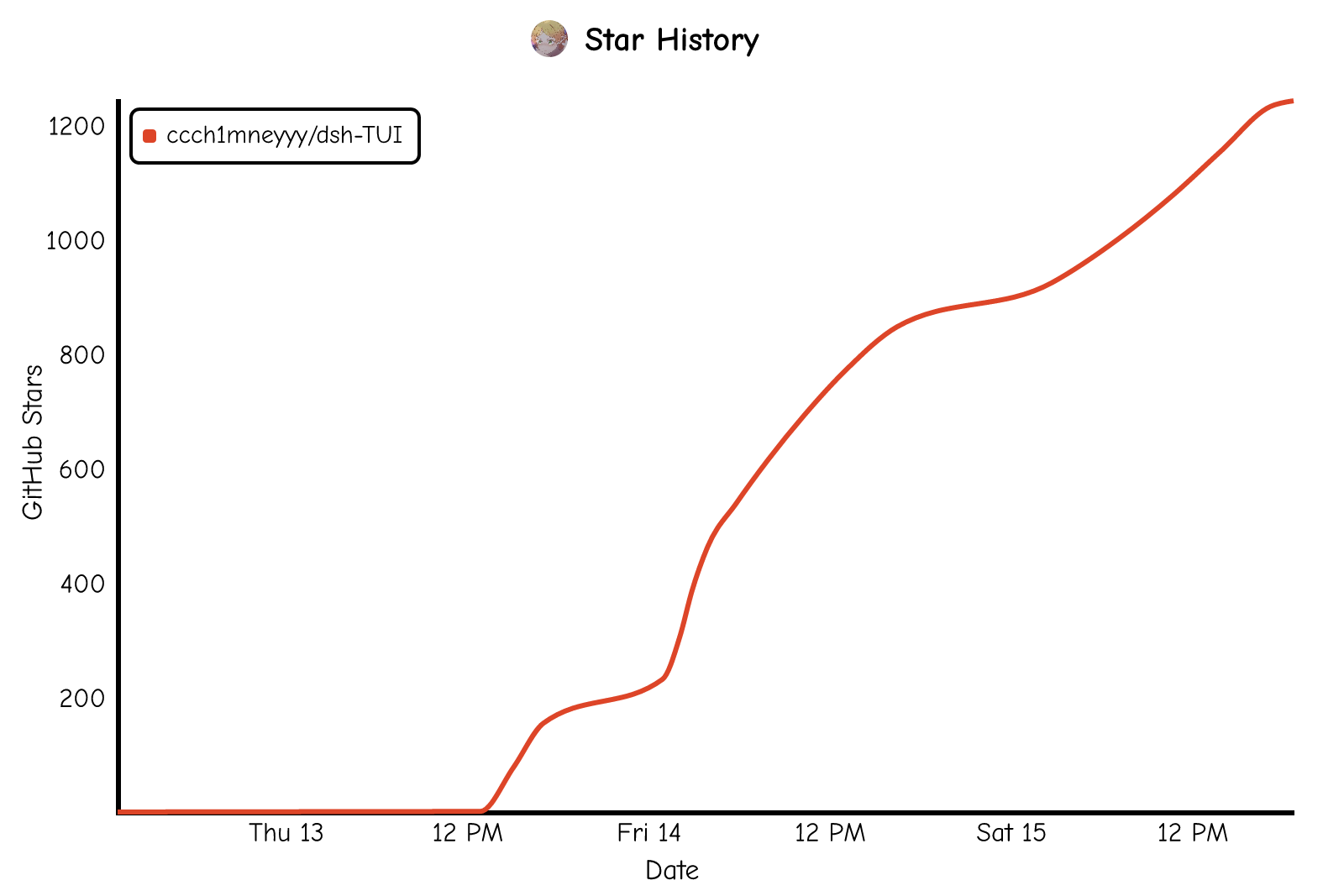
A beautiful, practical Claude Code-style TUI plugin with pixel whale top bar, flowing glow title, real-time status line, streaming thought expansion, time rewind, context progress bar and TPS gauge — zero core changes.
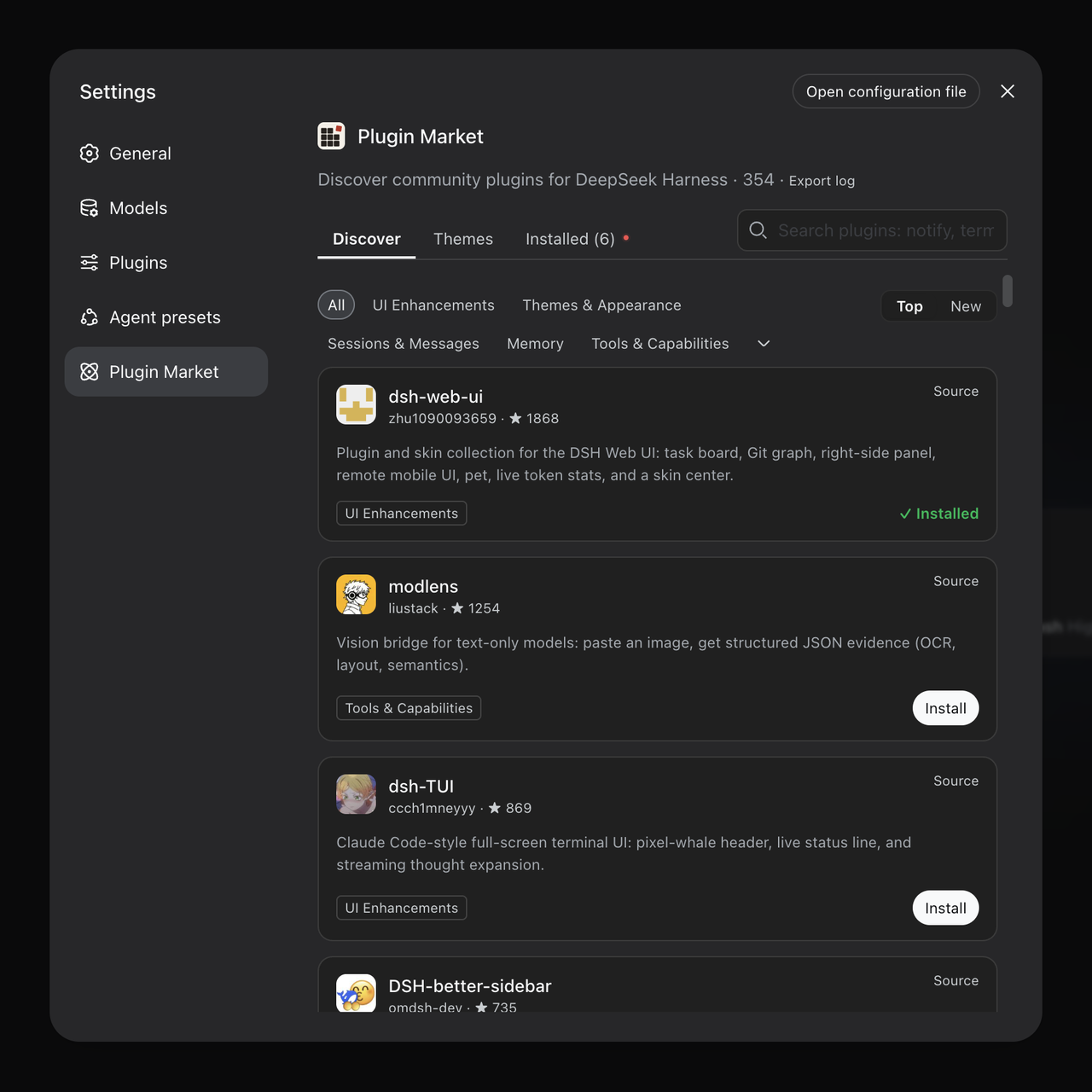
The plugin market for DeepSeek Harness: browse/search/one-click install community plugins and themes, with updates, backup/restore, hot disable, diagnostics, and AI fix.

A persistent whale widget on the DSH web UI that shows DeepSeek balance, today's usage, and per-turn cost, with drag-and-snap and sound effects.