
dsh-token-live
Run the following command in DeepSeek Harness:
dsh plugin install woodfood111/dsh-token-live
Paste the following prompt into your AI chat to install this plugin:
Open a terminal in DeepSeek Harness and run dsh plugin install woodfood111/dsh-token-live to install; the source is at https://github.com/woodfood111/dsh-token-live .
About this plugin
In DeepSeek Harness, writing or coding a draft gives you almost no live feedback: how many tokens are sitting in the composer, what this session has actually cost, and how full the context window is all remain invisible until generation finishes. The number that matters most before switching models, what the same work would have cost on the other tier, is entirely absent.
dsh-token-live adds a permanent panel to the composer dock, running as a single client-side bundle. It reads the live composer draft (with CJK-weighted estimation to avoid undercounting dense scripts by two to three times), cumulative token usage with cache-hit details, and context-window pressure, then computes session burn and per-hour cost from the official peak and idle price table. Its most distinctive feature is a comparison pill that applies your exact token buckets, including cache hits and misses, to the other model price list and shows the delta in one glance. The panel never reads an API key and injects no server-side route, eliminating the class of local-port exposure by design.
It suits developers who switch between flash and v4-pro frequently and want the cost delta before sending a request, as well as those who are billing-sensitive and prefer not to hold a balance endpoint on the host.
Screenshots
Use Cases
- Check draft size against a token budget before hitting send
- See the exact cost delta of the same work on flash vs v4-pro before switching
- Get an early warning when context pressure approaches the window limit
Best For
- Developers who toggle between flash and v4-pro and care about per-round cost
- Cost-sensitive users who want token spend visible before sending a request
- Privacy-first users who avoid exposing API keys or balance endpoints on the host
Related Plugins
A service-oriented sidebar framework for DSH, offering a full workbench with file explorer, embedded browser, real terminal, Git panel, and extensible plugin services.
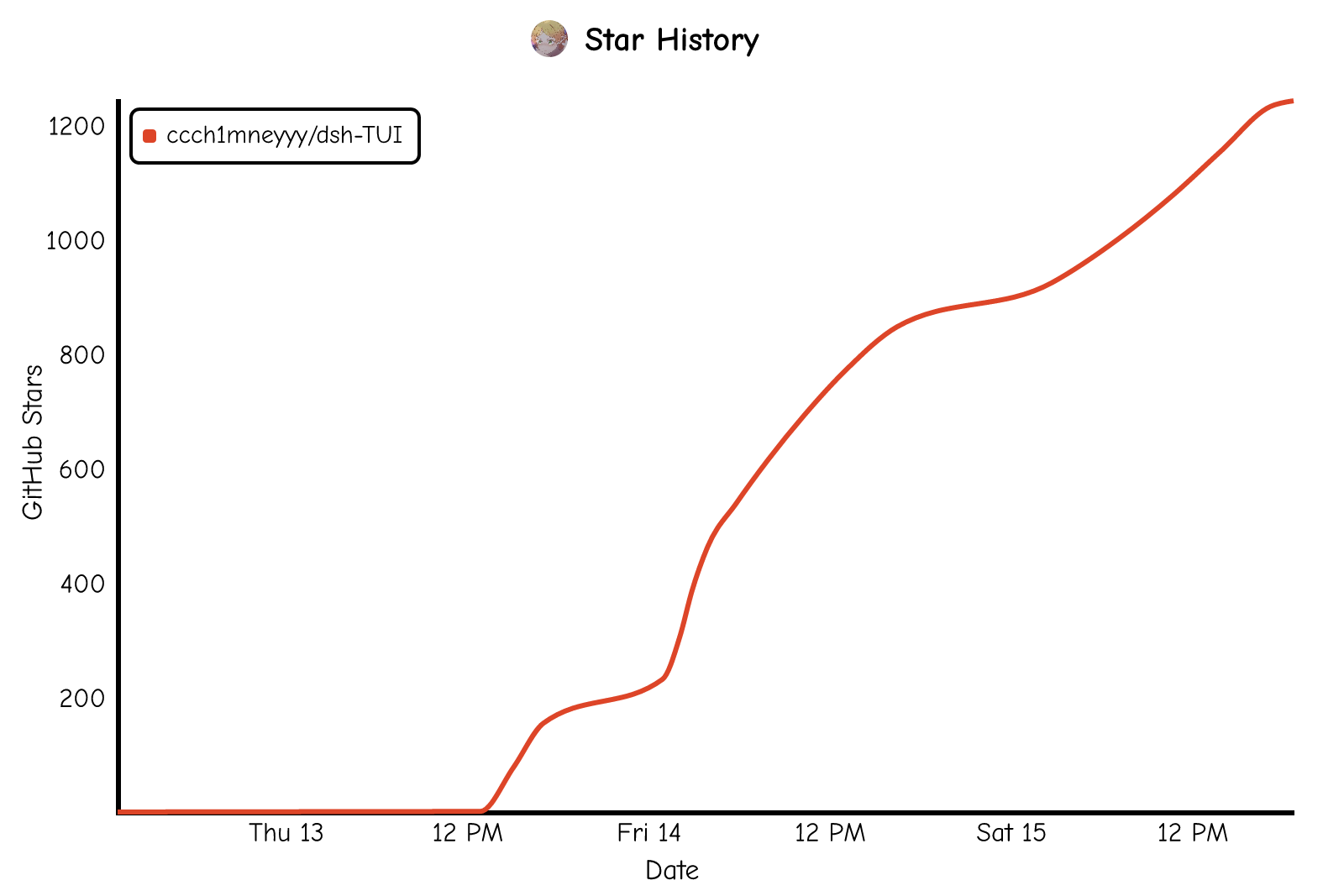
A beautiful, practical Claude Code-style TUI plugin with pixel whale top bar, flowing glow title, real-time status line, streaming thought expansion, time rewind, context progress bar and TPS gauge — zero core changes.
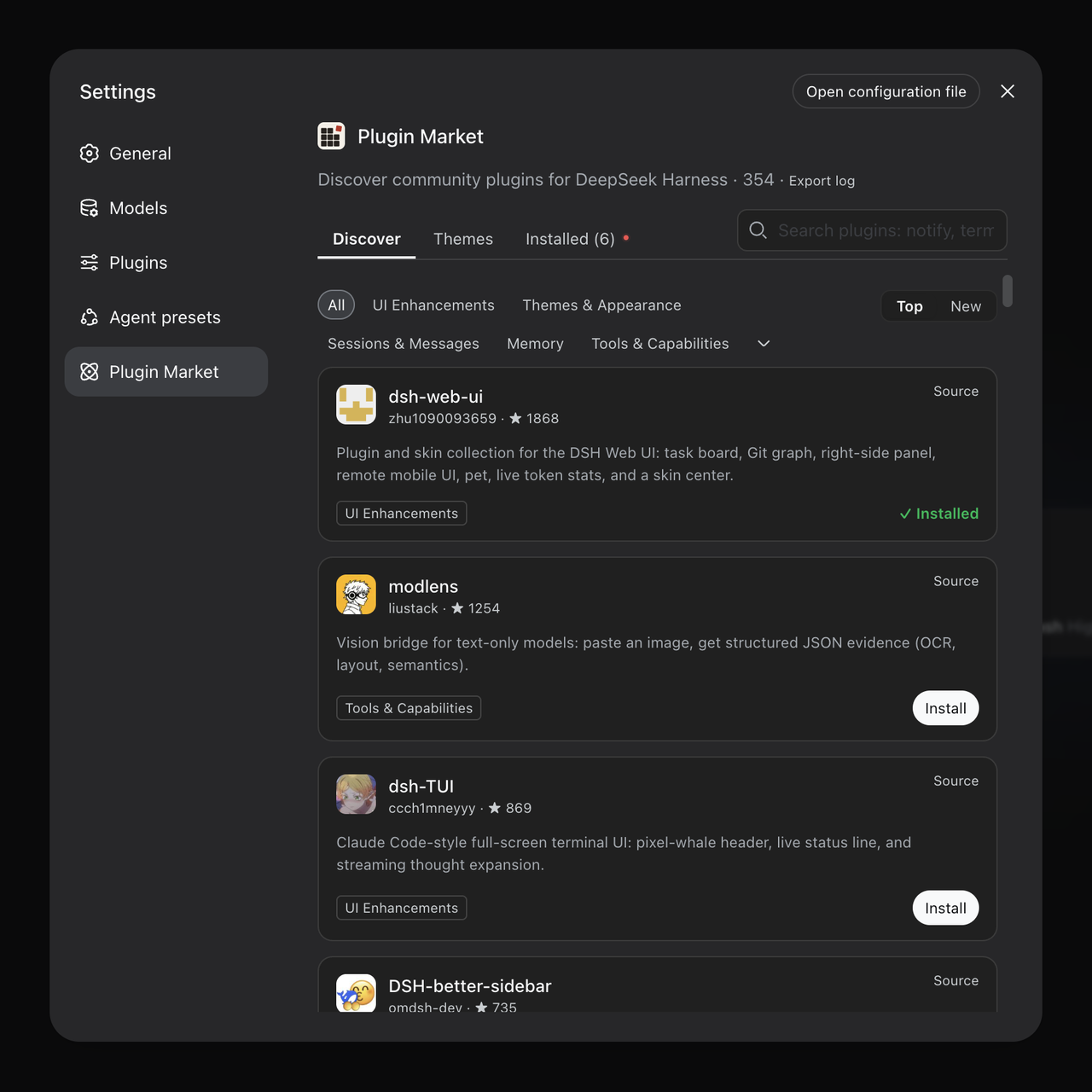
The plugin market for DeepSeek Harness: browse/search/one-click install community plugins and themes, with updates, backup/restore, hot disable, diagnostics, and AI fix.

A persistent whale widget on the DSH web UI that shows DeepSeek balance, today's usage, and per-turn cost, with drag-and-snap and sound effects.