dsh-profile-switch
Run the following command in DeepSeek Harness:
dsh plugin install fan56/dsh-profile-switch
Paste the following prompt into your AI chat to install this plugin:
Run dsh plugin install fan56/dsh-profile-switch in the DeepSeek Harness terminal to install this plugin; source code is available at https://github.com/fan56/dsh-profile-switch
About this plugin
Jumping between projects in dsh often means re-running /model and then walking through every subagent to set its model and think level. dsh-profile-switch groups all of that into named configuration profiles: a single /profile-switch command swaps the whole set, the current session picks up the new default model instantly through the TUI bridge or the web session controller, and a workspace-tree pin (.dsh-profile, similar to .nvmrc) ensures every future session in that tree assembles from the profile without touching sibling directories.
The /profile-cfg wizard handles the full lifecycle—create, edit, save-current, rename, and delete. Every model choice is a three-step narrowing chain (provider, then that provider models, then think levels) whose options are read live from installed llm adapters, so nothing is hardcoded. Paired with dsh-subagent-registry it adds per-agent overrides with an inherit default; agents absent from the profile simply fall back to their baseline. The store at ~/.dsh/model-profiles.json is versioned, atomically written, and self-heals on corruption, while sharing a single schema contract with registry and tui-pi editors.
Ideal for users who toggle between work, personal, or client-specific contexts frequently, or who run multiple subagents that need differentiated models and thinking depths. Whether you are on the TUI, a web surface, or a headless script, the plugin delivers the same interactive flow; in headless mode it fails fast with a clear file-path pointer instead of hanging.
Use Cases
- Switch default model and think level between work and personal directory trees with one command
- Assign differentiated models, think depths, or inheritance rules across multiple subagents
- Bind a workspace profile in headless scripts without interactive prompts or hangs
Best For
- dsh users who toggle between multiple project contexts frequently
- Users running multiple subagents with differentiated model configs
- Developers working across TUI, web, and headless workflows
Related Plugins
A service-oriented sidebar framework for DSH, offering a full workbench with file explorer, embedded browser, real terminal, Git panel, and extensible plugin services.
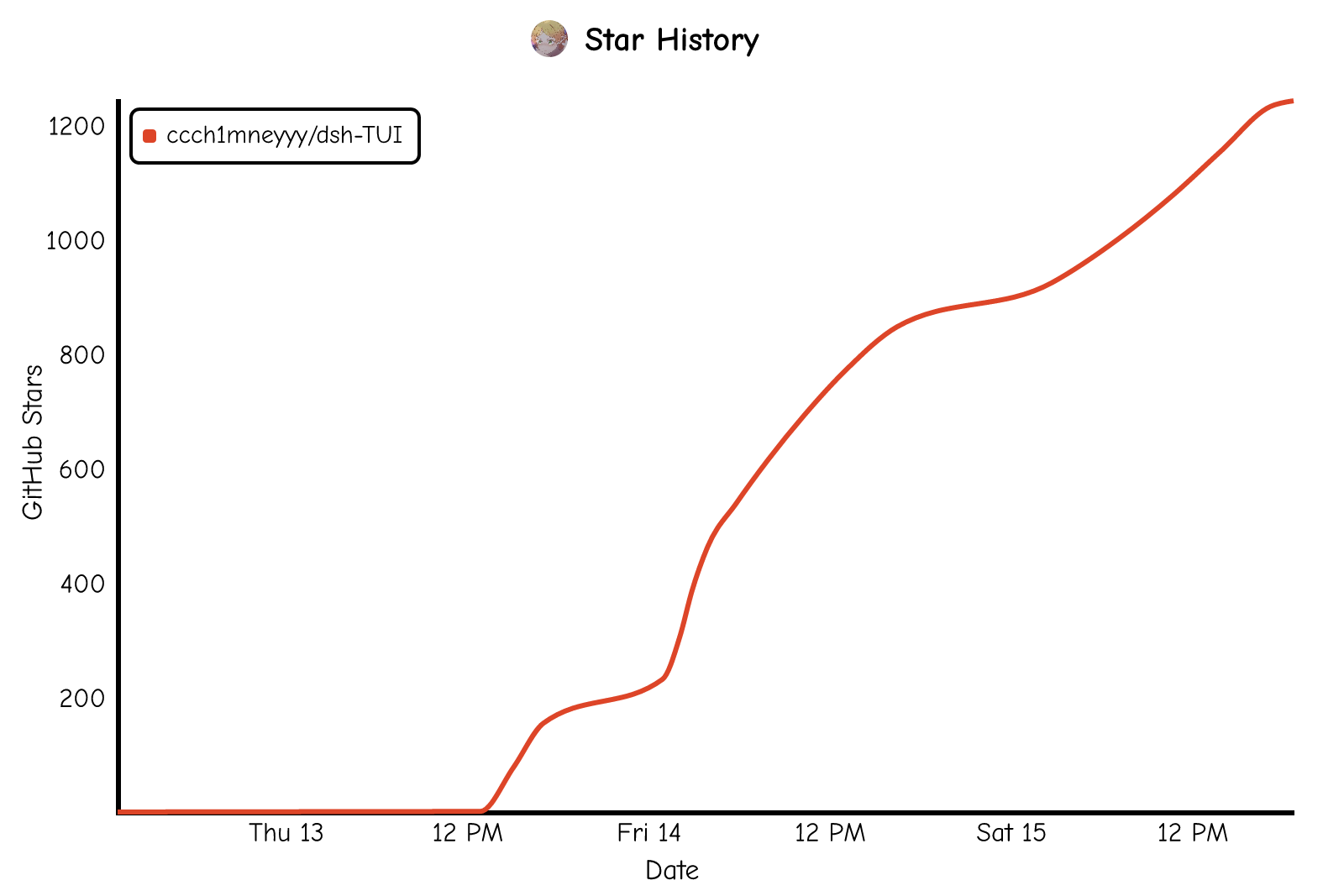
A beautiful, practical Claude Code-style TUI plugin with pixel whale top bar, flowing glow title, real-time status line, streaming thought expansion, time rewind, context progress bar and TPS gauge — zero core changes.
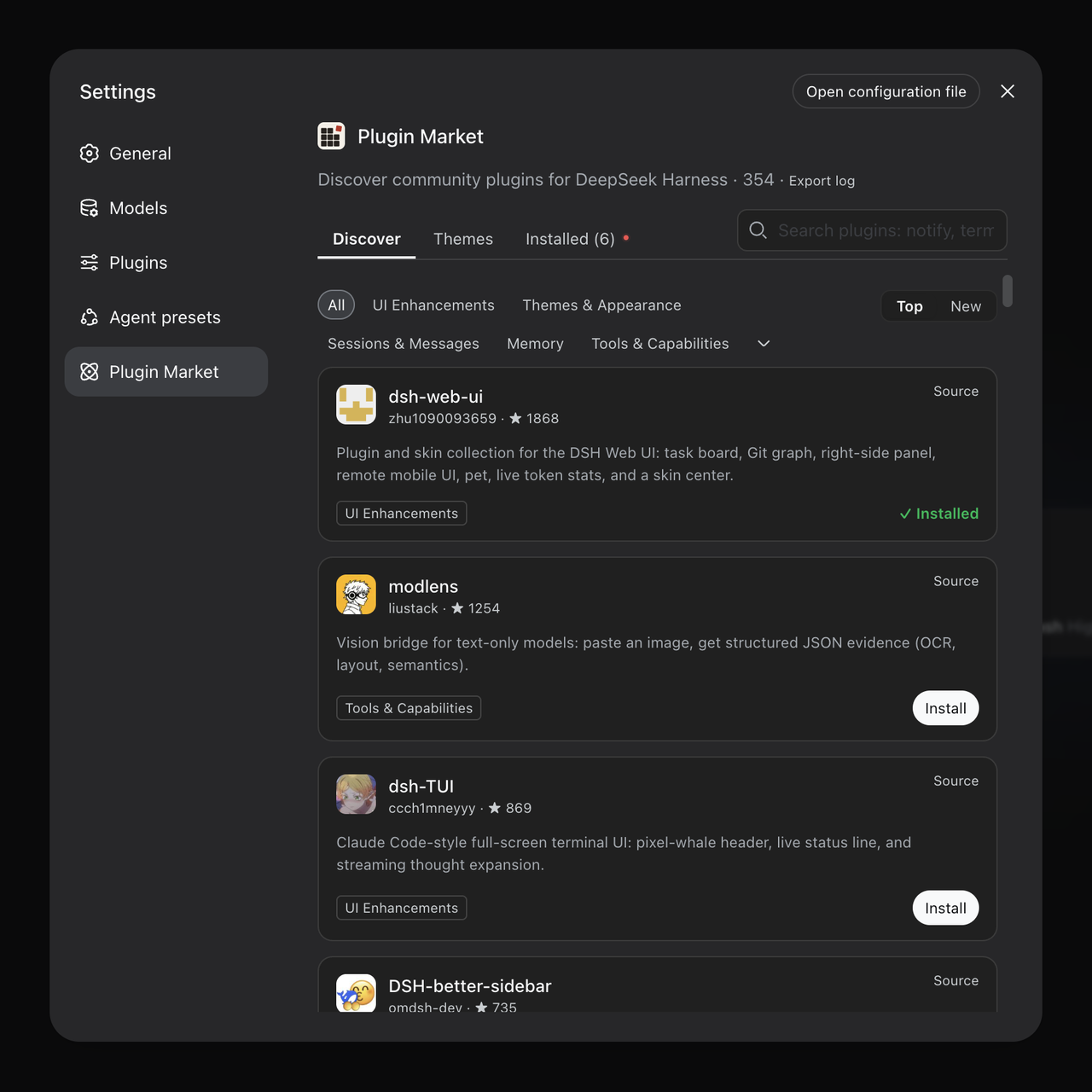
The plugin market for DeepSeek Harness: browse/search/one-click install community plugins and themes, with updates, backup/restore, hot disable, diagnostics, and AI fix.

A persistent whale widget on the DSH web UI that shows DeepSeek balance, today's usage, and per-turn cost, with drag-and-snap and sound effects.