dsh-plugin-devkit
Run the following command in DeepSeek Harness:
dsh plugin install CkEFFAF/dsh-plugin-devkit
Paste the following prompt into your AI chat to install this plugin:
Run dsh plugin install CkEFFAF/dsh-plugin-devkit inside DeepSeek Harness to install the plugin; the source repository is at https://github.com/CkEFFAF/dsh-plugin-devkit
About this plugin
Building a DeepSeek Harness plugin usually means juggling runtime inspection, host-contract verification, isolated booting, and client-side preview with four separate tools, each carrying its own setup and each risking side effects on your daily profile. This DevKit folds all four jobs into a single npm package: a session-queriable runtime inspector driven by the /debug command, an isolated-boot CLI for throwaway profiles, a contract-test runner that mounts your plugin on a fake Cordis host, and a slot preview page wired to the official theme tokens. They share one public surface, install side by side, and never write back to your running composition.
The inspector is strictly read-only. Secrets are redacted before they enter the buffer, overflow is counted, and the JSON report surfaces dropped records so a lossy run can never masquerade as a clean pass. The test CLI mirrors the real normalizeDefinition and execute(agent, line, …) signatures on a fake host, catching the class of plugins that sail through a green unit suite yet do nothing on a live host. The preview page defines the --dsw-alias-* custom properties across light/dark and narrow/wide, and if esbuild is absent it refuses to render rather than silently showing a placeholder.
It is aimed at developers actively writing or maintaining DSH plugins: you need to reproduce a failure on a copy, prove your host contract without a browser, and eyeball your client half against official theming, all from the session you are already in, with no DevTools attach and no second window. What it deliberately leaves out — full-payload replay, config repair, pixel-diff, source-level stepping — is stated up front, so you can pair it with dedicated tools or skip them altogether and stay focused on plugin logic.
Use Cases
- Trace a full tool-call timeline from a live session via /debug to find which service never activated
- Reproduce a production failure on a throwaway profile without touching your daily DSH instance
- Mount your plugin on a fake Cordis host and assert the execute signature before shipping
Best For
- Individual developers writing or maintaining DeepSeek Harness plugins
- Small teams that need contract testing and regression checks for DSH plugins
- Plugin authors who want to verify client-half rendering without launching a browser
Related Plugins
A service-oriented sidebar framework for DSH, offering a full workbench with file explorer, embedded browser, real terminal, Git panel, and extensible plugin services.
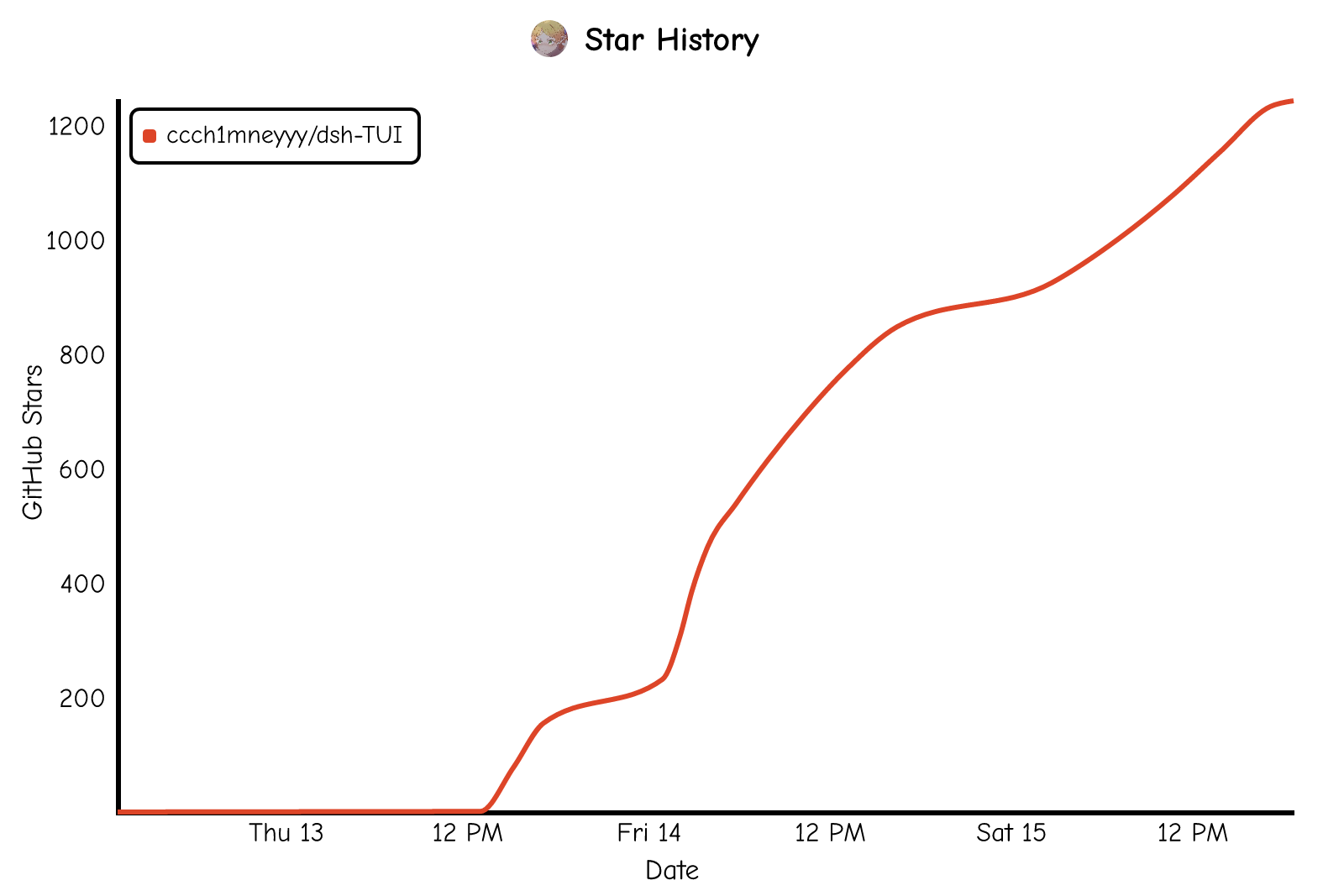
A beautiful, practical Claude Code-style TUI plugin with pixel whale top bar, flowing glow title, real-time status line, streaming thought expansion, time rewind, context progress bar and TPS gauge — zero core changes.
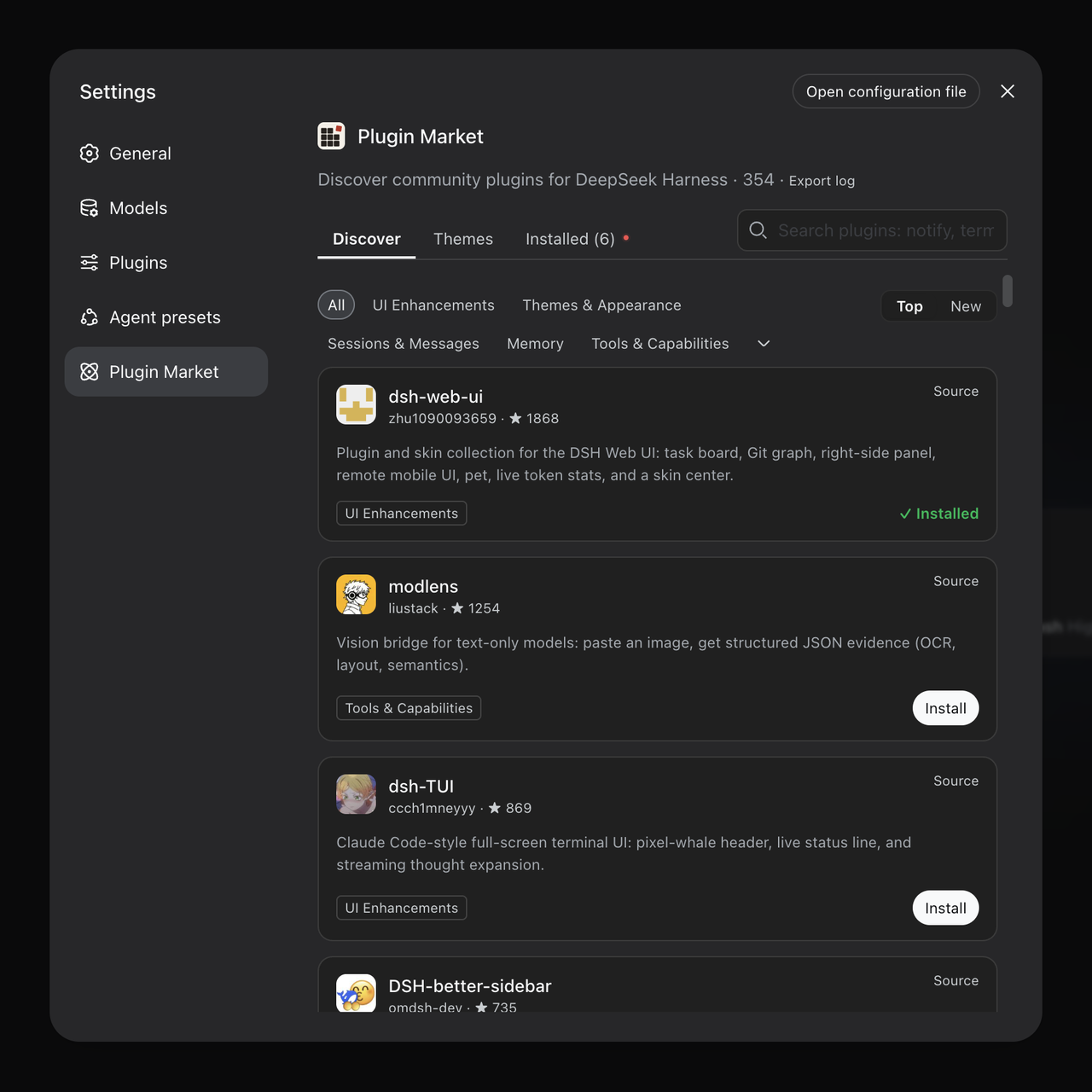
The plugin market for DeepSeek Harness: browse/search/one-click install community plugins and themes, with updates, backup/restore, hot disable, diagnostics, and AI fix.

A persistent whale widget on the DSH web UI that shows DeepSeek balance, today's usage, and per-turn cost, with drag-and-snap and sound effects.