dsh-web-fetch-moli
Run the following command in DeepSeek Harness:
dsh plugin install GreyRaphael/dsh-web-fetch-moli
Paste the following prompt into your AI chat to install this plugin:
Run dsh plugin install GreyRaphael/dsh-web-fetch-moli in your terminal, then restart dsh web to load the plugin; source code is available at https://github.com/GreyRaphael/dsh-web-fetch-moli .
About this plugin
In the DeepSeek Harness ecosystem, web-fetch tools typically rely on Chromium or Playwright for JavaScript rendering, with each instance consuming 800 MB to over 1.2 GB of RAM. On resource-constrained servers that must simultaneously drive enterprise micro-frontend sandboxes (Alibaba Alfa, qiankun, single-spa), infinite-scroll sentinels, or dynamic SPAs, that footprint simply does not scale. dsh-web-fetch-moli swaps the rendering backend to Moli, an ultra-lightweight Rust headless browser, bringing per-instance memory down to 50-60 MB-a reduction exceeding 90%-so high-concurrency fetching remains viable on ordinary VPS hardware.
The plugin centers on full rendering fidelity at minimal cost. CDP Micro-Clip layout materialization combined with Page.setBypassCSP cleanly renders complex micro-frontends and dynamic style-loaders with zero user-script monkey-patching. A two-stage denoise pipeline first strips ads, navigation bars, footers, and forms via LinkeDOM and Mozilla Readability, then converts the result through mdream-a native Rust converter with a pure-JS fallback-into LLM-optimized GitHub Flavored Markdown, with inline base64 images automatically collapsed into compact size placeholders. A built-in Cloudflare challenge handler waits naturally within the same page context for verification to clear, avoiding artificial bot behaviors. On first use, if no Moli binary is detected, the plugin automatically downloads and caches the correct release for your OS and architecture, eliminating manual setup entirely.
This solution is well suited for DSH users running high-concurrency web rendering on constrained hardware, developers who need reliable parsing of dynamic micro-frontends and SPAs without Chromium-level memory overhead, and pipeline teams that feed fetched content directly into large language models and demand clean, structured Markdown output. Two flexible backends let you toggle between a locally managed Moli daemon and a remote CDP endpoint, adapting seamlessly between single-node and browser-cluster deployments.
Use Cases
- High-concurrency SPA and micro-frontend rendering on memory-constrained servers
- Fetching web pages and extracting clean structured Markdown for LLM pipelines
- Parsing enterprise dynamic sites protected by CSP or Cloudflare challenges
Best For
- Developers running DSH web_fetch on VPS or lightweight cloud instances
- Frontend and data-engineering teams that need reliable parsing of micro-frontend and SPA pages
- Engineers building web-content cleaning and structuring pipelines for large language models
Related Plugins
A service-oriented sidebar framework for DSH, offering a full workbench with file explorer, embedded browser, real terminal, Git panel, and extensible plugin services.
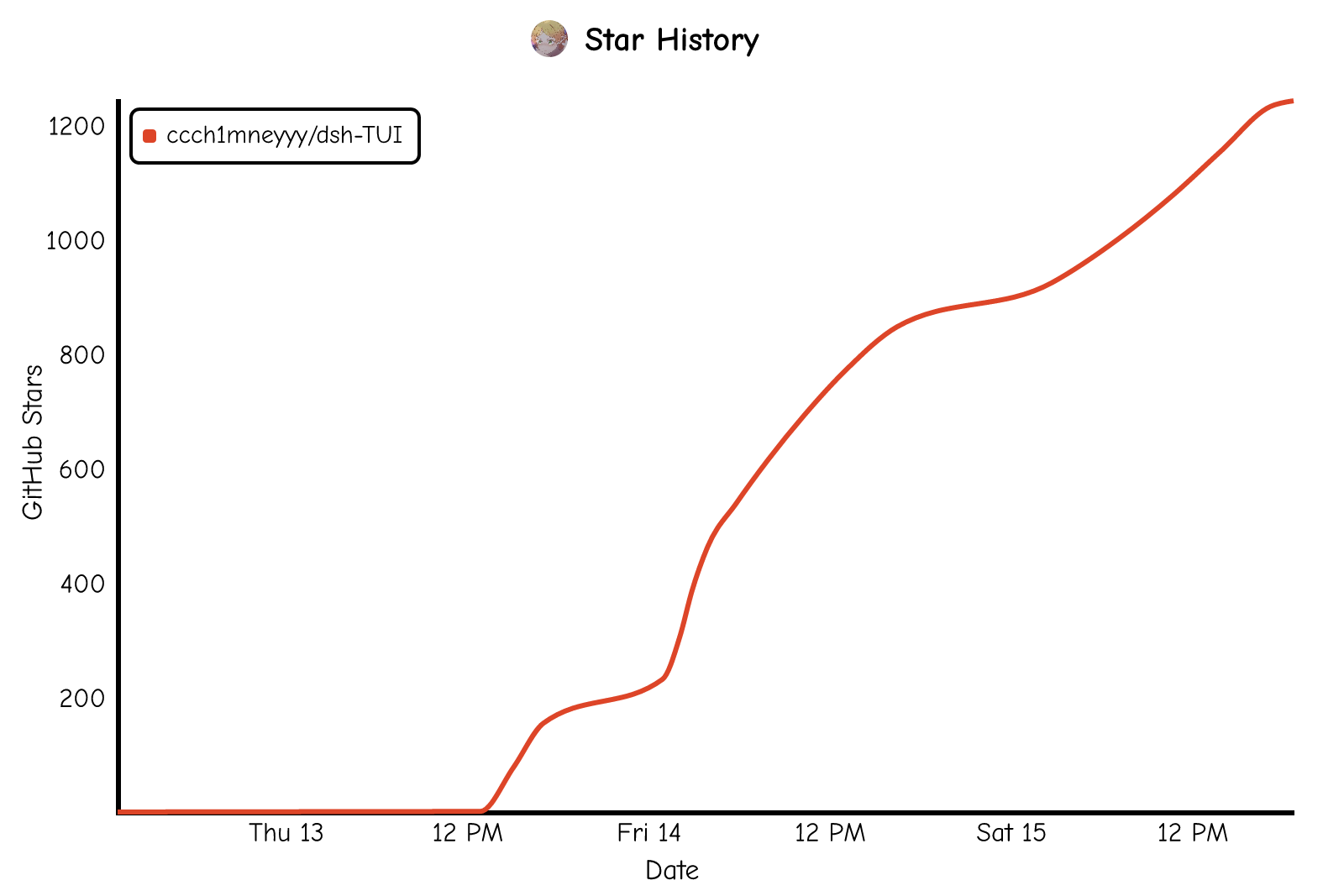
A beautiful, practical Claude Code-style TUI plugin with pixel whale top bar, flowing glow title, real-time status line, streaming thought expansion, time rewind, context progress bar and TPS gauge — zero core changes.
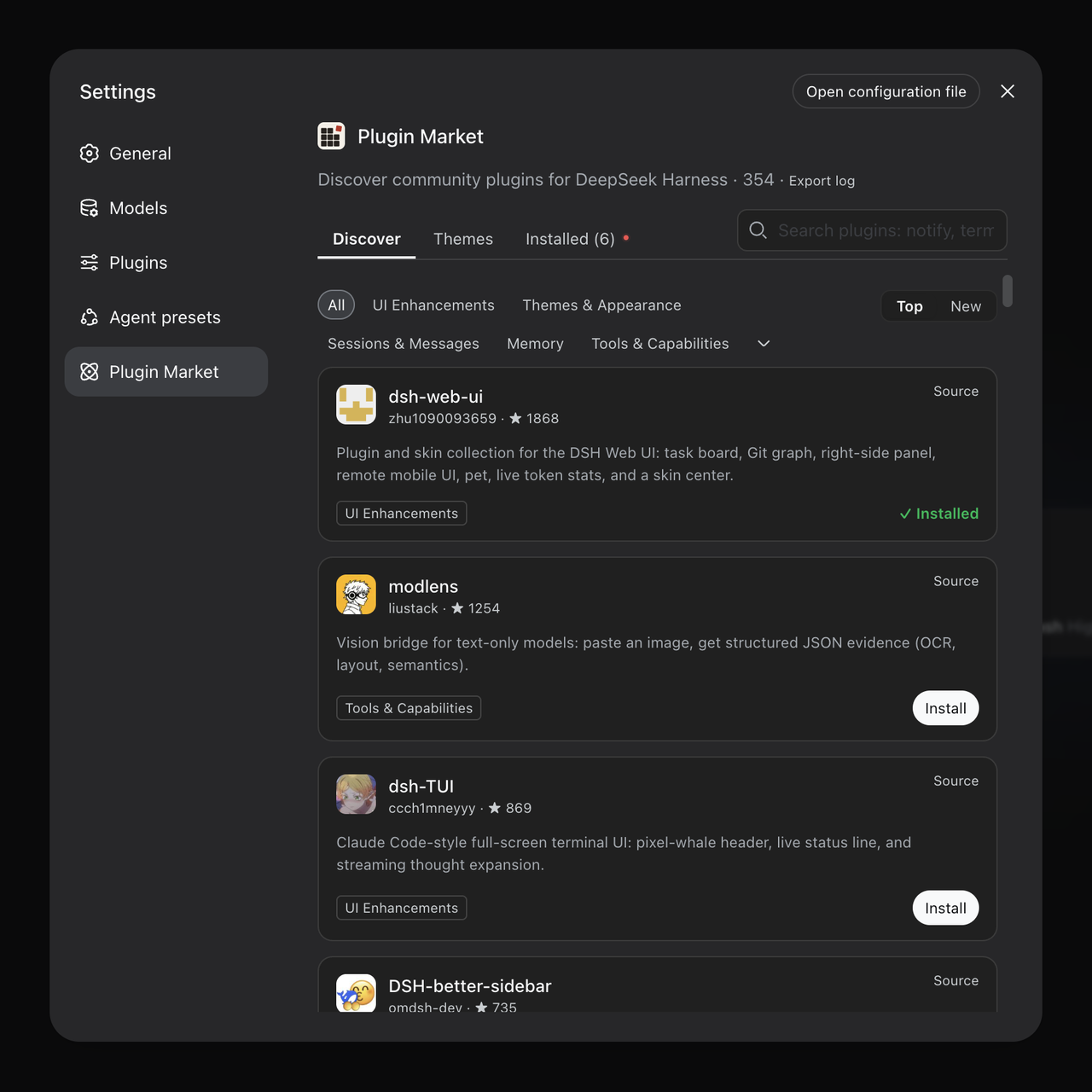
The plugin market for DeepSeek Harness: browse/search/one-click install community plugins and themes, with updates, backup/restore, hot disable, diagnostics, and AI fix.

A persistent whale widget on the DSH web UI that shows DeepSeek balance, today's usage, and per-turn cost, with drag-and-snap and sound effects.