dsh-multi-model-orchestrator
Run the following command in DeepSeek Harness:
dsh plugin install Bazley13/dsh-multi-model-orchestrator
Paste the following prompt into your AI chat to install this plugin:
Run the install command in your DeepSeek Harness terminal to enable the plugin; the source is available at https://github.com/Bazley13/dsh-multi-model-orchestrator .
About this plugin
When a single complex task demands deep reasoning, code generation, and high-volume templating all at once, throwing everything at one model is neither economical nor fast. dsh-multi-model-orchestrator turns your dsh primary model into a multi-model main brain: it decomposes the task into subtasks, reads the per-route strengths and weaknesses you have described in config, and dispatches each subtask to the best-fit model route (GLM, Kimi, Qwen, or any OpenAI-compatible endpoint) in parallel within a single conversation, then synthesizes the results.
Beyond routing, the plugin tracks per-model token usage: input, output, cache-read, and cache-write tokens plus request counts accumulated per provider/model since the process started, so you always know where compute is going. All you need to do is define your routes and model notes in settings.yaml; from then on the main brain handles the decompose-dispatch-aggregate loop autonomously.
It is designed for dsh users who have configured two or more OpenAI-compatible routes and want a single prompt to fan out across models while keeping granular visibility into per-route cost. The plugin does not touch harness internals; every route and allow-list entry is a plain config value, and removing the plugin restores your setup exactly as it was.
Use Cases
- Auto-decompose complex tasks and dispatch subtasks to the best-fit model routes in parallel
- Route deep reasoning to strong models and high-volume templating work to fast ones
- Audit per-model token consumption and request counts to optimize routing cost
Best For
- dsh users with two or more OpenAI-compatible model routes configured
- Developers who want a single prompt to fan out across specialized models
- Teams that need granular per-route cost visibility and control
Related Plugins
A service-oriented sidebar framework for DSH, offering a full workbench with file explorer, embedded browser, real terminal, Git panel, and extensible plugin services.
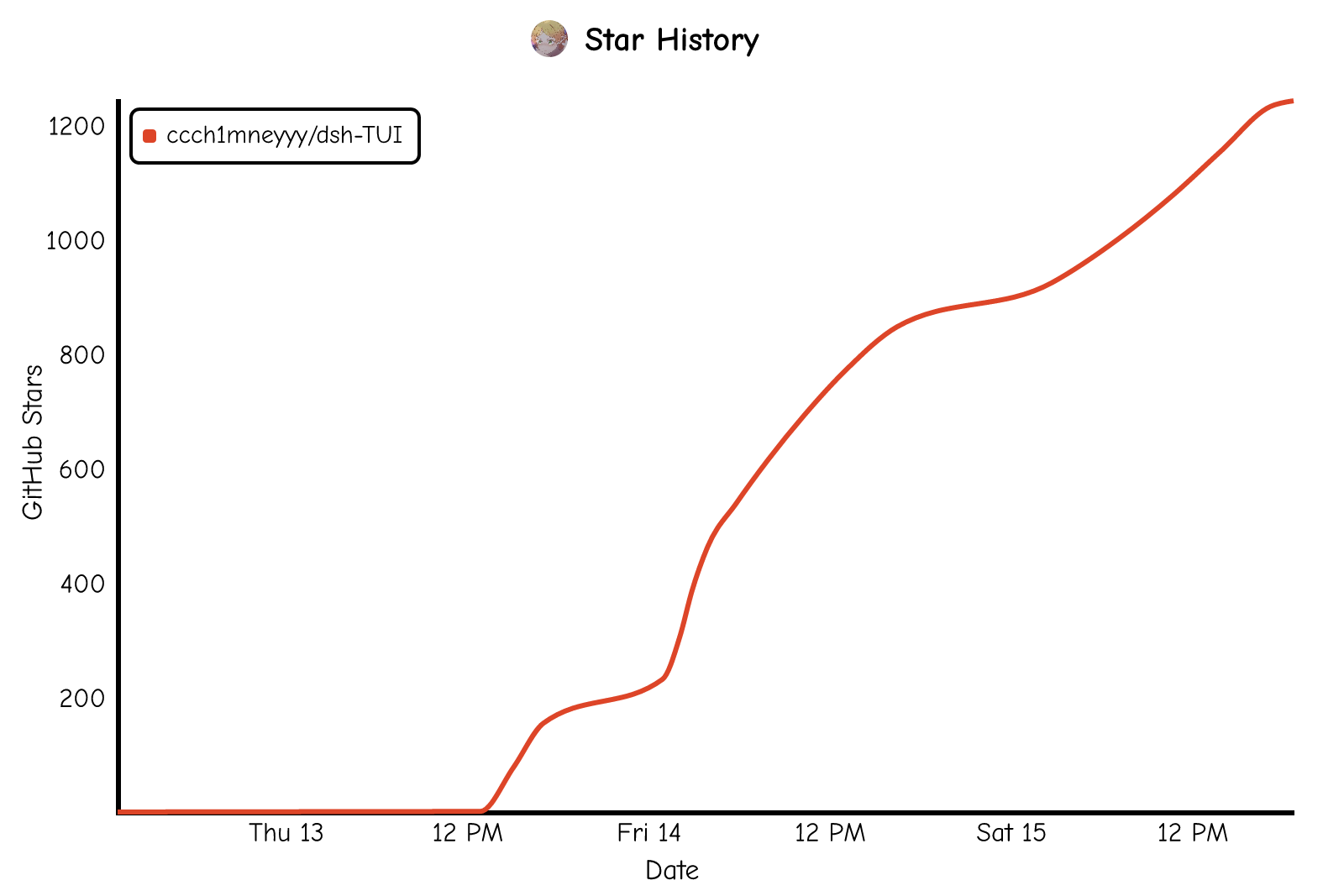
A beautiful, practical Claude Code-style TUI plugin with pixel whale top bar, flowing glow title, real-time status line, streaming thought expansion, time rewind, context progress bar and TPS gauge — zero core changes.
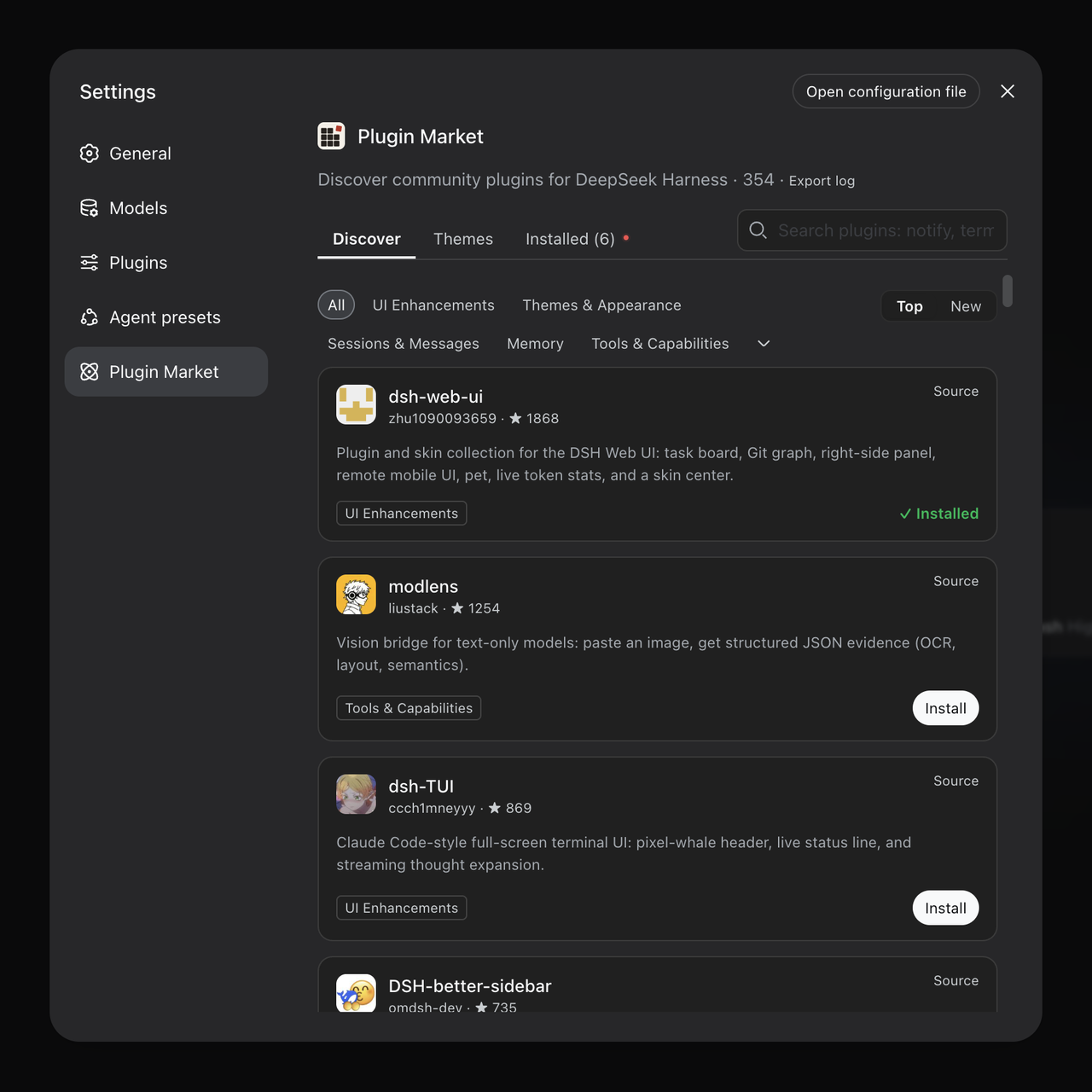
The plugin market for DeepSeek Harness: browse/search/one-click install community plugins and themes, with updates, backup/restore, hot disable, diagnostics, and AI fix.

A persistent whale widget on the DSH web UI that shows DeepSeek balance, today's usage, and per-turn cost, with drag-and-snap and sound effects.