dsh-local-hanaccount
Run the following command in DeepSeek Harness:
dsh plugin install Z-6354/dsh-local-hanaccount
Paste the following prompt into your AI chat to install this plugin:
Run dsh plugin install Z-6354/dsh-local-hanaccount in the DeepSeek Harness terminal to install the plugin. Source code: https://github.com/Z-6354/dsh-local-hanaccount
About this plugin
Exposing DSH Web to the public internet raises one immediate question: who gets in, and how do you verify them? dsh-local-hanaccount is a single-operator access gate built for exactly that situation. By default it wraps every plugin webServer route behind a unified authentication wall, while leaving DSH native workspace and session management completely untouched.
Authentication spans both browser and command-line workflows. In the browser you can use a password (scrypt-hashed, with a 5-attempt lockout), a WebAuthn Passkey (fingerprint or face unlock, available over HTTPS or localhost), or an SSH ed25519 key through a challenge-and-verify flow for headless scripts. At the network layer, an IP whitelist lets trusted addresses bypass login entirely, an IP blacklist issues a permanent deny with a running block counter, and every suspicious source is logged for later review. For public deployments the plugin ships a copy-paste Nginx reverse-proxy snippet with X-Real-IP passthrough, and it can even auto-authenticate when Nginx already supplies a Basic Auth header. Cross-device peer tokens and manually issued API Bearer keys cover the remaining script-and-multi-device use cases without repeated password entry.
The target profile is clear: you are running DSH Web on a VPS or a home server, you want it reachable from your phone and laptop over the open internet, but you do not want to bolt on a heavyweight identity platform. Single operator, security-first, minimal operational overhead — that is the design boundary this plugin lives in.
Use Cases
- Safely exposing DSH Web to the public internet for remote phone and laptop access
- Authenticating headless scripts and CLI tools via SSH keys or Bearer tokens
- Pairing with an Nginx reverse proxy for IP filtering and Basic Auth passthrough
Best For
- Single-operator users running DSH Web on a VPS or home server
- Developers and SysOps engineers who need scripted automation access to DSH
- Technical admins who want hardened web security without a full IAM stack
Related Plugins
A service-oriented sidebar framework for DSH, offering a full workbench with file explorer, embedded browser, real terminal, Git panel, and extensible plugin services.
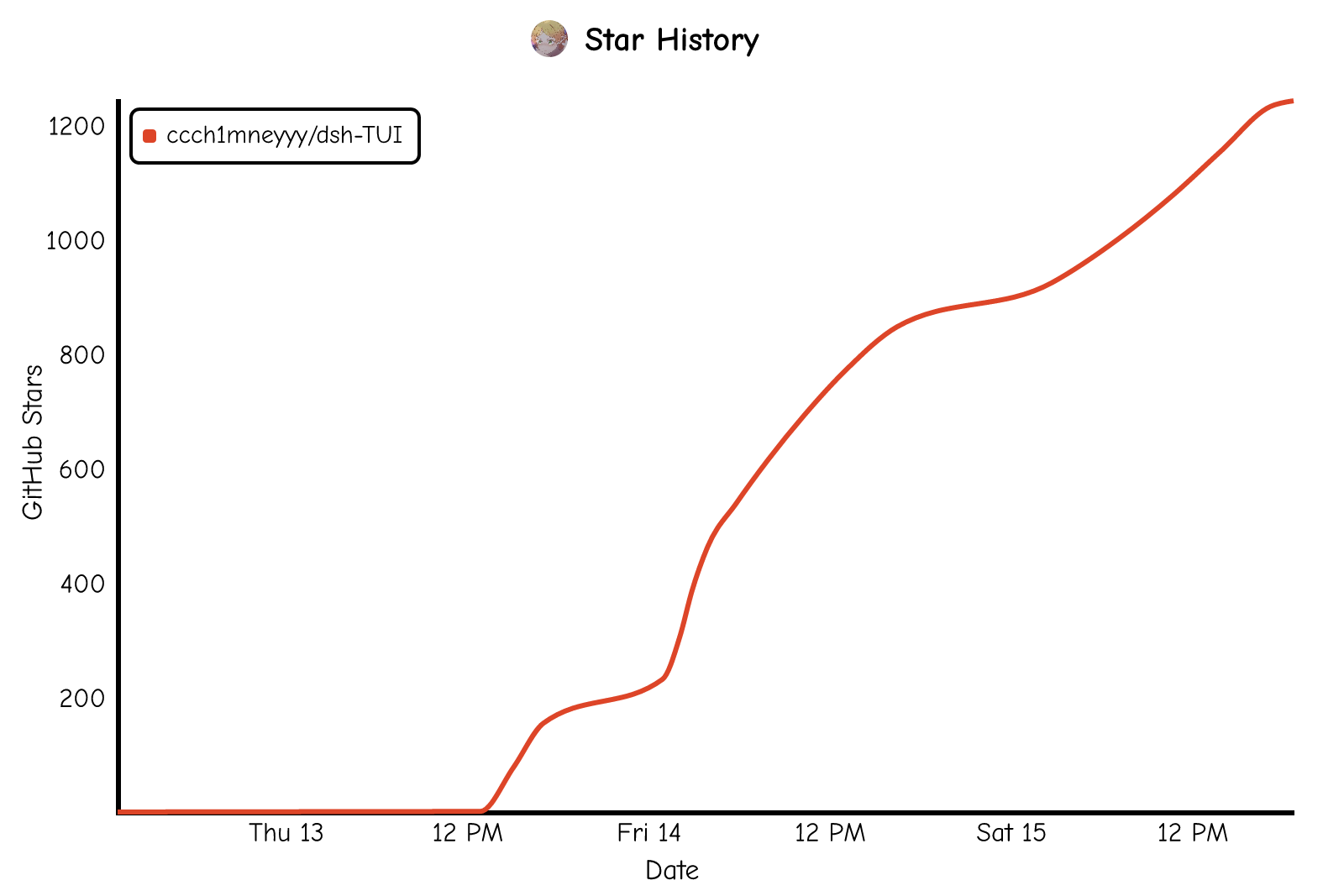
A beautiful, practical Claude Code-style TUI plugin with pixel whale top bar, flowing glow title, real-time status line, streaming thought expansion, time rewind, context progress bar and TPS gauge — zero core changes.
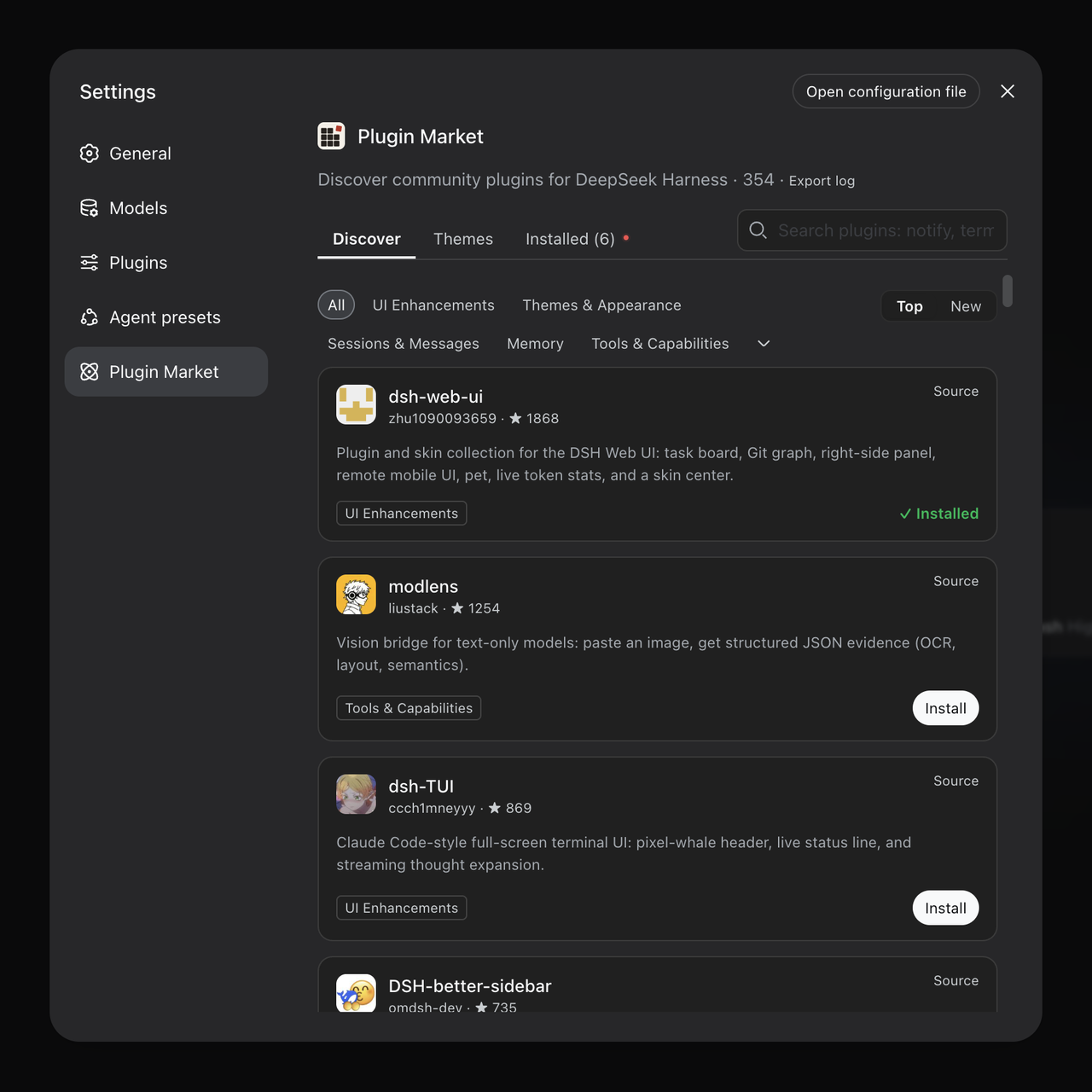
The plugin market for DeepSeek Harness: browse/search/one-click install community plugins and themes, with updates, backup/restore, hot disable, diagnostics, and AI fix.

A persistent whale widget on the DSH web UI that shows DeepSeek balance, today's usage, and per-turn cost, with drag-and-snap and sound effects.