dsh-ai-wallet
Run the following command in DeepSeek Harness:
dsh plugin install gouzijing0821/dsh-ai-wallet
Paste the following prompt into your AI chat to install this plugin:
Run dsh plugin install gouzijing0821/dsh-ai-wallet in your terminal to install the plugin from https://github.com/gouzijing0821/dsh-ai-wallet , then restart DSH for it to take effect.
About this plugin
When running multiple AI providers through DSH, balance and quota information is scattered across vendor dashboards, and it is hard to tell which model the current conversation is consuming or how much headroom remains without hopping between tabs. dsh-ai-wallet pulls all of that into a freely draggable floating ball: the surface shows the balance or quota of the model in active use, auto-refreshing every 60 seconds; clicking it opens a full panel that lists every configured provider at a glance, with progress bars and reset times for quota-based plans and friendly warnings when credentials are missing or a service errors out.
Eight built-in themes - Liquid Glass, Phosphor Green, Cyber Cyan, Dracula, Nord Ice Blue, Amber, and Parchment - are switchable from the panel footer, and both ball position and theme choice persist to a local file so they survive DSH restarts and port changes. Nine first-class providers are supported out of the box, including DeepSeek, Zhipu GLM, Z.ai, Moonshot Kimi, MiniMax, StepFun, SiliconFlow, OpenRouter, and xAI, and custom or private endpoints can be declared in config without touching source code.
Ideal for developers and teams who juggle two, three, or more model providers inside DSH and want a constant, at-a-glance view of usage and remaining credits without ever leaving the workbench.
Use Cases
- Monitoring balances and quotas across multiple AI providers while working inside DSH
- Quickly comparing remaining credits for DeepSeek, Zhipu, Kimi, and others from one panel
- Keeping wallet info on the workbench instead of hopping between vendor dashboards
Best For
- Developers who run two or more model providers side by side in DSH
- Teams that need frequent balance and quota checks without leaving the workbench
- Advanced users who deploy private endpoints and want a unified wallet view
Related Plugins
A service-oriented sidebar framework for DSH, offering a full workbench with file explorer, embedded browser, real terminal, Git panel, and extensible plugin services.
A beautiful, practical Claude Code-style TUI plugin with pixel whale top bar, flowing glow title, real-time status line, streaming thought expansion, time rewind, context progress bar and TPS gauge — zero core changes.
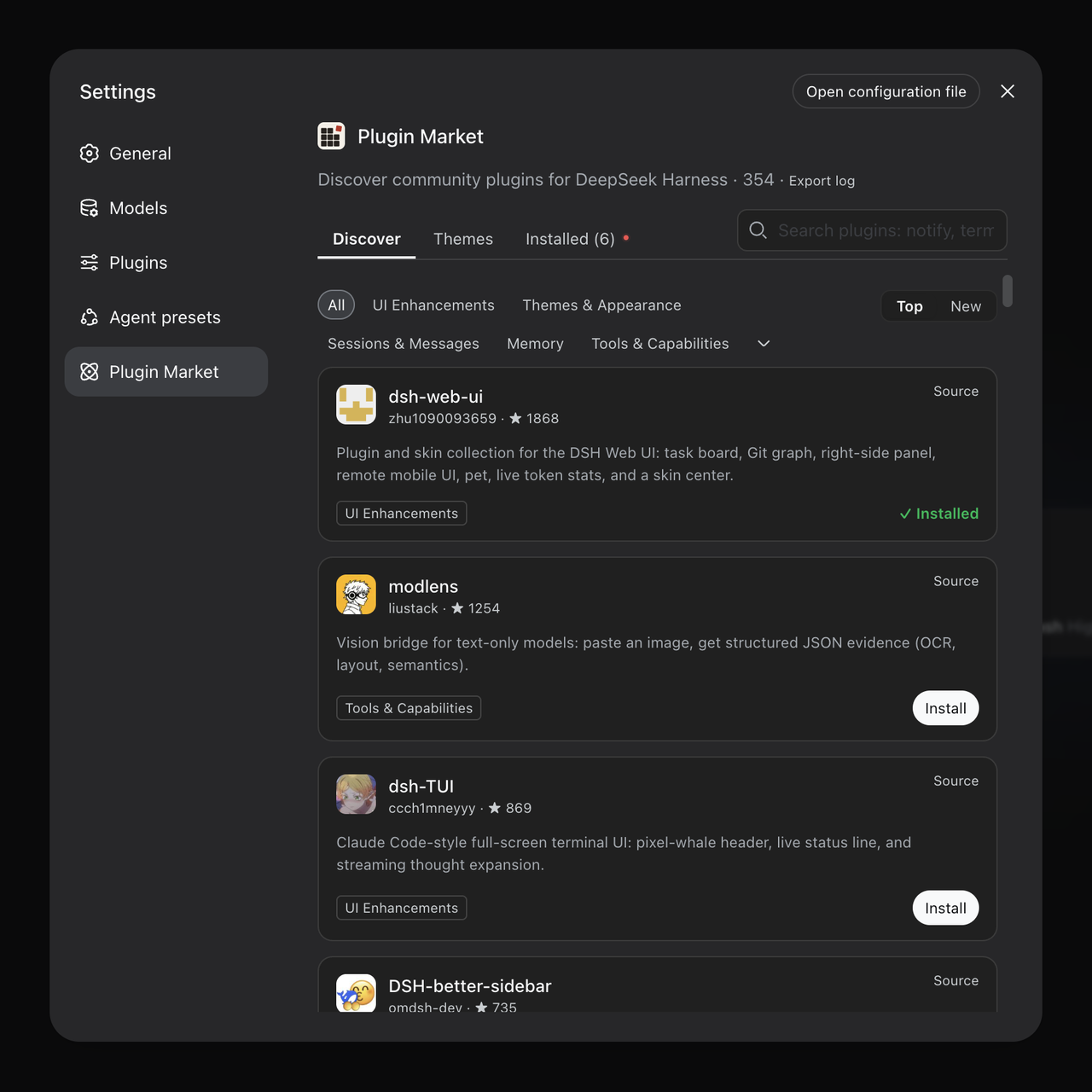
The plugin market for DeepSeek Harness: browse/search/one-click install community plugins and themes, with updates, backup/restore, hot disable, diagnostics, and AI fix.

A persistent whale widget on the DSH web UI that shows DeepSeek balance, today's usage, and per-turn cost, with drag-and-snap and sound effects.