dsh-plugin-kit
Run the following command in DeepSeek Harness:
dsh plugin install jwilson411/dsh-plugin-kit
Paste the following prompt into your AI chat to install this plugin:
Run dsh plugin install jwilson411/dsh-plugin-kit in your terminal to add this plugin to DeepSeek Harness; the source is available at https://github.com/jwilson411/dsh-plugin-kit.
About this plugin
Building a function plugin for DeepSeek Harness rarely trips you up on business logic; it trips you up on the minimal correct loop — which manifest field to declare, how the patch YAML attaches to the profile, where registration and teardown happen inside apply, and how defineTool validation meets the output.render projection. dsh-plugin-kit compresses all of that into a single installable package that runs the full chain through one tool called kit_ping, so you never have to assemble the scaffold from scratch.
It plays double duty as a profile bundle and the plugin that bundle mounts. The manifest declares dsh.bundle.patch, and the installer appends the package to the ordered dsh.profile.bundles list; the accompanying patch file is a top-level YAML array whose entries replace an entire row by id rather than merging individual keys. On the plugin side, registration happens inside apply, a hard dependency on tools is declared via inject, and the disposer returned by register hands lifecycle ownership back to the Cordis fiber — stopping, updating, or reloading the plugin automatically unregisters the tool. The parameter schema is an implicit open object root: missing fields or wrong types raise ToolArgsError before the body ever runs, and both output.schema and output.render stay lossless JSON with explicit additionalProperties on every nested object.
It fits developers who are new to the Harness plugin surface and want to confirm patch-layer composition order and Cordis lifecycle semantics, as well as teams looking for the smallest forkable scaffold to swap kit_ping for a real tool. The test suite is offline by construction — a stub context records registrations, no socket opens, no API key is read — and CI runs two plain commands on Node 22 and 24 with zero external credentials. The package pins the 0.1.1-rc.2 line and locks the exact version in devDependencies to sidestep npm latest-tag drift, making it safe to install in any environment without side effects.
Use Cases
- Scaffold a minimal Harness function plugin in minutes
- Validate patch-layer composition order and Cordis lifecycle semantics
- Swap kit_ping for a real tool and publish immediately
- Exercise the full register-validate-render chain in an offline environment
Best For
- Developers new to the Harness plugin surface
- Teams seeking the smallest forkable scaffold to iterate on quickly
- Maintainers verifying manifest and patch wiring correctness
Related Plugins
A service-oriented sidebar framework for DSH, offering a full workbench with file explorer, embedded browser, real terminal, Git panel, and extensible plugin services.
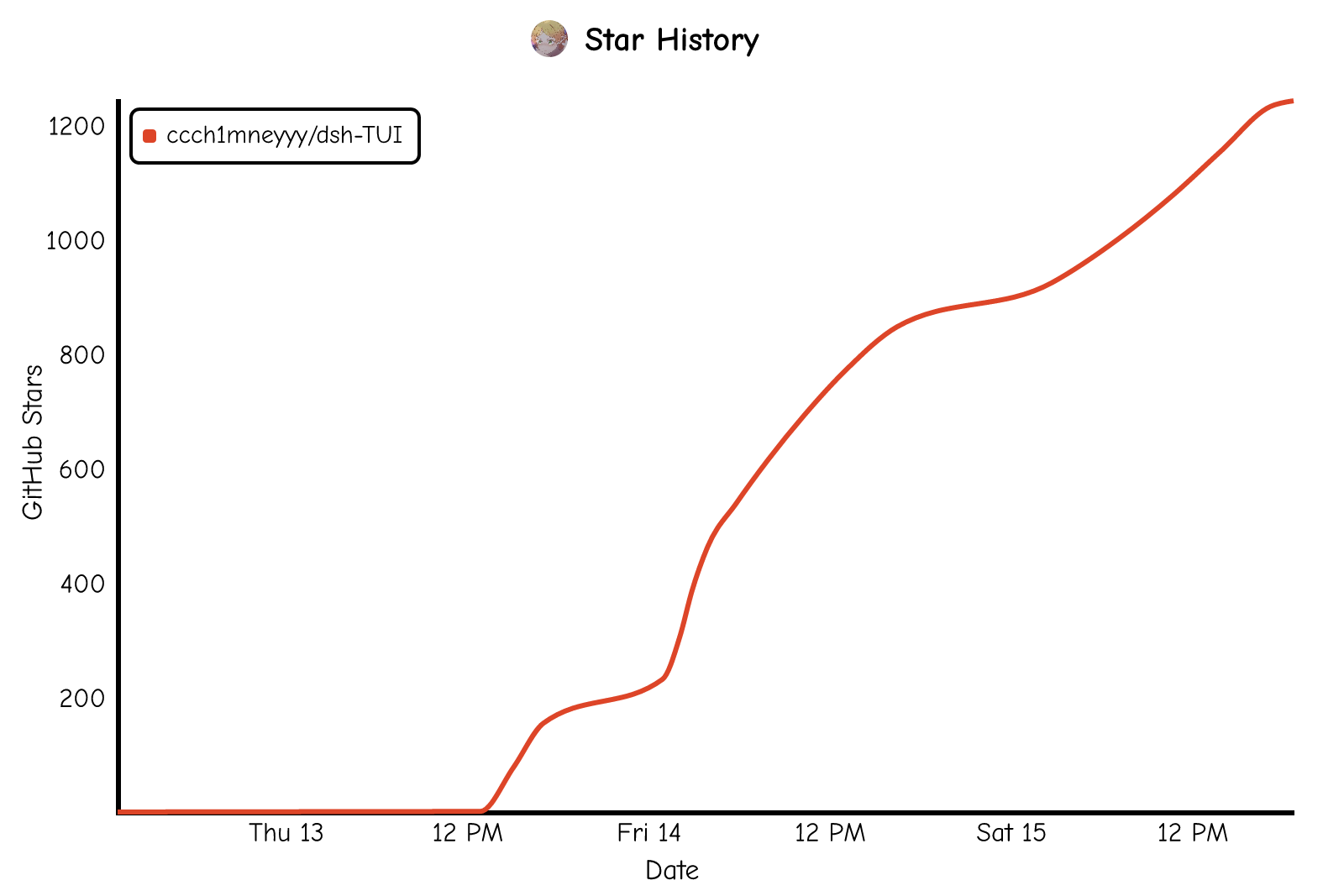
A beautiful, practical Claude Code-style TUI plugin with pixel whale top bar, flowing glow title, real-time status line, streaming thought expansion, time rewind, context progress bar and TPS gauge — zero core changes.
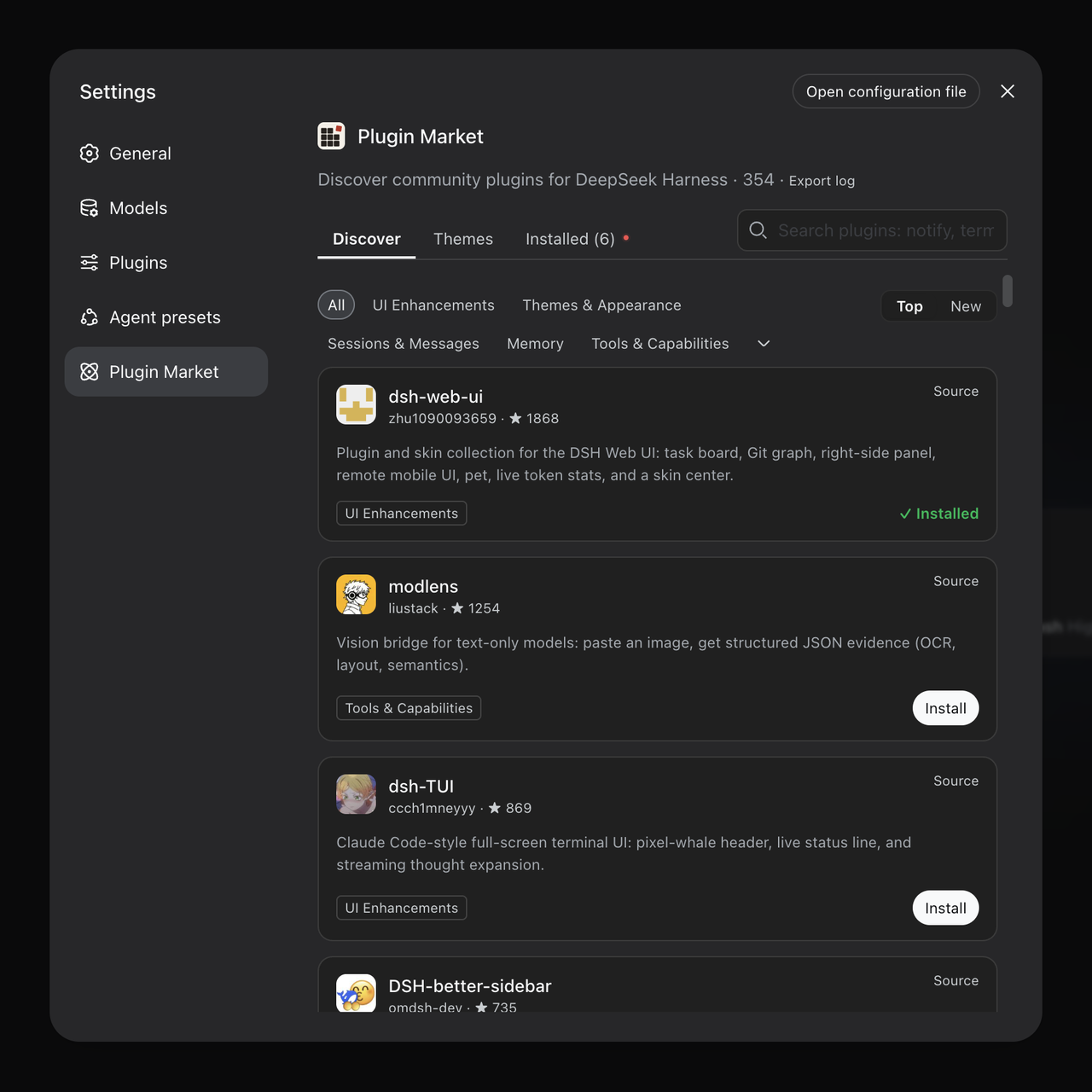
The plugin market for DeepSeek Harness: browse/search/one-click install community plugins and themes, with updates, backup/restore, hot disable, diagnostics, and AI fix.

A persistent whale widget on the DSH web UI that shows DeepSeek balance, today's usage, and per-turn cost, with drag-and-snap and sound effects.