dsh-asc
Run the following command in DeepSeek Harness:
dsh plugin install Tangweiwei227/dsh-asc
Paste the following prompt into your AI chat to install this plugin:
Run dsh plugin install Tangweiwei227/dsh-asc to install this plugin in DeepSeek Harness; the full source is available at https://github.com/Tangweiwei227/dsh-asc .
About this plugin
Managing an App Store Connect account usually means running commands like asc apps list, asc build upload, or asc metadata pull in a terminal, while having a model build raw shell strings inside DSH introduces injection risk. dsh-asc wraps the open-source App Store Connect CLI as a structured agent tool: the model passes a string array (e.g. ["apps","list"]) and the plugin invokes the binary via execFile with no shell involved, eliminating command injection by design.
Behind that single tool sit 76 top-level command groups covering over 1,200 App Store Connect API endpoints: TestFlight build uploads, App Store releases and rollbacks, Apple Ads, code signing, localized metadata and keywords, subscription management, analytics, Xcode Cloud, and alternative distribution. In non-interactive mode asc emits JSON automatically; the plugin passes the output through verbatim as { ok, exitCode, stdout, stderr } so the model can parse it precisely. Destructive operations still require asc's own --confirm flag, adding an extra safety rail.
If you already manage iOS or macOS app releases, metadata, or ads within a DSH workflow and would rather not maintain a pile of shell scripts, dsh-asc lets you drive everyday tasks with plain natural language while keeping the call chain safe and auditable.
Use Cases
- Query all apps and build statuses under an account in natural language
- Bulk pull localized description and keyword metadata
- Upload a new build to TestFlight and track release progress
Best For
- iOS/macOS developers who frequently interact with App Store Connect
- Teams managing app releases and metadata within DSH workflows
- AI agent users who want to avoid shell injection risks
Related Plugins
A service-oriented sidebar framework for DSH, offering a full workbench with file explorer, embedded browser, real terminal, Git panel, and extensible plugin services.
A beautiful, practical Claude Code-style TUI plugin with pixel whale top bar, flowing glow title, real-time status line, streaming thought expansion, time rewind, context progress bar and TPS gauge — zero core changes.
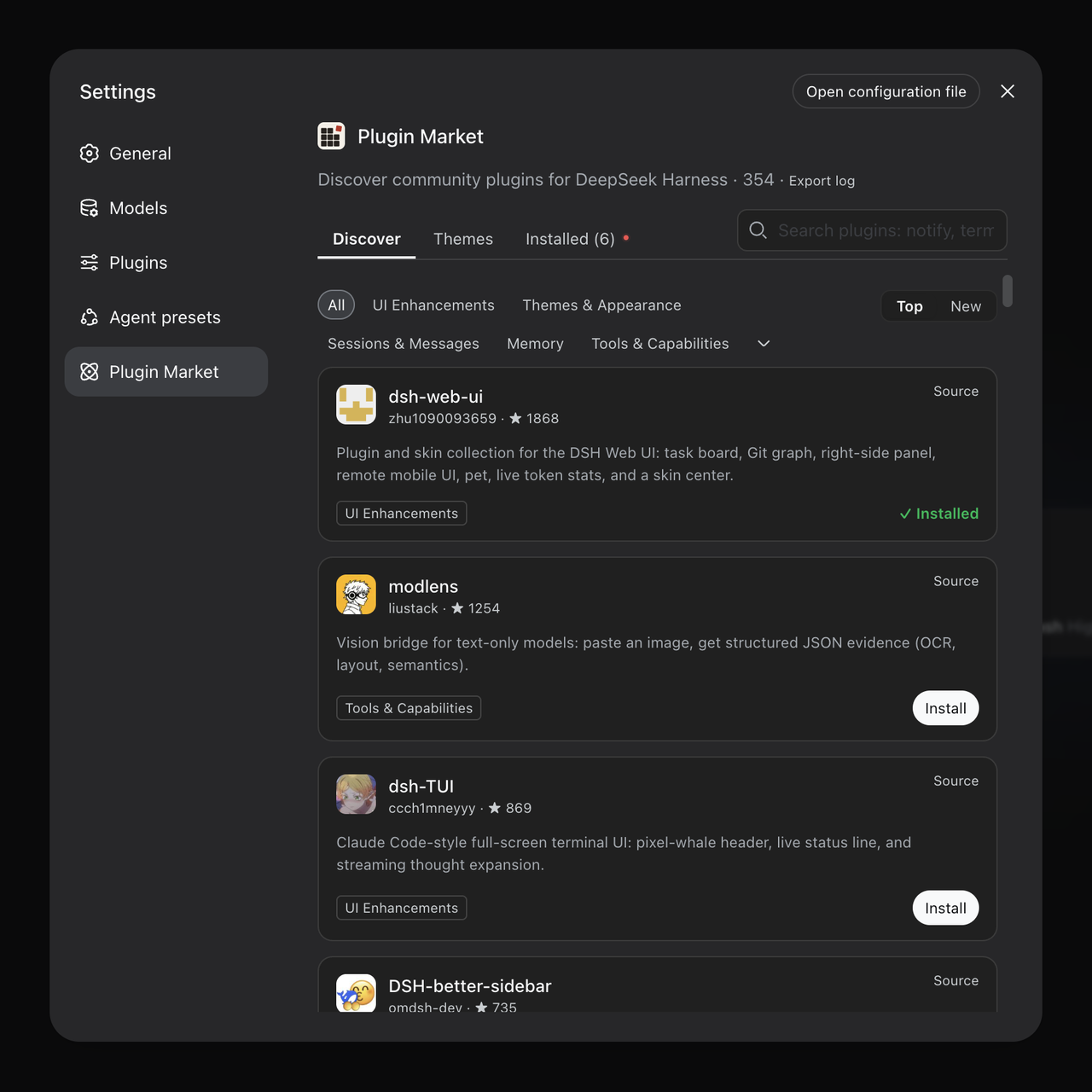
The plugin market for DeepSeek Harness: browse/search/one-click install community plugins and themes, with updates, backup/restore, hot disable, diagnostics, and AI fix.

A persistent whale widget on the DSH web UI that shows DeepSeek balance, today's usage, and per-turn cost, with drag-and-snap and sound effects.