dsh-subagent-grok
Run the following command in DeepSeek Harness:
dsh plugin install KarthusLorin/dsh-subagent-grok
Paste the following prompt into your AI chat to install this plugin:
Install the plugin in DeepSeek Harness by running dsh plugin install KarthusLorin/dsh-subagent-grok; the source is available at https://github.com/KarthusLorin/dsh-subagent-grok
About this plugin
DSH needs a trustworthy backend when delegating subagent tasks. dsh-subagent-grok plugs a locally authenticated Grok CLI into DSH as the default one-shot subagent provider, so you can reuse Grok's own local authentication without setting up a remote service or an API gateway.
Each delegation runs a single grok -p --output-format json command in the parent session's working directory and returns structured JSON. On the safety side, the default command pairs --always-approve with Grok's built-in workspace sandbox, confining file writes to the parent working directory, Grok's state directory, and temporary paths; loosening that boundary requires explicitly toggling both sandbox off and allowUnconfined true, a deliberate double safeguard that keeps the bundled defaults at least-privilege. The plugin never initiates a login, never reads or writes an API key, and surfaces a clear failed delegation when the CLI is missing, authentication is stale, output is not valid JSON, input is non-text, or the prompt is empty.
A good fit for developers who have already authenticated Grok CLI locally, want to route DSH subagent work to the Grok model, and care about keeping file-system writes within a well-defined boundary.
Use Cases
- Delegate DSH subagent tasks to a local Grok model
- Perform one-shot file read/write within a sandboxed workspace
- Extend DSH agent capabilities without a remote API gateway
Best For
- DSH developers with a locally authenticated Grok CLI
- Automation workflows requiring strict file-write boundaries
- Users who prefer local inference over remote API key management
Related Plugins
A service-oriented sidebar framework for DSH, offering a full workbench with file explorer, embedded browser, real terminal, Git panel, and extensible plugin services.
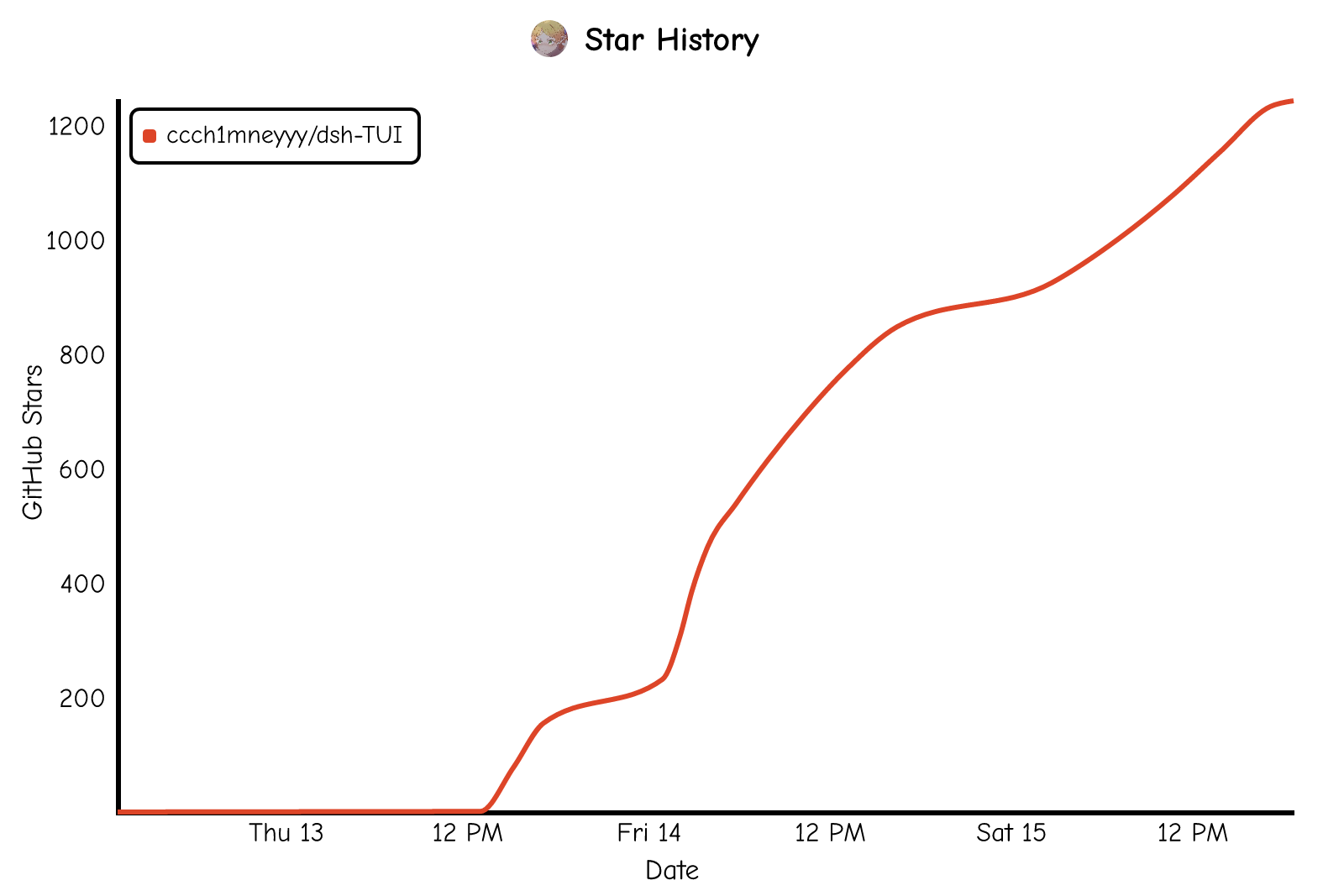
A beautiful, practical Claude Code-style TUI plugin with pixel whale top bar, flowing glow title, real-time status line, streaming thought expansion, time rewind, context progress bar and TPS gauge — zero core changes.
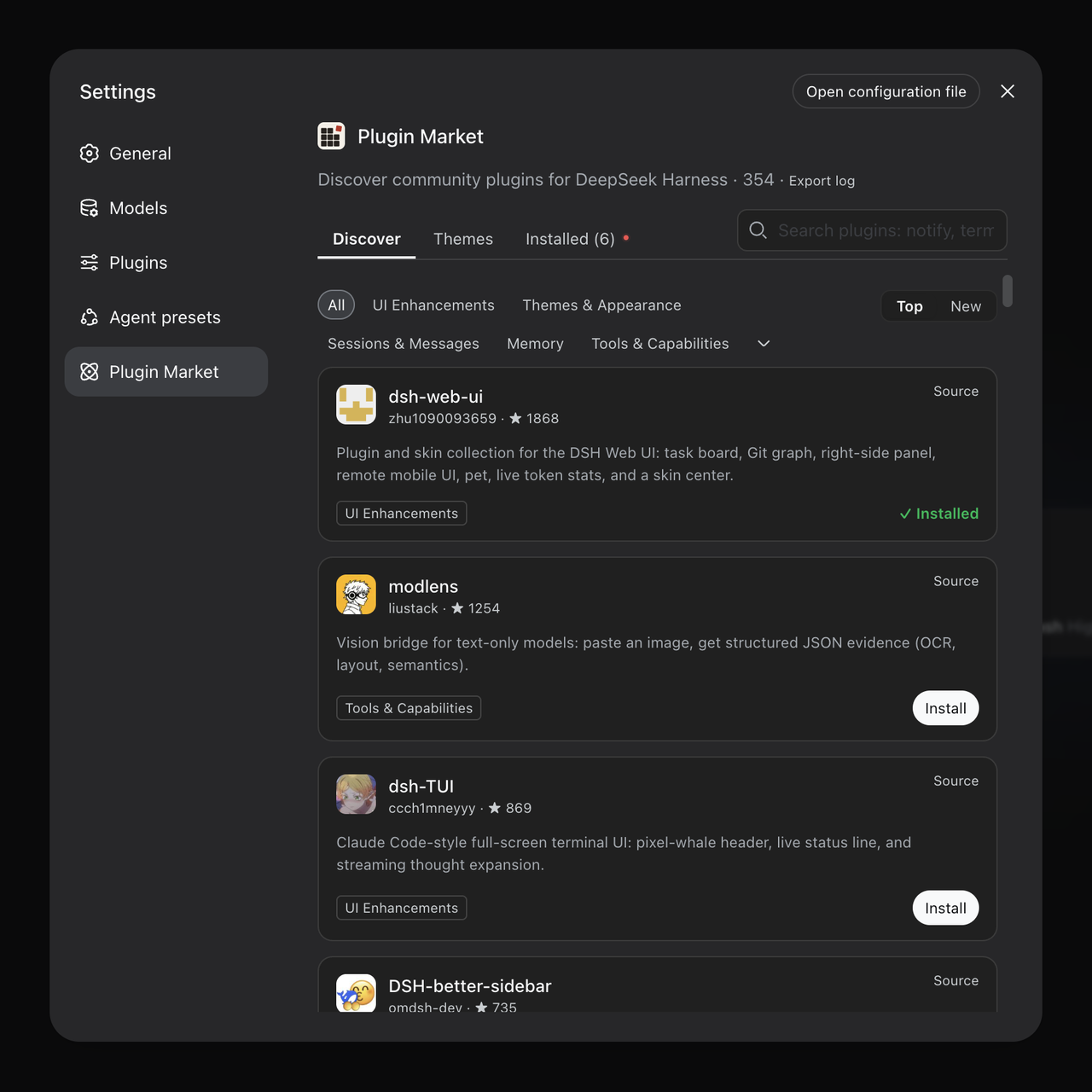
The plugin market for DeepSeek Harness: browse/search/one-click install community plugins and themes, with updates, backup/restore, hot disable, diagnostics, and AI fix.

A persistent whale widget on the DSH web UI that shows DeepSeek balance, today's usage, and per-turn cost, with drag-and-snap and sound effects.