dsh-plugin-topology
Run the following command in DeepSeek Harness:
dsh plugin install sleetdrop/dsh-plugin-topology
Paste the following prompt into your AI chat to install this plugin:
Install it in DeepSeek Harness by running dsh plugin install sleetdrop/dsh-plugin-topology; the source is at https://github.com/sleetdrop/dsh-plugin-topology
About this plugin
In a DeepSeek Harness deployment running multiple plugins, the web of who depends on whom, which nodes are bridges, and which are orphaned often lives only in boot logs and config files, surfacing as a pain during incident triage. dsh-plugin-topology takes a live snapshot of the Cordis plugin fiber tree, casts it into a plugin-service bipartite graph, and derives a full set of graph-theory metrics including in/out degree, betweenness and eigenvector centrality, PageRank, density, strongly connected components, DAG status, and diameter.
A single install delivers three surfaces: a gateway-facing host service exposing analyze() and render(); a model-facing graph.render tool that emits JSON (NetworkX-compatible node-link), Graphviz DOT, or SVG; and a browser panel in the sidebar footer with pan/zoom, a color legend, an unresolved-dependency table, and one-click format downloads.
It is built for platform engineers maintaining multi-plugin Harness integrations, agent developers who need the model to reason about the current assembly, and operators who want to inspect dependency topology without restarting services.
Use Cases
- Diagnosing circular dependencies and orphaned nodes in multi-plugin deployments
- Letting the model read live graph-theory metrics of the current assembly
- Exporting JSON or SVG dependency graphs for team review and archiving
Best For
- Platform engineers maintaining multi-plugin Harness integrations
- Agent developers who need model-aware plugin topology
- Operators who want to inspect dependency graphs without service restarts
Related Plugins
A service-oriented sidebar framework for DSH, offering a full workbench with file explorer, embedded browser, real terminal, Git panel, and extensible plugin services.
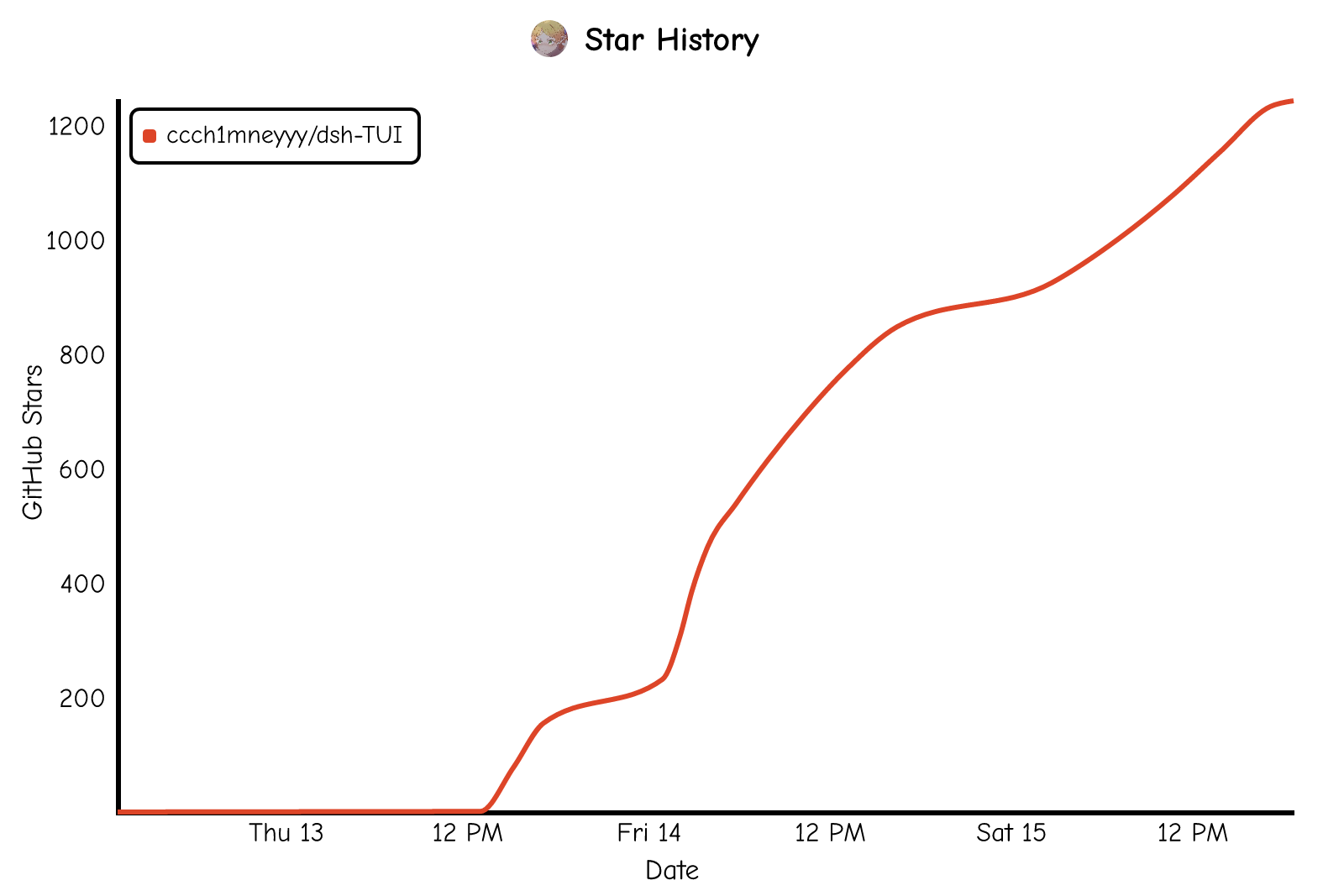
A beautiful, practical Claude Code-style TUI plugin with pixel whale top bar, flowing glow title, real-time status line, streaming thought expansion, time rewind, context progress bar and TPS gauge — zero core changes.
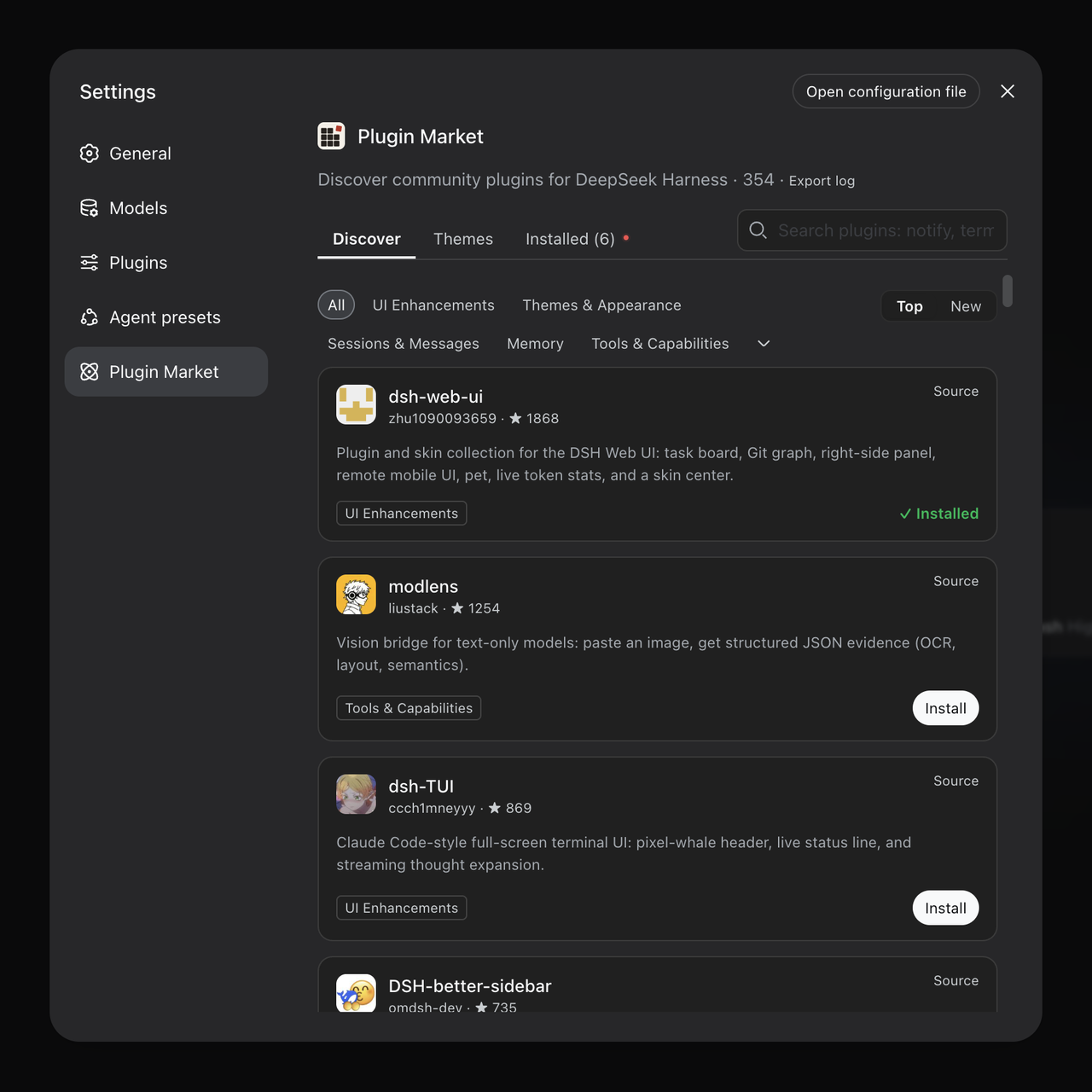
The plugin market for DeepSeek Harness: browse/search/one-click install community plugins and themes, with updates, backup/restore, hot disable, diagnostics, and AI fix.

A persistent whale widget on the DSH web UI that shows DeepSeek balance, today's usage, and per-turn cost, with drag-and-snap and sound effects.